← All guidesAstroYoga practiceChair version →

AstroYoga · Kriyā on the mat

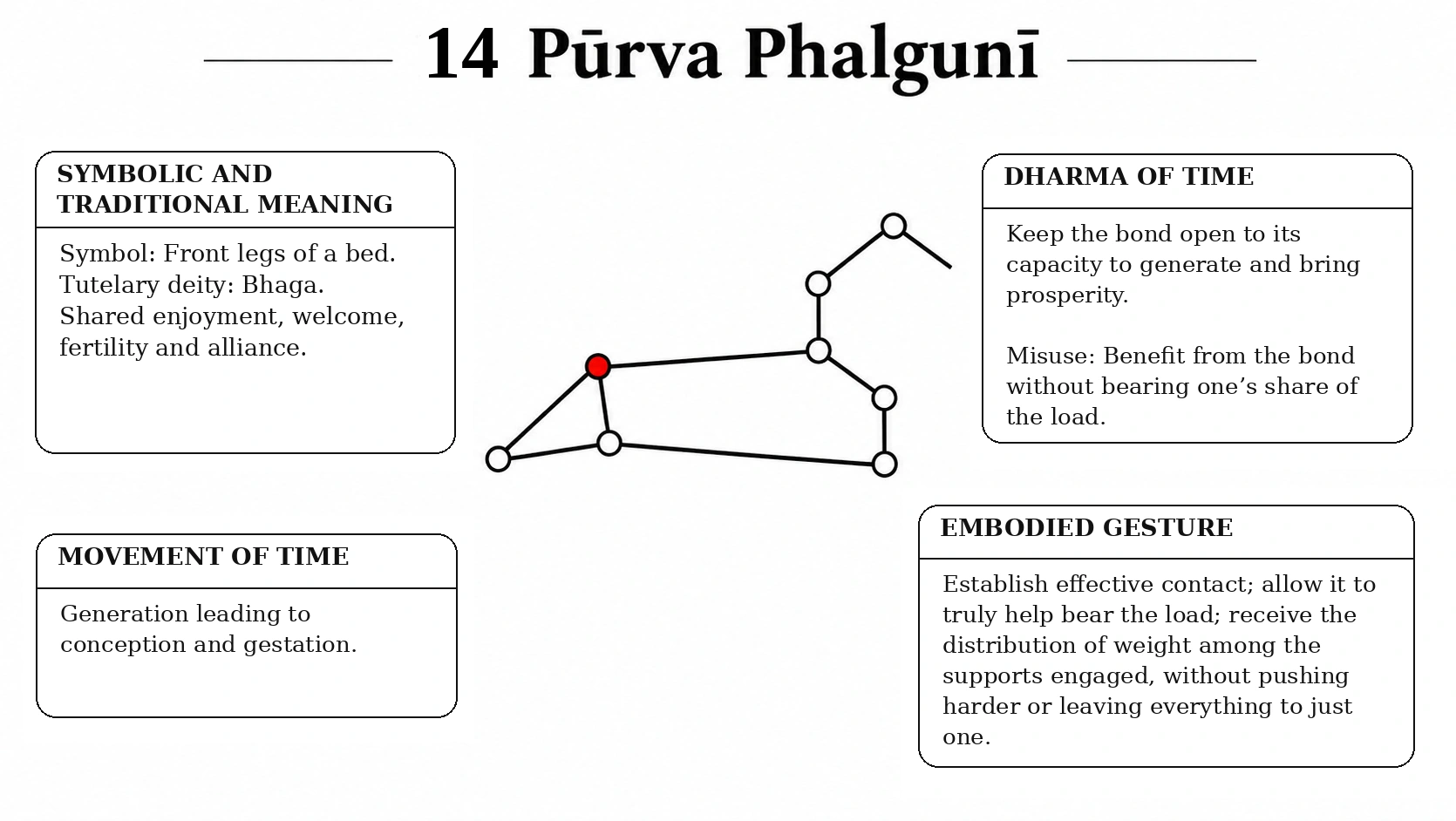
Pūrva Phalgunī

GENERATE

Support → Target → Integration
Practices
Phalakāsana — adapted plank on the knees · Bālāsana — Child’s Pose.
Mudrā and seal
AstroYoga seal — the shared gift · Mahābandha — symbolic convergence of currents, an analogy not performed.
Supports
Palms and knees bearing weight · short plank on the knees · no support removed while loaded · guided return towards Bālāsana.
Pūrva Phalgunī · GENERATE
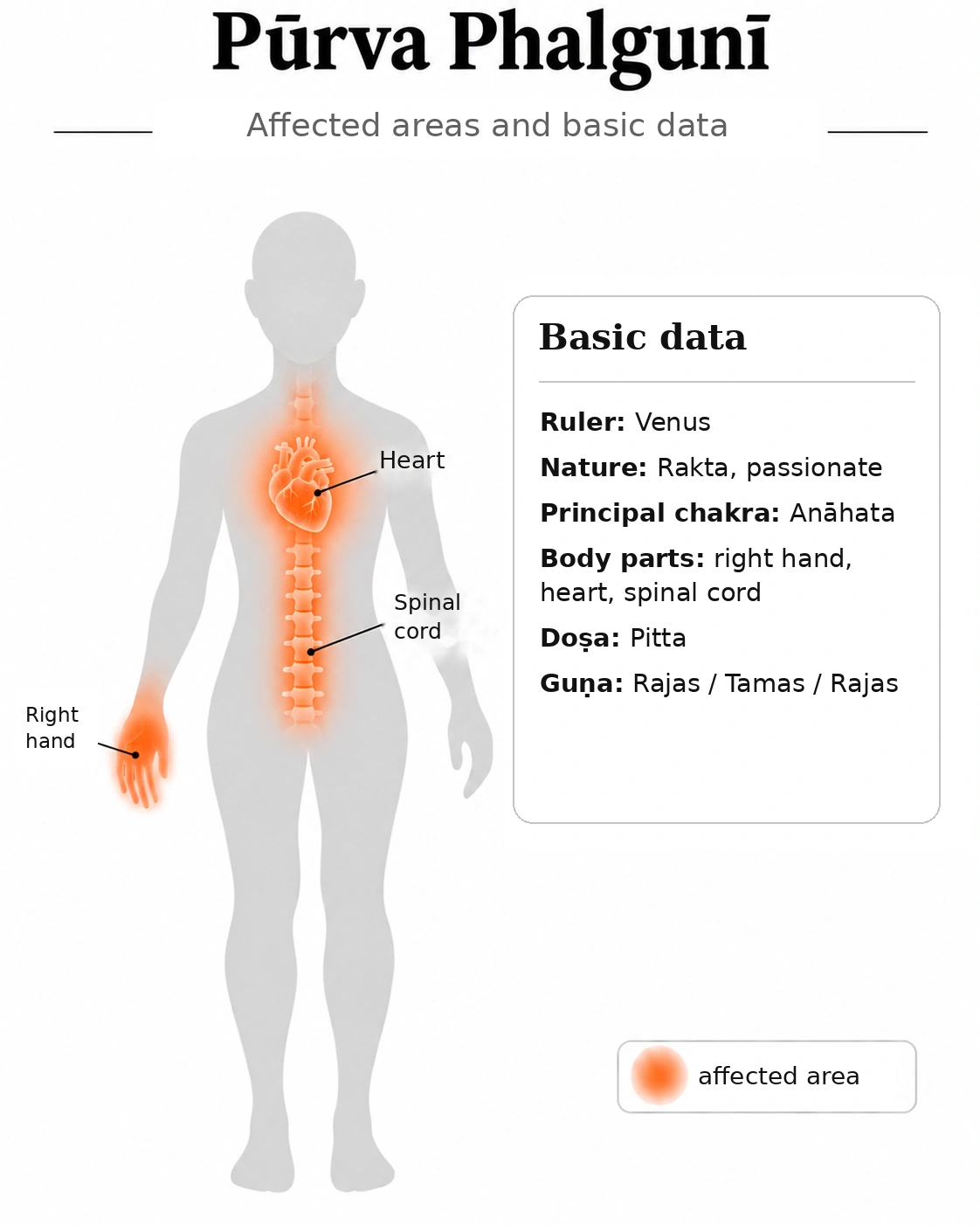
Body zonesBody zones · Pūrva Phalgunī
01

Support

Adapted Phalakāsana, knees resting on the mat.
  1. Come onto hands and knees by a route that is accessible to you. Place the palms comfortably apart, with relaxed fingers and knees well supported by the mat. Feel all four points of support contributing to the body's base before the plank has even been formed. Bring attention to the inner axis of suṣumṇā. The breath passes through the whole body. No limb is yet required to take more load than the others. Do not hold the breath. If it remains easy, let it become slightly textured at the back of the throat.

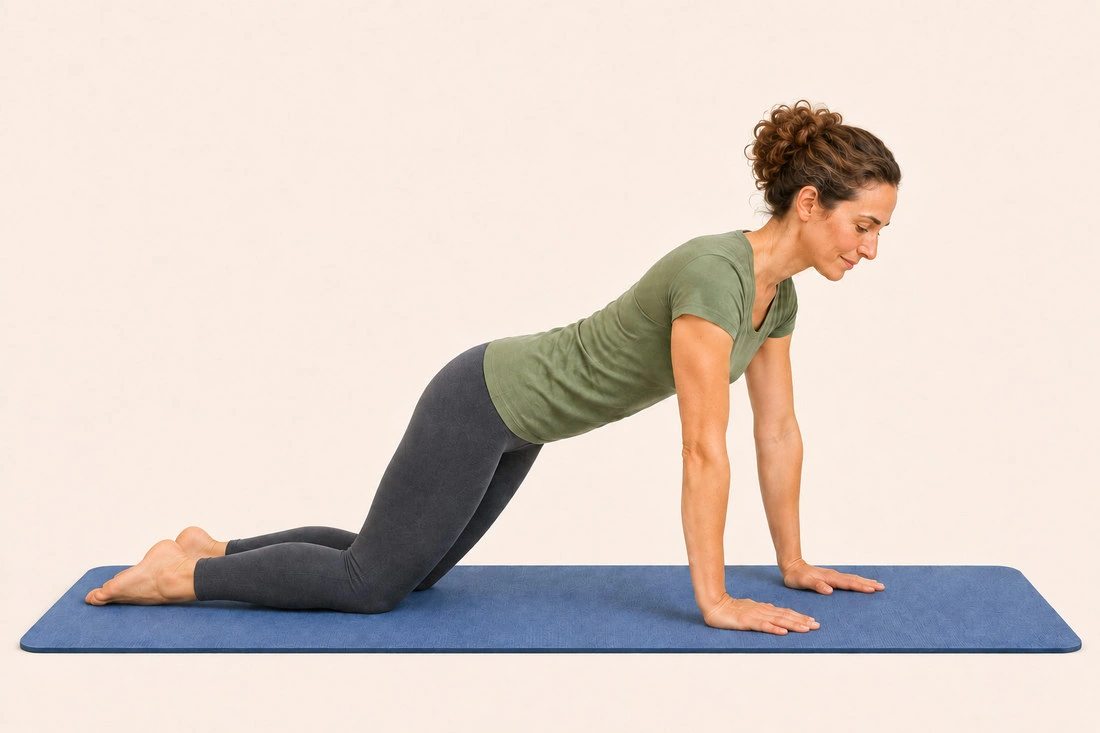
  2. On a natural exhale, if one arises, move the knees slightly backwards to form a short plank on the knees. Organize a workable line from head to pelvis and on to knees, without hollowing the back or over-pushing the shoulders. Feel palms and knees bearing weight together. The breath may stay softly audible if that remains easy. Do not lengthen the exhale to maintain the shape; welcome the next inhale without abruptly moving the supports. Palms and knees have carried a first plank.

  3. Gradually move the pelvis back towards the knees, keeping the hands available until the weight has truly returned to its base. Bring the knees back underneath the pelvis if needed, and receive a clear moment of rest. Let breathing accompany the return without an imposed rhythm. Recognize what the palms have just carried, without separating their contribution from that of the rest of the body.

  4. Return to the same short knee plank once, and only once. Move the knees moderately backwards with the same organization of pelvis, back and shoulders. Do not increase the length or intensity of the posture. Let breathing renew itself at the pace needed; no retention is used to stabilize the plank. The palms and knees once again support the plank.
02

Target

The same position: the supports genuinely share the weight.
  1. In this second plank, feel especially how the right palm receives its share of the weight. Recognize its actual pressure against the mat without trying to push harder. The left hand and both knees continue carrying their own shares. No contribution is withdrawn to make the right hand's part more important. Bhaga, a figure of the share received and given, inspires the seal of the shared gift here. The breath remains available throughout the body, without being artificially directed towards any one hand.

  2. Remain briefly in this distribution if shoulders, wrists and breathing are comfortable. Do not increase the push of the right hand or let all the weight shift to the left. Imagine prāṇa circulating between palms and knees as a load carried together. The breath may remain faintly perceptible. Inhalation and exhalation pass through a shared structure; they do not successively direct the right hand, then the left hand, then the knees. Each support keeps its function in this common load.

  3. Recognize what this short duration brings to light. Perhaps there is a wish to hold longer, push harder through one hand, or let another support take almost all the load. Do not act on that wish. Let breathing continue freely. There is no need to tighten the belly, close the throat or hold the breath to portray a convergence of forces. When the distribution has been sufficiently felt, prepare to return before one support becomes exhausted. The shared strength has been experienced; it has nothing to prove through greater intensity.

03

Integration

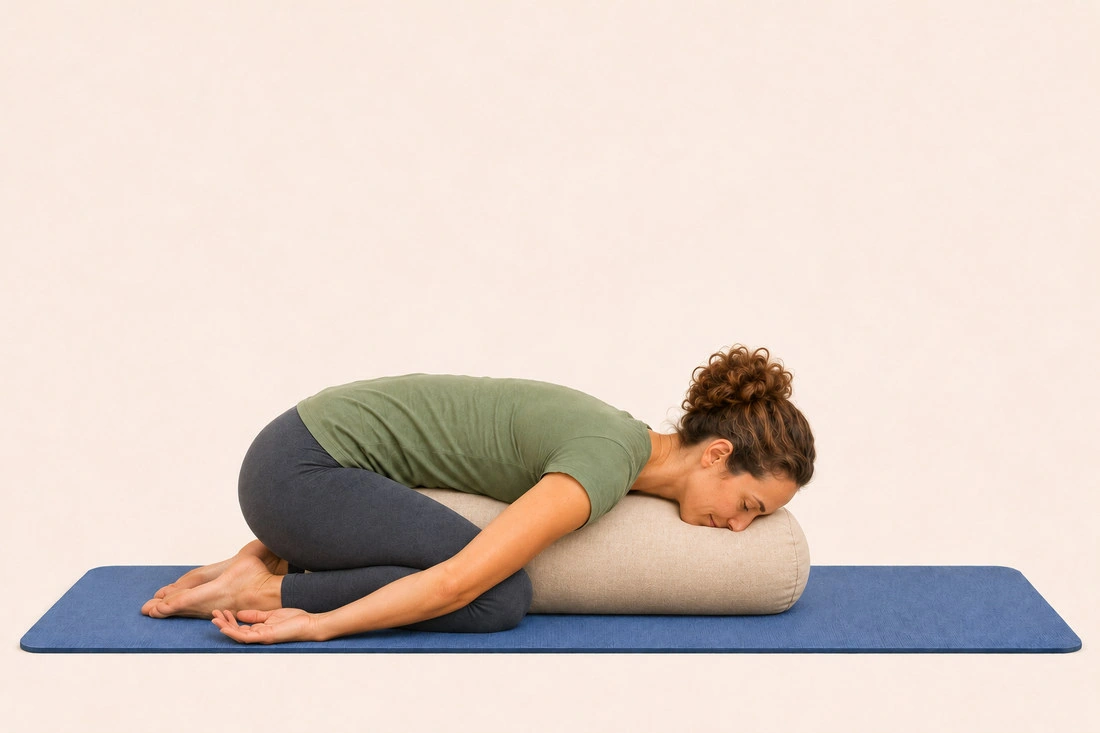
Bālāsana reached in rest; seated rest remains an option.
  1. Gradually move the pelvis backwards towards the knees without suddenly removing the hands. The palms continue to serve as supports for as long as the body bears weight on them. The knees progressively receive a different distribution of weight. Allow as many breaths as the movement requires. The breath may soften as the arms are genuinely unloaded. The plank is released in stages, without the palms withdrawing too soon.

  2. If comfortable, come into Bālāsana, bringing the pelvis towards the heels only as far as accessible, with a resting support if needed. Otherwise, come to a stable resting seat by an assisted route. Allow hands, shoulders and knees to be freed from the particular effort of the plank. The breath may gradually settle, then become natural again. Do not add humming or another breathing technique. The shared participation has reached its end. Each support may rest without its contribution being erased.

Closing meditation

The hands and knees carried part of the body together before returning to rest. Sometimes one part of us would like to take on everything. Yet every support contributed without taking the place of the others. There is gentleness in this fair distribution.

Silence