
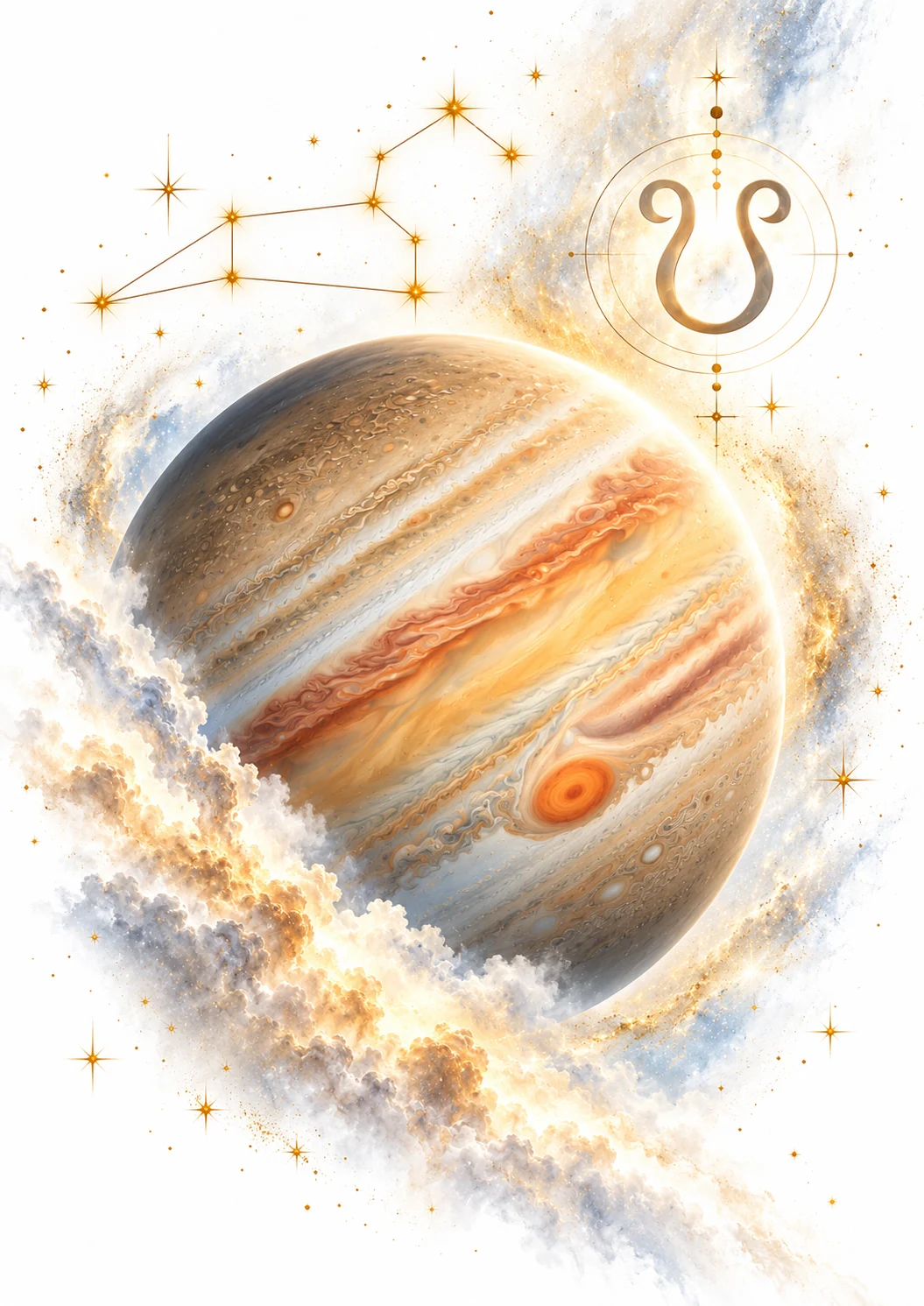
Opening — All Saints' Day 2026: a window onto our near future?
“Faith, that ray of light within us in moments of extremity, enables us to overcome the insurmountable.” — Maitreyi Amma Sonyeo
A world in transformation
We live in an age when certainties are wavering. Institutions are being challenged, shared values are questioned, and demands for change are voiced with growing force.
What will become of our world? What should we preserve from our heritage? How can we regain trust when our familiar points of reference are shifting? These questions touch on faith: not only religious belief, but the trust that helps us go on when the future lies beyond our certainties.
Yet transformation is not necessarily a catastrophe. It can also open possibilities we had not yet imagined.
We are living through an age ripe for profound transformations. It is not change itself that we should fear, but the misuse of the forces that make it possible.
A sky that illuminates rather than predicts
From 31 October to 4 November 2026, the Moon travels through five nakshatras, regions of the Indian sidereal zodiac. This brief passage coincides with a slower movement: that of Jupiter and Ketu between Maghā and Āśleṣā, whose symbolic significance extends into 2027.
In this language, Jupiter evokes faith, wisdom and transmission; Ketu evokes detachment from forms that have become limiting. Their meeting in Maghā, associated with ancestors and authority, raises a question: how can we remain faithful to what we have received without becoming trapped in the past?
This question concerns our personal history as much as the trust we place in institutions. France, approaching its 2027 presidential election, provides one example. We will seek neither an election forecast nor a prediction of events, but symbolic insight into how we welcome change.
Another way of inhabiting change
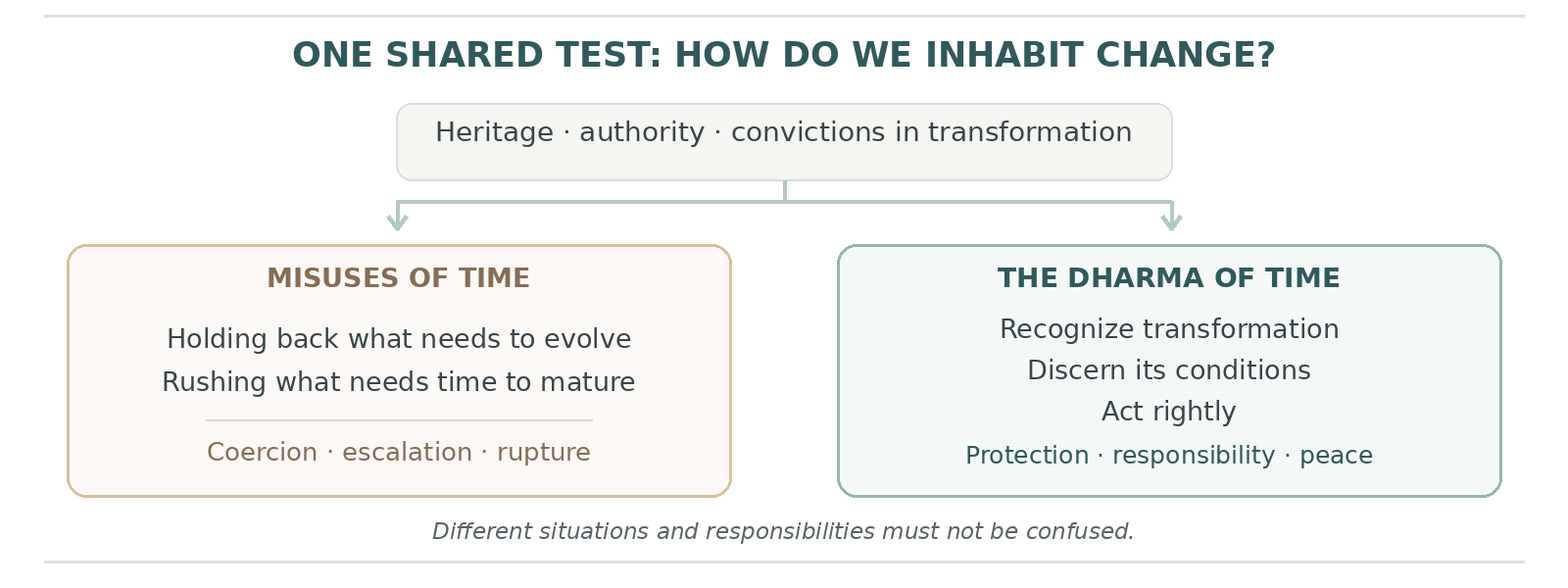
In a crisis, some seek to preserve everything at any cost; others break away without discerning what they may destroy. Their goals and responsibilities may differ greatly. What they sometimes share is a failure to recognize the conditions of just change.
The wisdom traditions of India invite us to recognize the qualities of time. In our approach, Vedic astrology explores their dynamics; the teachings of the siddhas, especially in Tamil traditions, inform our reflection on the conditions for welcoming them and entering into a right relationship with them. We call this search for a just way of inhabiting transformation the Dharma of Time.
It is neither about submitting to destiny nor evading ethical responsibility. It is about discerning when to preserve, let things mature, transmit or act, and seeking peace without abandoning justice.
The body, breath and silence will allow us to experience this: loosening a grip, accepting a handover, sharing an effort. In this way, faith can become a living force at the heart of the world's transformations.
I — When faith is put to the test
Faith beyond our certainties
We often associate faith with our beliefs or our trust in a teaching. Yet it involves something deeper: the ability to continue when our certainties fail us, when bereavement, separation or a profound reassessment unsettles the foundations of our lives.
Faith protects us neither from doubt nor from suffering. It helps us maintain confidence that meaning remains possible, even when it eludes us. An ordeal reveals how much of our trust depended on a person, a role or an external form to which we had become attached.
Faith may not mean holding on to every certainty, but discovering what remains alive when those certainties change.
Our societies, too, depend on shared trust: institutions, common values, traditions and teachings passed down. When these foundations waver, it is not only their organization that is tested, but our confidence in the possibility of a shared future.
The many faces of trust
In Indian astrology, Jupiter is the primary signifier of faith: wisdom, understanding and trust in an order that carries meaning. Yet our way of believing engages many dimensions of our being.
The Moon evokes our capacity to receive and our need for security; the Sun, our inner direction. Mercury opens us to questioning and discernment; Mars gives us the courage to intervene; Venus reminds us of the value of connection and harmony. Saturn confronts us with duration, limits and responsibility. Rahu can amplify our desires and collective aspirations; Ketu invites us to loosen certain identifications.
We can remain loyal to our values and still lose confidence in the future. We can want to act without sufficient discernment, or become so attached to our convictions that we fail to see their need to evolve. The same holds true for societies: strong institutions do not guarantee trust, any more than a powerful desire for change guarantees just means.
The decisive question, then, is not only what we believe in, but how our faith leads us to live, act and encounter others.
Heritage: between fidelity and freedom
We inherit a language, a culture, values and ways of understanding the world. Our parents, ancestors, teachers and earlier generations shape our lives. This heritage is a treasure: it connects us to a story larger than ourselves and gives us support.
Yet a form that once held people together can become unsuitable. A precious loyalty can turn into an obligation to repeat. How can we keep what is alive in our inheritance without also passing on the wounds, rigidities and dependencies of the past?
Maghā, the nakshatra of ancestors and authority, symbolically expresses this tension. The meeting of Jupiter and Ketu in this region invites us to distinguish inherited wisdom from the forms to which we have become attached. Honouring does not necessarily mean imitating; gratitude does not require holding on.
The deepest fidelity does not always lie in repetition. It can be expressed in our ability to renew what has been handed down to us.
When authority loses trust
In a family, school, spiritual community or society, authority can protect, organize and transmit. Yet its value comes not from the power it holds but from the service it provides. When it stops listening and confuses institutional continuity with keeping its position, a crisis of legitimacy arises.
Conversely, challenging an old order does not, by itself, guarantee a fairer one. Protest can open a space for freedom but can also reproduce the very mechanisms of domination it condemns. Discernment means examining the facts, the means employed and the rights of those concerned; it does not mean treating every conflict or political project as equivalent.
History offers an echo of this. In autumn 1517, Luther's 95 Theses challenged certain religious practices and authorities, opening the way to the Protestant Reformation. This spiritual renewal was also accompanied by lasting divisions and conflicts. The analogy with our own age concerns the testing of legitimacy and transmission, not any proven repetition of an identical astrological configuration.
Living authority can renew itself by accepting criticism, being accountable and transmitting without imposing. Deep conviction, too, can grow when we allow ourselves to question it.
The ordeal and the possibility of peace
When our certainties feel threatened, we are tempted to defend them with increasing force. The need to protect can become control; the desire for liberation, a will to break away. Fear of losing our bearings can then turn into fear of others.
Violence, however, does not become legitimate merely because it accompanies a time of transformation. A just aspiration does not make every means acceptable. Nor is nonviolence an excuse for inaction in the face of injustice. Faith can give us the courage to set boundaries, defend and repair, without making the other person an absolute enemy.
Between what is ending and what is seeking to be born, there can be a long period of uncertainty. Precisely then, faith becomes precious: not as a guarantee of the outcome, but as the ability to remain present, responsible and open to what may emerge.
II — The sky of great transitions
Two rhythms, one question
At All Saints' Day 2026, the Moon passes in just a few days through regions that illuminate a movement unfolding over a much longer time. The Moon speaks to how we receive events; Jupiter and Ketu probe our beliefs, loyalties, inheritance and detachment more deeply.
Astrology does not present five stages everyone must inevitably live through. It offers five symbolic doorways into a single question: how can we go through change without trying to hold it back or impose it by force?
Five days under the Moon's gaze
31 October — Punarvasu: finding the light again
Punarvasu evokes the return of light after an ordeal. When a painful situation ends, we often long for everything to be as it was before. Yet rebirth does not mean reproducing the past. Restoration can mean the birth of something we did not yet know.
This quality invites us, individually and collectively, to welcome a new beginning without demanding an exact return to what was.
1 November — Puṣya: protecting what nourishes
Puṣya is associated with nourishment and protection. Every new possibility needs fertile ground, support and patient care. We can recognize the relationships and institutions that allow life to grow. But protection is not possession: support becomes a grip when it prevents another from growing.
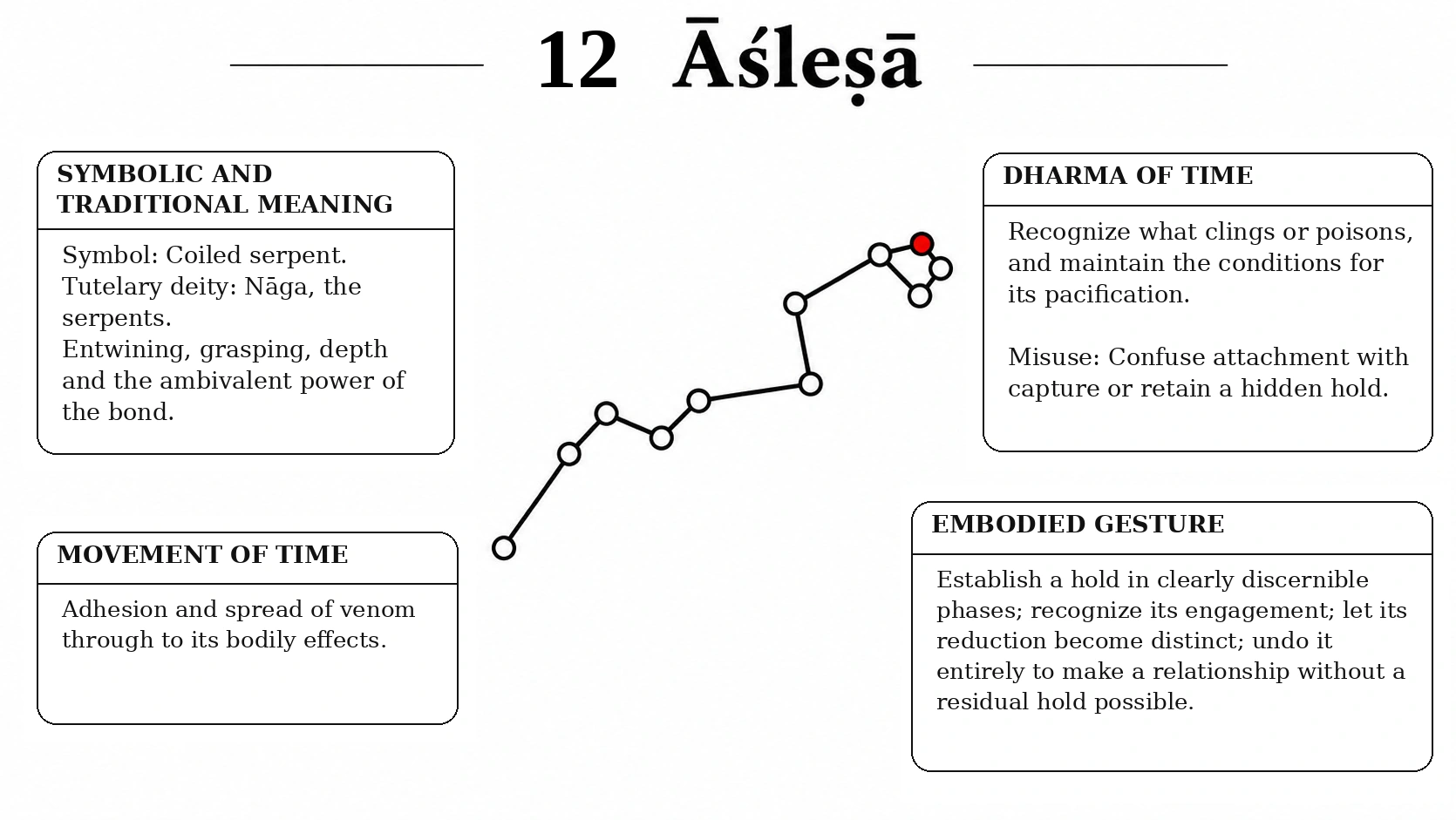
2 November — Āśleṣā: recognizing our grips
Āśleṣā confronts us with deep ties, attachments and their ambiguity. Loyalty can support or confine. A protective force can become domination. The right gesture is neither to cling nor to sever ties on principle: it invites us to distinguish living relationships from constraint.
We can remain loyal without possessing, protect without dominating, and commit ourselves without trying to control everything.
3 November — Maghā: honouring and passing on
Maghā evokes ancestors, memory and legitimacy. We inherit forms of life and authority that came before us; we are also responsible for how they continue. The presence of Jupiter and Ketu in this region gives this lunar passage particular resonance: is inheritance a security to hold on to, or wisdom to pass on?
Honouring our ancestors does not mean reproducing their lives. Accepting a handover can be an act of gratitude and trust.
4 November — Pūrva Phalgunī: rediscovering sharing
Pūrva Phalgunī opens us to creativity, the joy of living and renewed relationships. After examining attachment and transmission, we rediscover the possibility of being together differently: everyone can contribute without carrying everything, and cooperation does not require erasing differences.
The journey at a glance
| Passage | Symbolic quality | Invitation |
|---|---|---|
| Punarvasu | Renewal | Welcome the return without demanding sameness |
| Puṣya | Nourishment | Support without holding on |
| Āśleṣā | Ties and grips | Loosen without abandoning |
| Maghā | Ancestors and authority | Honour and pass on |
| Pūrva Phalgunī | Fruitful connection | Share and open the relationship |
Jupiter and Ketu: the long time of discernment
In autumn 2026, Jupiter joins Ketu in Maghā. Wisdom, faith and transmission symbolically meet detachment. The process continues as Ketu, then Jupiter, return to Āśleṣā: having questioned authority and inheritance, we must recognize the ties that bind us to them.
Noticing that an institution needs to change does not mean knowing how to transform it. Wanting freedom does not mean we have recognized the dependencies that hold us back. Some breaks are necessary; others are rushed. Some forms of support need to remain; others must change shape.
When Jupiter returns to Maghā in summer 2027, the handover can be imagined differently. After detachment, what still deserves to be passed on? The movement toward Pūrva Phalgunī then opens a relational perspective: how can we turn this new freedom into a fruitful contribution?
Some signposts for 2026–2027
| Period | Symbolic threshold | Open question |
|---|---|---|
| Late Oct.–Nov. 2026 | Jupiter and Ketu in Maghā | What should we pass on from our heritage? |
| Dec. 2026–Jan. 2027 | Return toward Āśleṣā | Which grips must we understand and loosen? |
| March–April 2027 | Jupiter–Ketu meetings in Āśleṣā | How can we act without coercion? |
| Late June 2027 | Jupiter's return to Maghā | What handover becomes possible? |
| Late Aug.–autumn 2027 | Jupiter toward Pūrva Phalgunī | How can relationships be renewed? |
| Late 2027 | Toward Uttara Phalgunī | How can renewal be made lasting? |
These signposts are interpretive landmarks, not dates on which events are destined to occur. Positions depend on calculation conventions; the practice calendar in the appendix offers suggested lunar windows.
Other planets complete this reading. The Sun in Svātī raises the question of holding a steady axis amid movement; retrograde Mercury in Viśākhā calls us to reconsider words and evidence; Mars in Āśleṣā questions the use of force. Retrograde Venus in Citrā invites us to reshape relationships; retrograde Saturn in Uttara Bhādrapadā reminds us of responsibility and duration; Rahu in Dhaniṣṭhā shows the power and risks of collective amplification.
This reading of the sky thus concerns our sensitivity, discernment, will to act and the quality of our ties. It never replaces examining reality. We may know the forces of time symbolically and still use them unjustly. We must also learn how to inhabit them.
III — The Dharma of Time: wisdom for our age
Time is more than what passes
We often think of time as a duration that flows by. Yet experience tells us there are moments to decide and others to let things ripen, times to protect and others to let go. Even a well-meant word can hurt if it disregards the person hearing it; a necessary decision can become destructive when imposed without considering its consequences.
It is not enough to wish for good. We must also recognize how, under what conditions and at what moment it can come about.
India's wisdom traditions invite us to recognize particular qualities of time. Nakshatras are more than names on a chart: they offer a language for exploring patterns of growth, protection, detachment, maturation and transformation.
Knowing a force is not the same as knowing how to inhabit it
A protective force can preserve life or become a desire to dominate. Detachment can open the way to freedom or turn into a blind break. The search for harmony can welcome differences or seek to erase them. The nature of a force does not, on its own, determine the value of its effects.
Our explorations of siddha teachings, especially Tamil traditions, have informed this distinction. For us, yantras and vasyas offer points of reference for considering the conditions in which an energy can be welcomed and brought into right relationship with life. By “habitability” we mean finding the supports, boundaries and right measure that allow transformation to be lived without becoming destructive.
The image of a seed helps us understand this. It carries the potential to grow; yet without suitable soil, water, light and sufficient time, that potential cannot unfold. Pulling a shoot to make it grow faster risks breaking it. Human transformations, too, need the right conditions and measure.
Three perspectives in search of the same rightness
To make this search accessible, we have organized our AstroYoga approach around three perspectives. V refers to Vedic astrological reading: what dynamic is this time setting in motion? T refers to our Tamil reading of the conditions for habitability: what supports, boundaries and rhythms make that movement viable? Y refers to relationship: how can we take part while respecting ourselves, others and life?
| Perspective | Question | Direction |
|---|---|---|
| V — Recognize | What is the nature of this time? | See the dynamic without judging it in advance |
| T — Inhabit | What conditions make it viable? | Respect boundaries, supports and rhythm |
| Y — Relate | How can we take part rightly? | Bring freedom, connection and responsibility into harmony |
These three perspectives are signposts for our approach, not a recipe that decides for us. The Dharma of Time invites us to seek what is right; it never excuses us from checking the facts or taking responsibility for our actions. Consider a disagreement between generations: recognizing a young person's wish to choose their own path is not enough. We must also offer the support they need, respect their pace and accept that passing something on does not mean deciding for them. Rightness then emerges through a living relationship between freedom and responsibility.
Maghā: passing on without holding on
Maghā places us before heritage and authority. The first perspective recognizes the tension between inherited wisdom and detachment. The second seeks the conditions for a viable transmission: protect what remains precious, acknowledge those concerned and do not impose the transition by force. The third asks about our relationships: can we honour those who came before us and allow those who follow to make their own way?
Passing something on does not mean preserving every form. It means consenting to life continuing beyond our will. In a family or an institution, handing over sometimes requires ending an effort that no longer serves and accepting that another support can take its place.
Āśleṣā: loosening without abandoning
Āśleṣā reveals our grips and dependencies. Inhabiting it rightly means neither maintaining everything nor severing everything. It asks us to recognize nourishing bonds, protective boundaries and what is becoming a form of control. Some separations are necessary; other situations call for patience and an appropriate distance.
Undoing a grip does not mean denying the relationship or abandoning responsibility. We can defend our freedom without seeking to dominate in turn.
Pūrva Phalgunī: sharing without imposing
Pūrva Phalgunī invites fruitful relationships. Yet the search for harmony can also become a demand that everyone be alike. Just cooperation, by contrast, allows each person to contribute according to their means. No support should carry the whole weight alone; no relationship should erase freedom.
| Quality of time | Misuse | A right way to inhabit it |
|---|---|---|
| Maghā — Heritage | Clinging to power or destroying the inheritance | Honour, discern, pass on |
| Āśleṣā — Attachments | Controlling others or breaking away blindly | Loosen, protect, liberate |
| Pūrva Phalgunī — Relationship | Forcing harmony or taking everything for oneself | Share, cooperate, respect differences |
Right action is not inaction
The Dharma of Time is not the art of always waiting or of seeking a middle-ground compromise. In the face of danger, protecting people may be urgent. Injustice may demand firm words, resistance or deep reform. At other times, haste makes worse what needed time to mature.
No astrological configuration authorizes violence, domination or abandoning those who suffer. The forces of time offer insight, not an excuse. Right action means discerning what is necessary, possible and respectful of human dignity.
We cannot stop the world from changing. We can, however, learn not to turn each change into another source of fear and conflict. This is how the Dharma of Time acquires its deeply contemporary meaning.
IV — When time is poorly inhabited
An age of opposing reactions
In political and social life, many feel that decisions are slipping beyond their control and institutions are not adequately meeting their needs. Others fear that a profound rupture might sweep away essential protections. These anxieties nourish two temptations: to hold on to what seems to be escaping us, or to force what has yet to arrive.
As positions harden, each side can see the other as the main threat. Yet the issue is not simply one of pitting defenders of the past against advocates of the future. It also concerns how each person responds to changes in time and the tangible consequences of their actions.
The misuse of continuity
A society needs institutions that provide continuity, protect people and safeguard common rules. Stability can therefore be a condition of freedom. But when those in authority confuse preserving institutions with preserving their own position, continuity risks becoming stagnation.
An authority may refuse to hear what is changing, minimize difficulties or treat every challenge as a threat. Reading Maghā sheds light on this danger: being entrusted with an inheritance does not entitle us to possess it forever. The strength of an authority also lies in its ability to acknowledge limits, be accountable and make a handover possible.
The misuse of rupture
A desire for change can respond to real injustice. It can open possibilities for freedom, solidarity or democratic renewal. But when the conviction of being right makes scrutiny of the means seem unnecessary, rupture becomes an end in itself. Institutions may be rejected wholesale; opponents reduced to obstacles that must be removed.
This temptation can arise in very different movements. Some currents of social protest and some nationalist forces reject the existing order, but their aims and values are not interchangeable. It would be neither fair nor enlightening to conclude that their projects or responsibilities are equivalent. The Dharma of Time instead asks how a transformation is carried through: with discernment and respect for life, or under the sway of impatience and power struggles.
Peaceful protest, dissent or advocacy of radical change is not in itself a misuse of time. A break can be necessary. Misuse begins when the promised liberation is itself used to justify domination, humiliation or violence.
France approaching 2027
France's 2027 presidential election offers a particularly vivid example of a crisis of trust and questions of legitimacy. Institutional continuity, the desire for reform, aspirations to deep rupture and the need for protection meet here. Citizens and political actors share neither the same priorities nor the same ideas of justice or the nation.
The symbolic meeting of Jupiter and Ketu in Āśleṣā in spring 2027 may invite us to look at this climate through attachments, resistance and the difficulty of releasing old grips. But it predicts no electoral outcome and does not determine human choices.
The relevant questions are more demanding: can those in power recognize what needs to evolve? Can those who challenge them distinguish what deserves preserving from what needs to change? Do political programmes account for their consequences? Do institutions truly protect rights and freedoms? Can citizens defend their convictions without denying the dignity of those who think differently?
The Dharma of Time names neither a winning camp nor an alternative ideology. It introduces discernment about the quality of our responses to change. This perspective erases neither political differences nor the particular responsibility of those in power.
The spiral of reactions
An authority that refuses to hear a protest can deepen anger and provoke stronger opposition. A protest movement that resorts to intimidation can in turn heighten fear and the temptation of an authoritarian response. Each side then feels vindicated by the other's excesses. Force calls forth force, fear justifies new restrictions, and the time of transformation becomes a time of reaction.
Recognizing this mechanism does not mean confusing different situations. Those who wield power have specific means and obligations. Those who suffer injustice are not in the same position as those who inflict it. Where violence occurs, the facts must be established, victims protected and responsibility acknowledged. A spiritual reading must never distract from this duty.
Peace: an active responsibility
Peace is neither imposed silence nor the absence of disagreement. A society in which nobody dares to object is not necessarily just. It may be necessary to protest, resist, protect threatened freedoms and set firm boundaries.
Peace also asks us not to add needless violence to violence: to consider the people concerned, check the facts and weigh the consequences of our actions. It does not always mean waiting; it can appear in courageous protective action, in a clear refusal or in the patient search for a fair agreement.
Three questions can help orient us and open a space for discernment: what is truly seeking to change? Under what conditions can this change become just? How can I take part without betraying my conscience?
These questions offer no political formula. They invite us to move beyond reflexive reaction, check the facts, respect others' freedom and avoid confusing conviction with a right to impose.
Peace is not a way of escaping our responsibilities. It is a way of fulfilling them without adding needless violence to the transformations we are living through.
We live in a time of change, not under a sentence of disorder. Wisdom means recognizing the possibilities it opens and the misuses that could distort them. Inner practice can help, because our reactions often arise before we have even put them into words.
V — From understanding to experience
The body, breath and awareness
We may understand that a situation needs to change and still remain tense at the prospect. Our fears, habits and need for control are expressed in the body as much as in our thoughts. Anxiety can shorten the breath; the desire to control can lead us to sustain an effort that is no longer needed.
AstroYoga connects a spiritual reading of time with the experience of yoga, breath and silence. It is not about mimicking planetary motion or achieving a performance. Practice invites us to notice how we enter a gesture, where our supports lie and when it becomes right to transform or release it.
Through conscious movement, we discover that we can commit ourselves without forcing, release without collapsing and find support without clinging. The body can thus teach us another way of inhabiting time.
Three kriyās, three complementary experiences
Āśleṣā — Loosen the grip
Āśleṣā practice explores the difference between a contact that supports and a grip that holds us fast. Supports are engaged gradually and then released without losing balance. This gesture reminds us that nourishing bonds need not become forms of control. Letting go can be another way of preserving the value of a relationship.
Maghā — Accept the handover
The Maghā kriyā invites us to feel a deliberate effort followed by its conscious cessation. A support takes over. In life, too, we have received help and teachings whose value we can recognize without reproducing them forever. Accepting the handover is not abandonment: it is allowing life to continue beyond our own will.
Pūrva Phalgunī — Share the weight
In the Pūrva Phalgunī kriyā, several supports take part in one movement. None has to carry the entire weight alone. This experience becomes an image of a community in which everyone contributes freely. Cooperation is neither dependence nor forced unanimity: it opens the way to trust, sharing and the joy of being together.
Silence, a space for discernment
Breath and silence extend these gestures. There is no need to force a particular breathing pattern or seek an extraordinary state. Observing what relaxes, what resists and what remains alive can deepen our self-knowledge.
Inner practice will never replace right action, protecting people or collective responsibility. Yet it can help us notice a tension before it becomes a hurtful word, set a boundary without hatred and act with greater presence.
The six illustrated guides that follow offer, for each of the three kriyās, a mat and a chair version. Each practice follows Support, Target and Integration, then ends with a meditation. Choose the version that suits your supports; no performance or inner result is expected.
Conclusion — Faith, a light for inhabiting time
We do not know what the future holds. Institutions evolve, beliefs are questioned, and certainties that sustained us can lose their apparent solidity. Yet change is not necessarily a threat: it belongs to the very movement of life.
What matters is how we respond to this transformation. Preserving can turn into clinging; renewing can turn into destroying. Knowledge of time helps us recognize qualities and possibilities, but never makes our decisions for us.
The Dharma of Time invites us to seek rightness in our participation: knowing when to let things mature, when to pass something on, when to set a boundary and when to act with determination. It never excuses us from checking the facts or protecting human dignity. Peace cannot be built upon injustice, any more than freedom can flourish through domination.
Faith is not a promise that nothing will change. It is the inner light that allows us to cross uncertainty without losing trust in life, to welcome what needs transforming and defend what deserves protection. It does not make difficulties disappear, but helps us avoid surrendering all our inner freedom to them.
We are living through an age ripe for profound transformations. It is not change itself that we should fear, but the misuse of the forces that make it possible.
The future depends not only on what changes around us but also on how we take part. To inhabit time rightly is to make room for the courage to transform, the wisdom to pass on and the freedom to build together. This time of change can become a time of peace if we learn to care for it.
A few notes for readers
| Term | Meaning in this booklet |
|---|---|
| Nakshatra | Region of the Indian sidereal zodiac associated with a symbolic quality of time |
| Graha | Planetary function illuminating a dimension of life and faith |
| Jupiter and Ketu | Wisdom, faith and transmission meeting detachment |
| Dharma of Time | The search for a just way to inhabit transformation |
| V / T / Y | Recognize the dynamic / discern the conditions / enter into relationship |
| Yantras et vasyas | Signposts from the traditions explored, for thinking about how to welcome forces and build right relationships |
| Kriyā | Sequence of bodily practice linked to an inner gesture |
| Letting go | Loosening a grip without abandoning protection or responsibility |
Astrological positions are presented as symbolic signposts, not predictions. Dates of passages and lunar windows depend on the calculation conventions used. The proposed practices are no substitute for individualized health advice and must always respect the body's comfort and capacities.
APPENDIX — The three kriyās
The three practices
Three nakshatras, each offered on a mat or in a chair. Choose the version suited to your support and mobility. Both forms explore the same inner gesture: Āśleṣā invites us to loosen; Maghā, to let support take over; Pūrva Phalgunī, to experience sharing the load.
A three-stage progression
| Order | Nakṣatra | Gesture to explore | Practice |
|---|---|---|---|
| 1 | Āśleṣā | Gradual grip → complete release | Mat / Chair |
| 2 | Maghā | Active cessation → handover to support | Mat / Chair |
| 3 | Pūrva Phalgunī | Engaged contact → shared weight | Mat / Chair |
The periods of resonance and lunar windows for 2026–2027 are presented in the calendar that follows. They offer practice signposts without making any date compulsory.
The six practices
Āśleṣā — Mat and Chair · 12-T / 12-C
Maghā — Mat and Chair · 13-T / 13-C
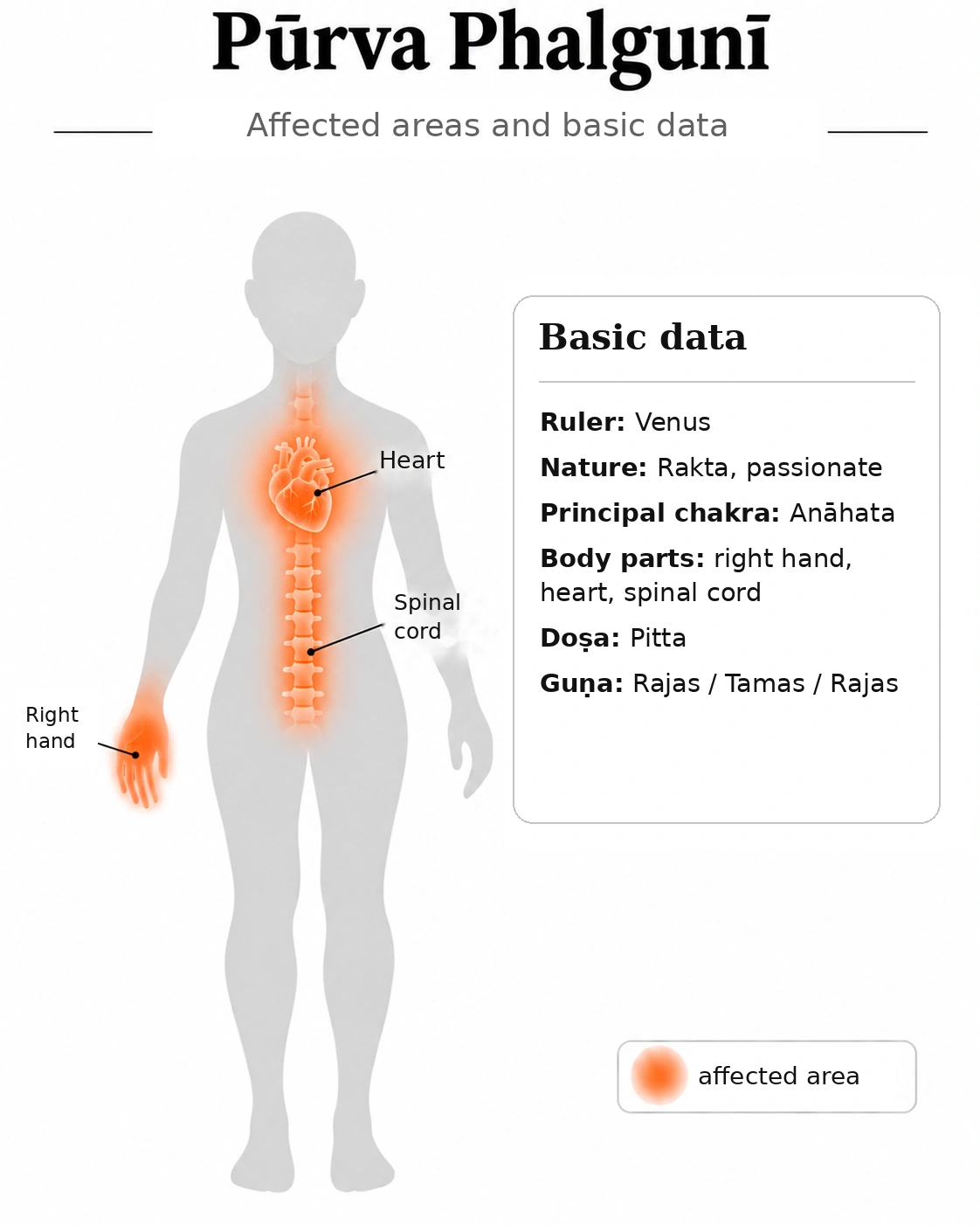
Pūrva Phalgunī — Mat and Chair · 14-T / 14-C
Reading and practising
Each practice presents three postures — Support, Target and Integration — followed by ten steps in order. A short closing meditation links the bodily experience with its inner meaning, the bonds that unite us and the way we live together.
Respecting your supports
Prepare a quiet space and stable equipment. If using two chairs, first check that neither can slide or tip and that the path between them is clear. Do not transfer weight unless that stability is assured. Keep breathing freely; in case of pain or loss of balance, return to a safe position.
Practice calendar · 2026–2027
All three kriyās may be practised at any time, according to the body's needs and capacities. The periods below are symbolic resonances that may help guide your choice of practice; they are not obligations.
Periods of resonance
| Nakṣatra | Gesture | Period and orientation |
|---|---|---|
| 10 · Maghā | Cease, pass on | 31 Oct. 2026 – 24 Jan. 2027 — Jupiter in Maghā; Ketu remains there until 5 Dec. 2026. Handover, heritage and transmission. |
| 09 · Āśleṣā | Grasp and release | 5 Dec. 2026 – 14 Aug. 2027 — Ketu in Āśleṣā. Recognize attachments and learn to loosen the grip. |
| 09 · Āśleṣā | Grasp and release | 24 Jan. – 26 June 2027 — INTENSIFICATION: Jupiter joins Ketu in Āśleṣā. Stronger resonance for the work of letting go. |
| 10 · Maghā | Cease, pass on | 26 June – 30 Aug. 2027 — RETURN TO MAGHĀ: Jupiter returns to this nakshatra. Resume the work of handover and transmission. |
| 11 · Pūrva Phalgunī | Share | 30 Aug. – 4 Nov. 2027 — Jupiter in Pūrva Phalgunī. Sharing contributions and cooperation. |
These periods offer symbolic guidance: Āśleṣā — loosen the grip; Maghā — recognize the handover; Pūrva Phalgunī — share the effort.
Lunar windows · November 2026 to December 2027
Suggested calendar signposts for the three nakshatras. Within each column, the days refer to the specified month; transitions between months are written out.
Monthly lunar passages
| Nakṣatra | Nov.–Dec. 2026 | Jan.–Mar. 2027 | Apr.–June 2027 | July–Sept. 2027 | Oct.–Dec. 2027 |
|---|---|---|---|---|---|
| 09 · Āśleṣā | Nov. 2 ; 29–30 Dec. 26–27 |
Jan. 23–24 Feb. 19–20 Mar. 18–19 |
Apr. 15–16 May 12–13 June 8–9 |
July 6–7 Aug. 2–3 ; 30 Sept. 26–27 |
Oct. 23–24 Nov. 19–20 Dec. 17–18 |
| 10 · Maghā | Nov. 2–3 ; 30 Nov.–1 Dec. Dec. 27–28 |
Jan. 24 Feb. 20–21 Mar. 19–20 |
Apr. 16–17 May 13–14 June 9–10 |
July 7 Aug. 3–4 ; 30–31 Sept. 27–28 |
Oct. 24–25 Nov. 20–21 Dec. 18 |
| 11 · Pūrva Phalgunī | Nov. 3–4 Dec. 1–2 ; 28–29 |
Jan. 24–25 Feb. 21–22 Mar. 20–21 |
Apr. 17–18 May 14–15 June 10–11 |
July 7–8 Aug. 4–5 ; 31 Aug.–1 Sept. Sept. 28–29 |
Oct. 25–26 Nov. 21–22 Dec. 18–19 |
The gesture can also be practised outside these windows: choose the mat or chair version according to your supports, and keep your breathing comfortable.
12-T — Āśleṣā · mat
BIND
Kriyā reference plates
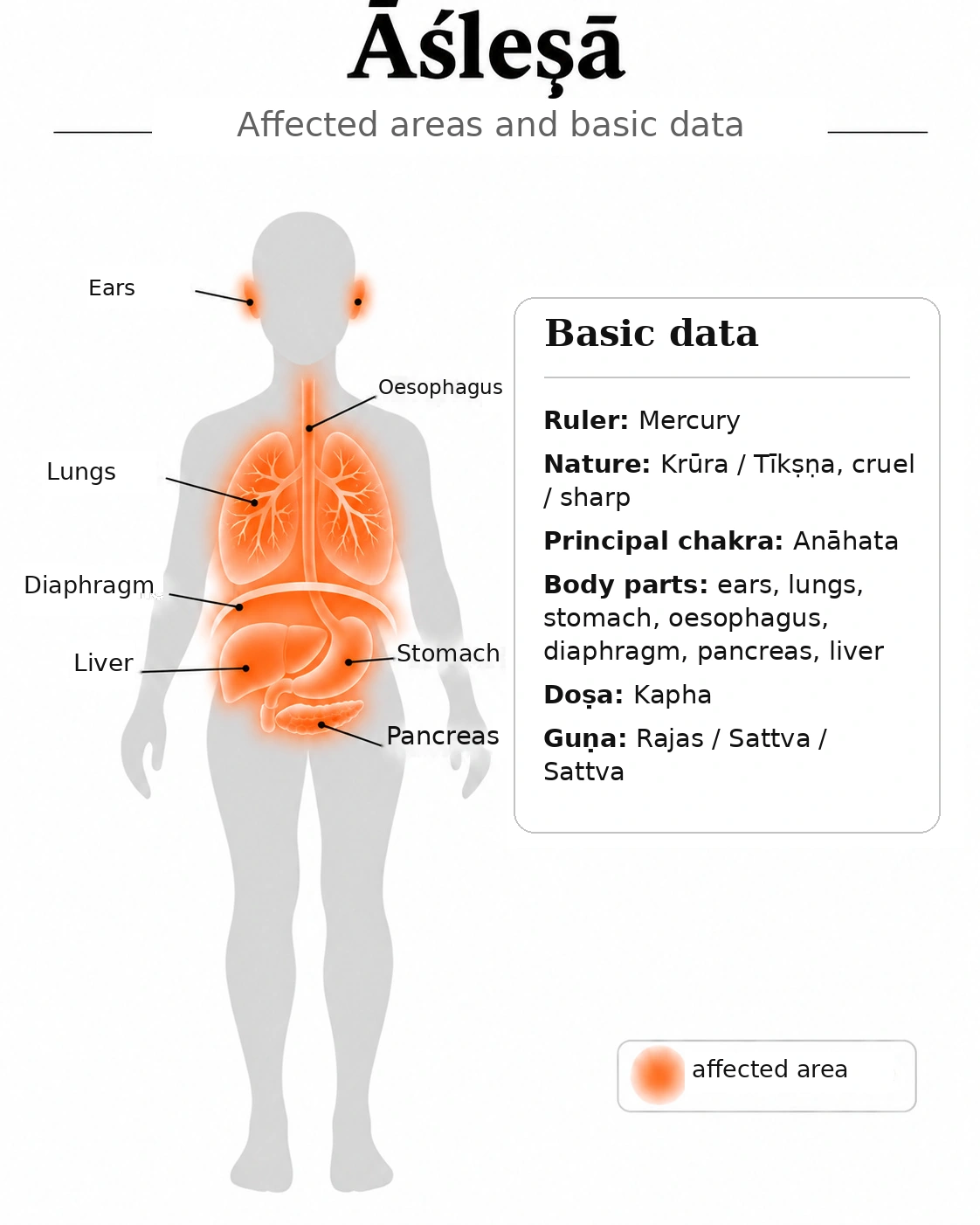
The three stages of the kriyā
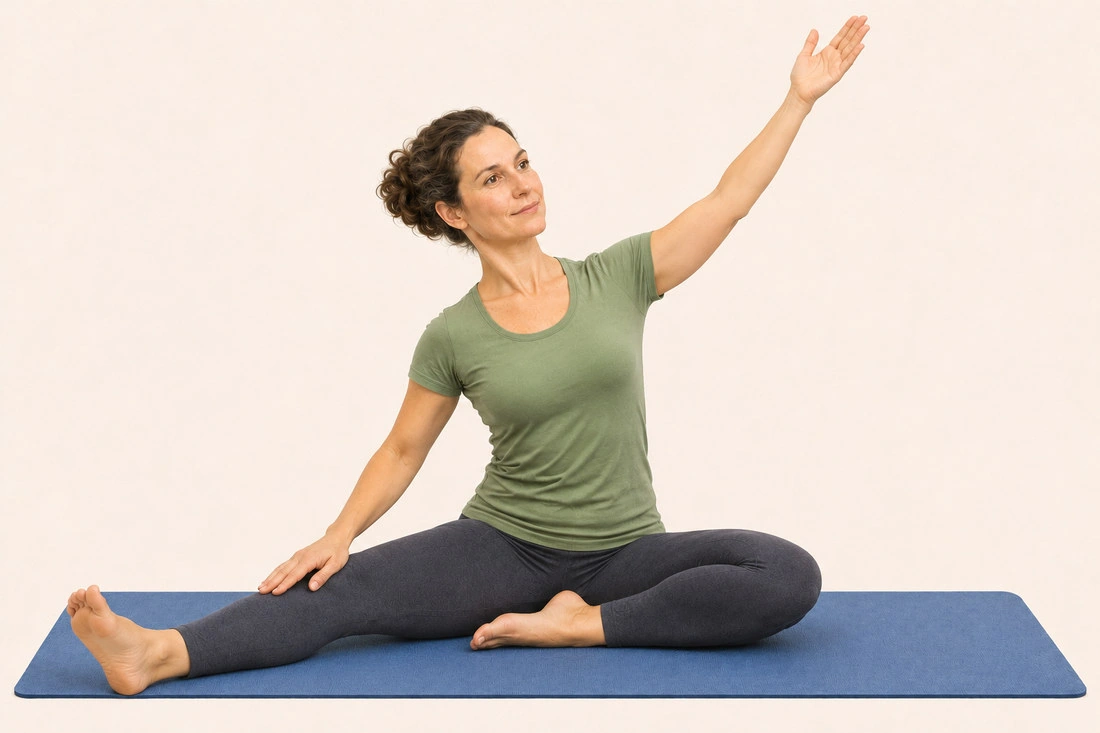
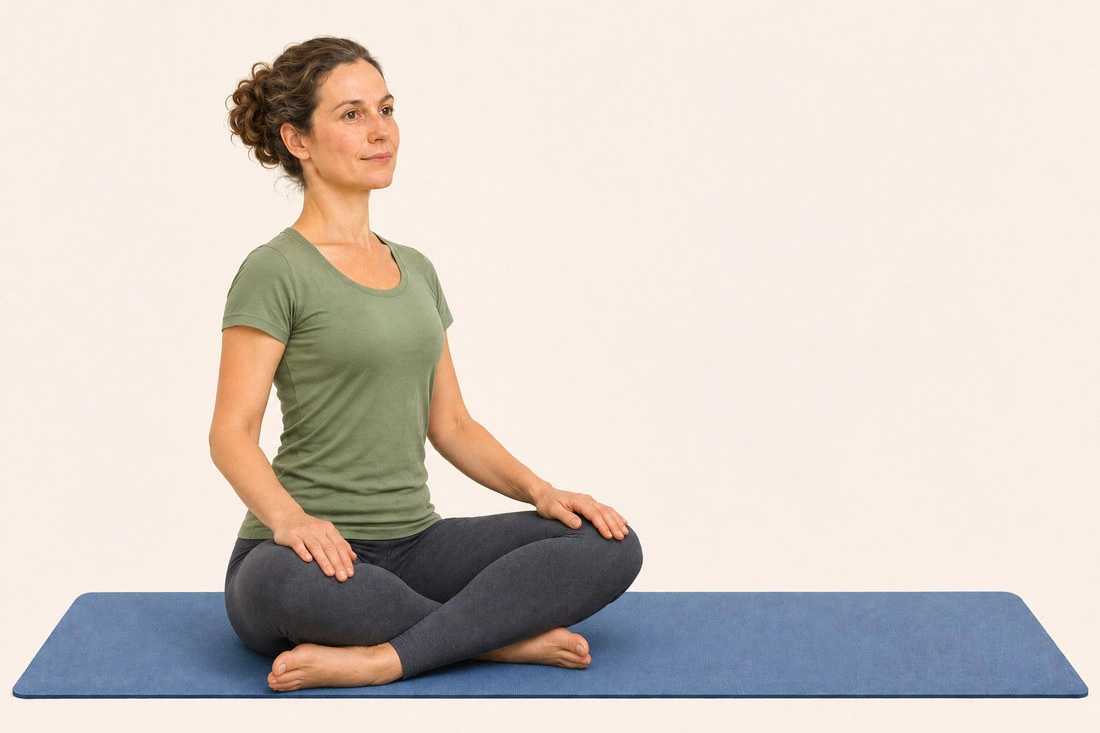
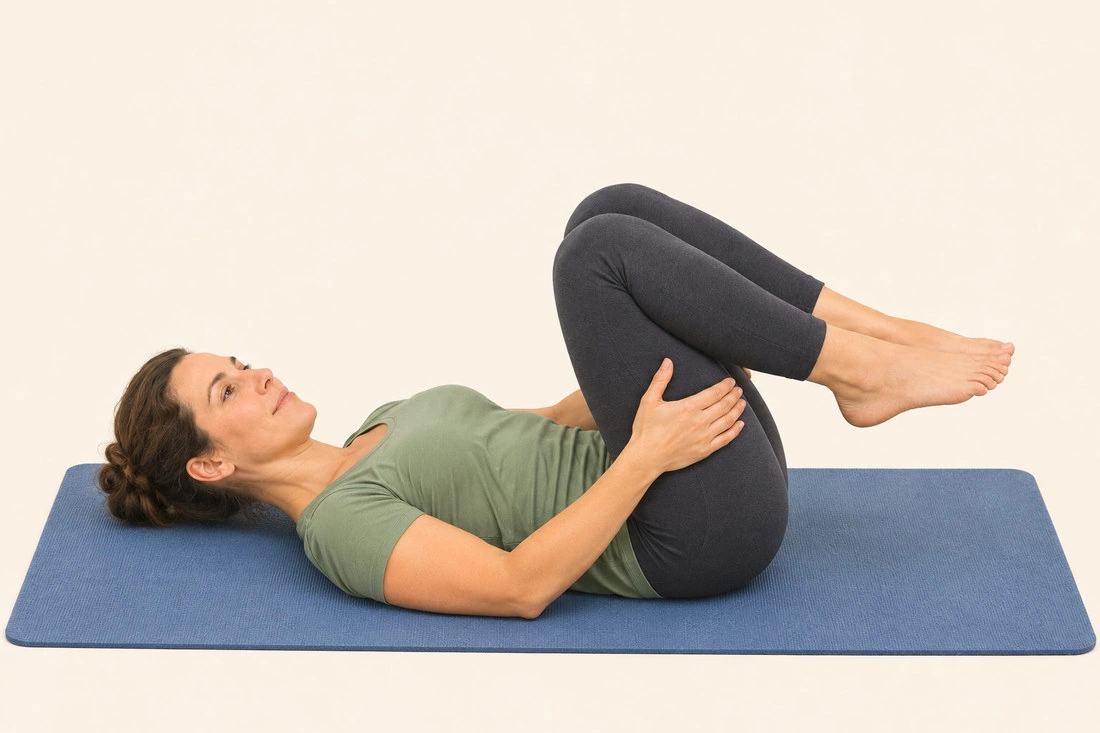
Step-by-step guidance
SUPPORT
Sit on the mat or on a firm raised surface, with the right leg opened slightly and the left leg bent without pulling. Feel the pelvis supported and both legs in a stable position. If the seat is stable and the right hand free, optionally form mṛgī mudrā (thumb to the right, ring finger to the left), then perform one gentle alternate-nostril cycle of Nāḍīśodhana with a slightly textured breath at the back of the throat, without retention. Afterwards, let the breath be free and put the hand down before looking for support. Attention recognizes the inner continuity of suṣumṇā without trying to keep a particular breathing pattern. If the seat is stable, briefly direct a soft gaze to the point between the eyebrows (bhrūmadhya-dṛṣṭi). Then let the eyes rest ahead and Śāmbhavī mudrā turn attention inward, towards the ears and upper belly. Relax the eyes. The preparatory breathing practice is complete.
Rest the right palm on the upper part of your own thigh. Recognize this contact as an available support, not a grip meant to pull the trunk. The palm touches the thigh while the pelvis remains supported. Let the breath accompany this first relationship without changing the body's position. The link is prepared through this simple contact.
Raise the left arm to a comfortable height, then allow a gentle exhale to accompany a small bend of the trunk to the right. The right palm remains in contact with the thigh. It helps organize the movement without pulling the chest. Feel the left side lengthen slightly while the pelvis stays supported. The breath passes through this direction without controlling its range. Return to the centre with whatever breath is available, even if another breath is needed.
Make the same small side bend just once more, without trying to go farther. The left arm accompanies the movement; the right hand remains available on the thigh. The breath stays continuous. The grip is experienced in its actual function: it accompanies a direction and makes it possible to return. Do not deepen the bend to feel the connection more strongly.
TARGET
From this second small side bend, begin bringing the chest back towards the centre. Keep the right palm available for as long as it helps organize the return. Let breathing accompany this straightening, taking as many breaths as needed. Do not remove the hand prematurely on the pretext that the gesture ought to end. The hand remains useful until the trunk has actually returned to the axis.
Once the chest is facing forward again, let the left arm come down. Then gradually reduce the pressure of the right palm, but only when it is no longer contributing to support. Feel this transition: the hand was useful, and can now become light. The breath may become quieter as the fingers release, without determining how fast they do so. The relationship to support remains even when the pressure stops.
Once the hands are available again, gently release the legs and return to a simple seated position. Let as many breaths as needed accompany this change. The pelvis remains supported; the thighs and feet find a position that no longer calls for the previous bend. The breath may become subtler. The grip has fulfilled its purpose; there is no need to re-establish it. If the hands are free in this settled seat, thumb and index finger may lightly brush for just one breath in Jñāna mudrā, without squeezing. Release the fingers before using the hands to move down onto the back.
INTEGRATION
With the help of the hands, gently move through one side of the pelvis to come to rest on the back. Let the breath accompany the transfers without imposing a slower pace. Once the back is received by the mat, feel that the arms and legs no longer have to maintain the previous relationship. The breath may become quieter without the body having to manufacture a new sensation of release.
Resting on your back, bring the knees a little closer to the belly if that remains comfortable. The hands may support the backs of the thighs without pulling. Receive this closeness briefly, then set the feet down one after the other, breathing at your own pace. Let the palms open and return to rest. Allow the breath to become almost silent, then return to its natural course. The back remains supported. The legs no longer need to draw in, and the hands have no grip left to exert. No contraction of the perineum, belly or throat is added to represent Mūla bandha or Śakticālana. The connection was experienced and then released. Support remains without any need to tighten.
Closing guided meditation
The hand let go of its grip; the side of the body and the pelvis returned to rest. An attachment can sometimes last after its reason for existing has disappeared. Here the connection was felt, then undone without abruptness. Staying close does not require holding tight.
Silence
12-C — Āśleṣā · chair
BIND
Kriyā reference plates
The three stages of the kriyā
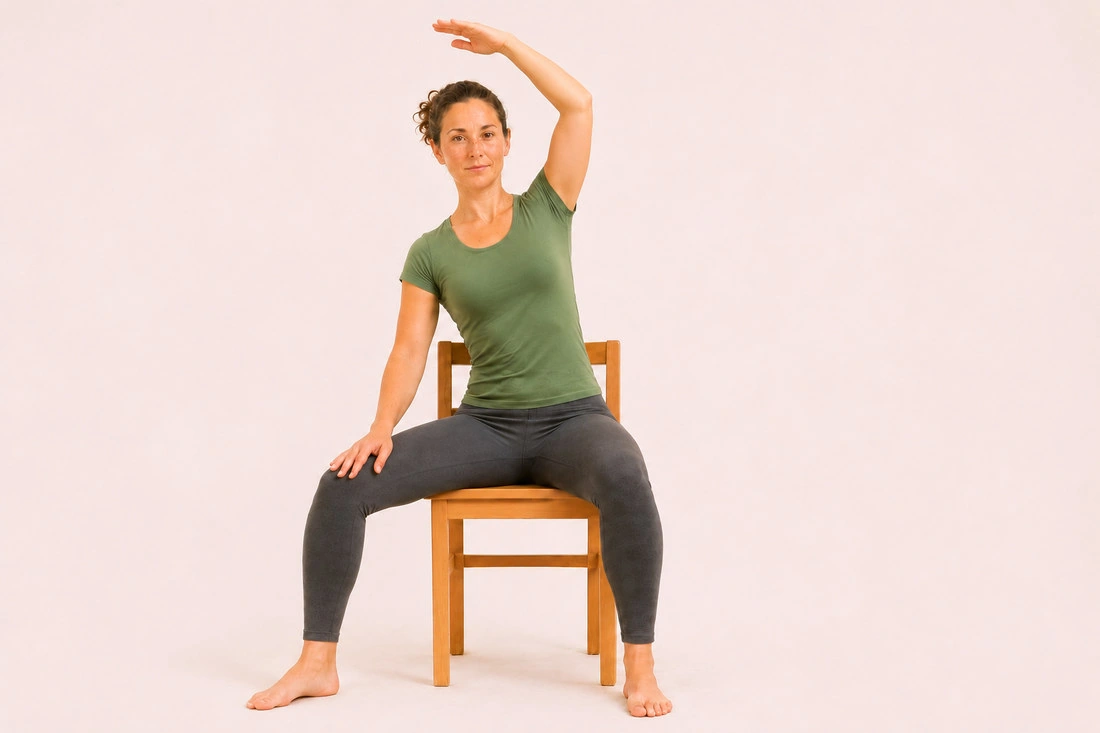
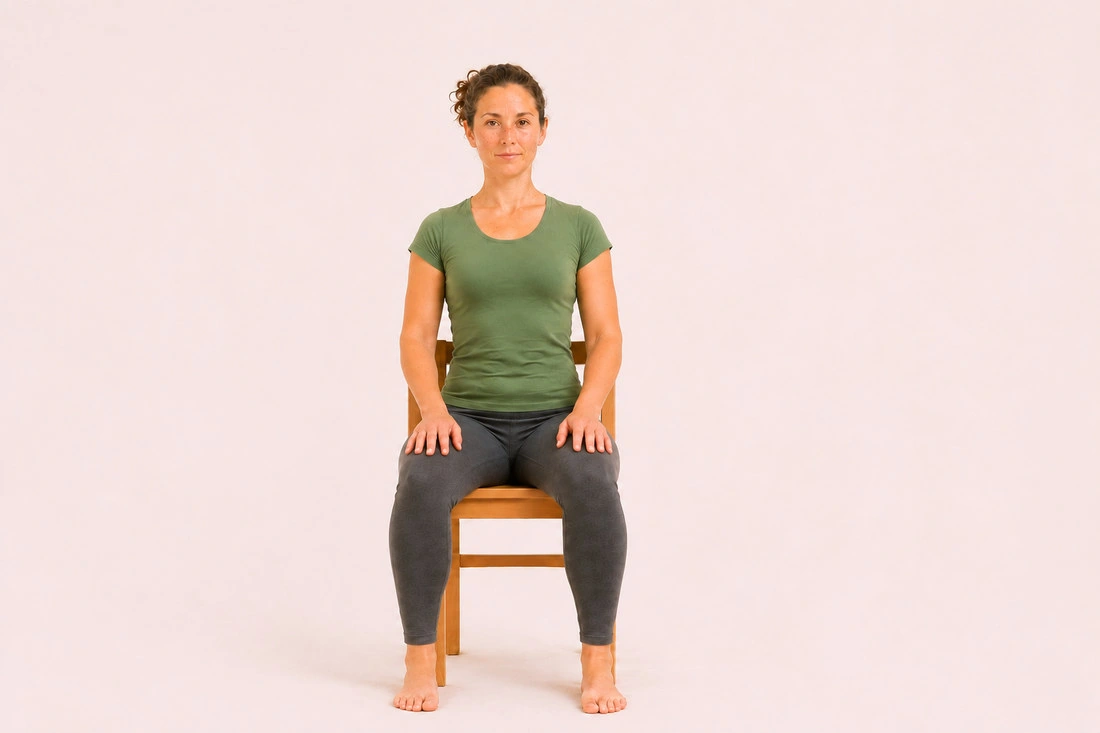
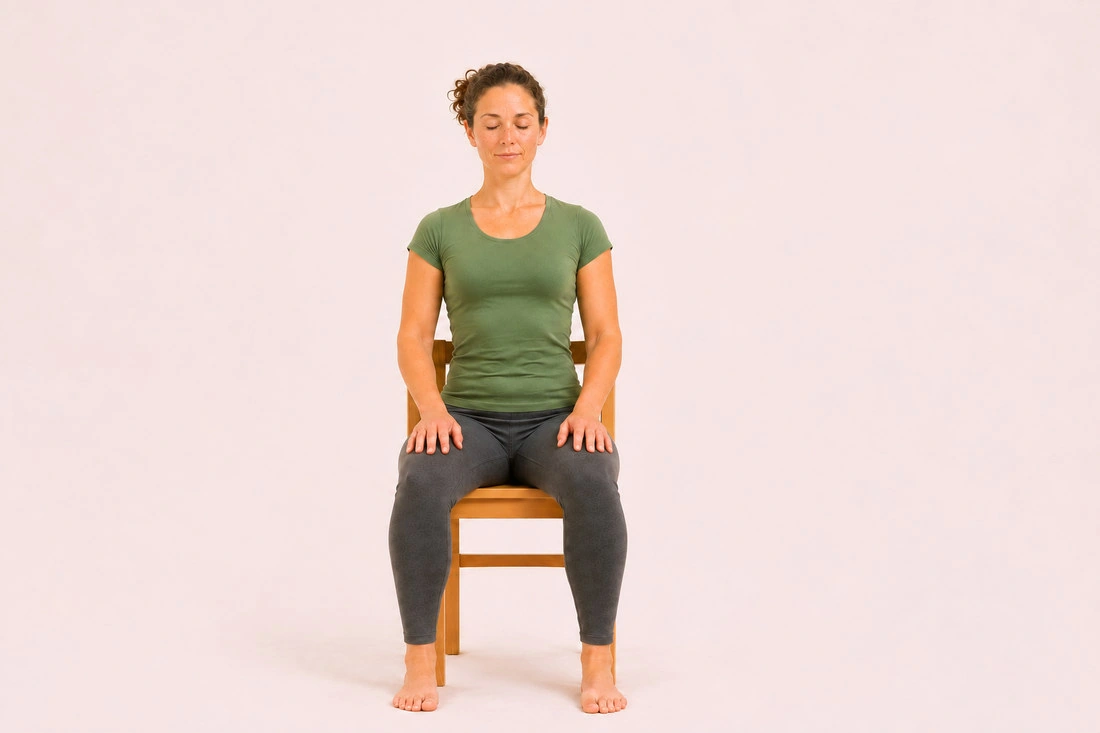
Step-by-step guidance
SUPPORT
Sit facing forward with the pelvis fully supported by the chair and both feet on the floor. Move the right foot slightly to the right, lifting it if necessary rather than sliding it. Recognize the supports of the pelvis and feet. If the right hand is free and the seat is supporting the pelvis well, optionally form mṛgī mudrā (thumb to the right, ring finger to the left) for one short round of Nāḍīśodhana with a slightly textured breath at the back of the throat, without retention. Finish the alternate-nostril breathing and rest the hands. Bring attention towards the inner axis of suṣumṇā. The supports are ready for the first side bend.
Place the right palm on the upper part of your own thigh. Feel this contact without gripping the leg or pushing to move the trunk. The hand becomes a support that is available. The pelvis remains received by the chair. Let the breath accompany this relationship without trying to strengthen it. The contact prepares a help without tension for the bend to come.
Raise the left arm only to an accessible height. On a gentle exhale, lean the trunk very slightly to the right. The right palm accompanies the gesture without pulling. The pelvis continues to support the body. Allow the breath to pass through this small direction without making the movement larger. Return to the centre with as many breaths as needed, keeping the right hand available on the thigh.
Make the same small bend to the right just once more. The left arm accompanies the familiar direction; the right hand remains in contact with the thigh. This repetition keeps the same small range. The breath stays gentle. The grip is genuinely felt in its function of accompanying the movement.
TARGET
From this second bend, begin to bring the trunk gently back into an upright seated position. Keep the right palm on the thigh for as long as it helps with the return. The breath accompanies this straightening. If several breaths are needed, let them come. Do not rush the gesture in order to free the hand sooner. The hand remains available until the trunk is back in its axis.
Once the chest is facing forward, let the left arm come down. The right palm can now reduce its pressure, provided it is no longer bearing any weight. Feel the instant when contact is still possible though the hand's effort has become unnecessary. The breath may become quieter during this release of load. Do not slow the exhale to prolong the letting go, nor open the fingers before it is appropriate. The grip ends without the seat ceasing to support the body.
Gently bring the right foot back under its knee, using any aids that make this easier. Rest both hands on the thighs. The pelvis remains supported; the feet find a comfortable base once again. Let the breath become quieter. The release is complete; no further bend is needed to check it.
INTEGRATION
Stay in the same stable seated position. If it helps, let the backrest gently receive the back without lifting the feet from their base. The hands remain resting. If they are not carrying any load, thumb and index finger may brush for one breath in Jñāna mudrā without squeezing, then the fingers open again. Feel the difference between the grip that was needed before and the supports still present. The breath may become almost silent. Its pace may settle when the body no longer has to organize a return. The connection has changed; it has not been broken abruptly.
Receive the weight of the pelvis on the seat and that of the feet on the floor. Keep the fingers open. The arms no longer need to accompany the side bend. If the seated position remains stable, briefly direct a soft gaze to the point between the eyebrows (bhrūmadhya-dṛṣṭi). Then allow the eyes to rest peacefully ahead and the inward attention of Śāmbhavī mudrā to turn towards the ears and upper belly. Relax the eyes. The breath may become almost silent or return to spontaneous breathing. Add no contraction of the perineum, belly or throat to represent Mūla bandha or Śakticālana. The hand no longer needs to hold on. The seat and floor continue to carry the body. The release is complete; the living relationship remains.
Closing guided meditation
The hand helping the side bend relaxed at the right moment; the seat still supports the body. Sometimes we confuse holding something dear with holding it back. The gesture showed another way: releasing a grip that is no longer needed without leaving the living support.
Silence
13-T — Maghā · mat
RELEASE
Kriyā reference plates
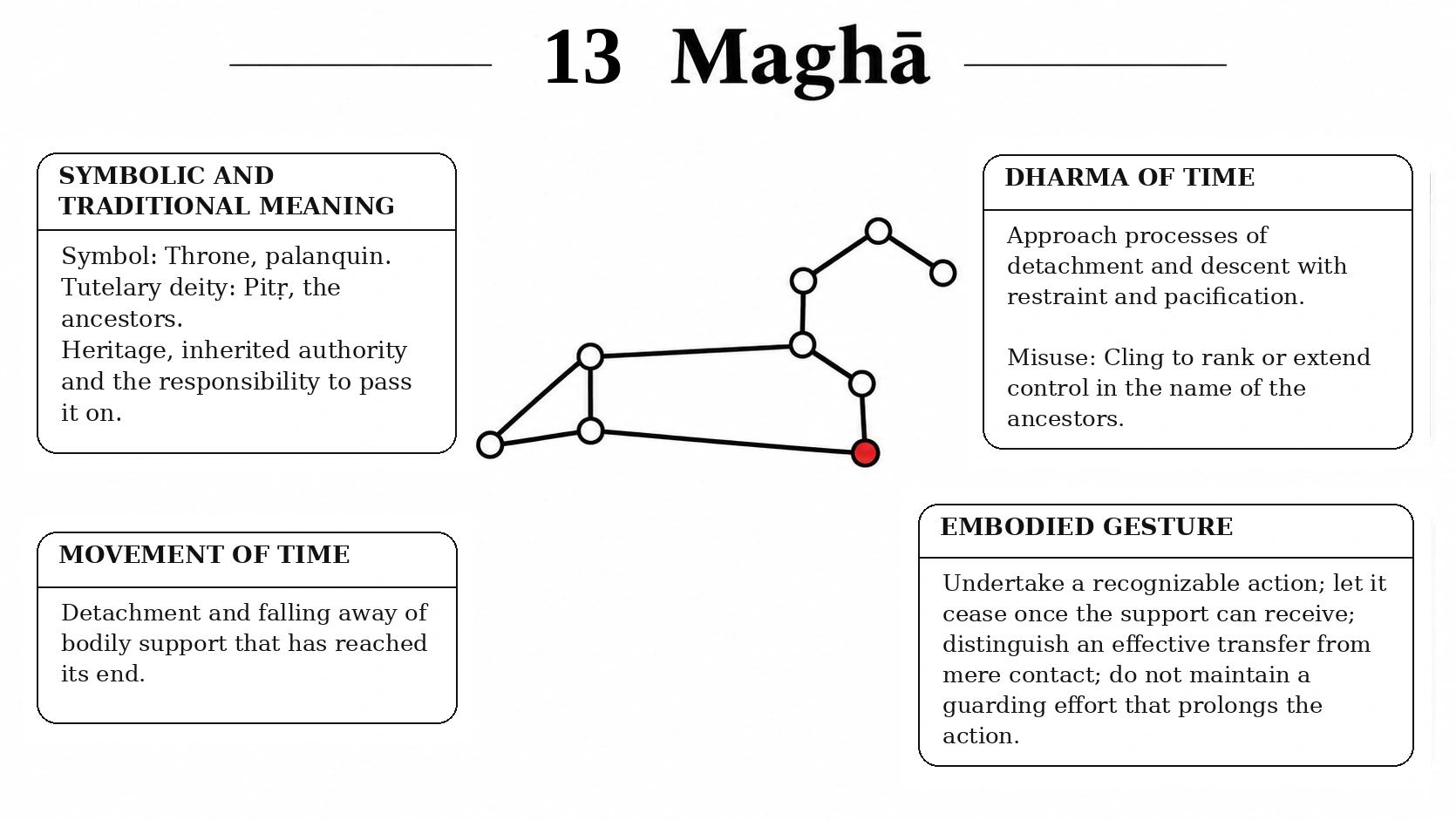
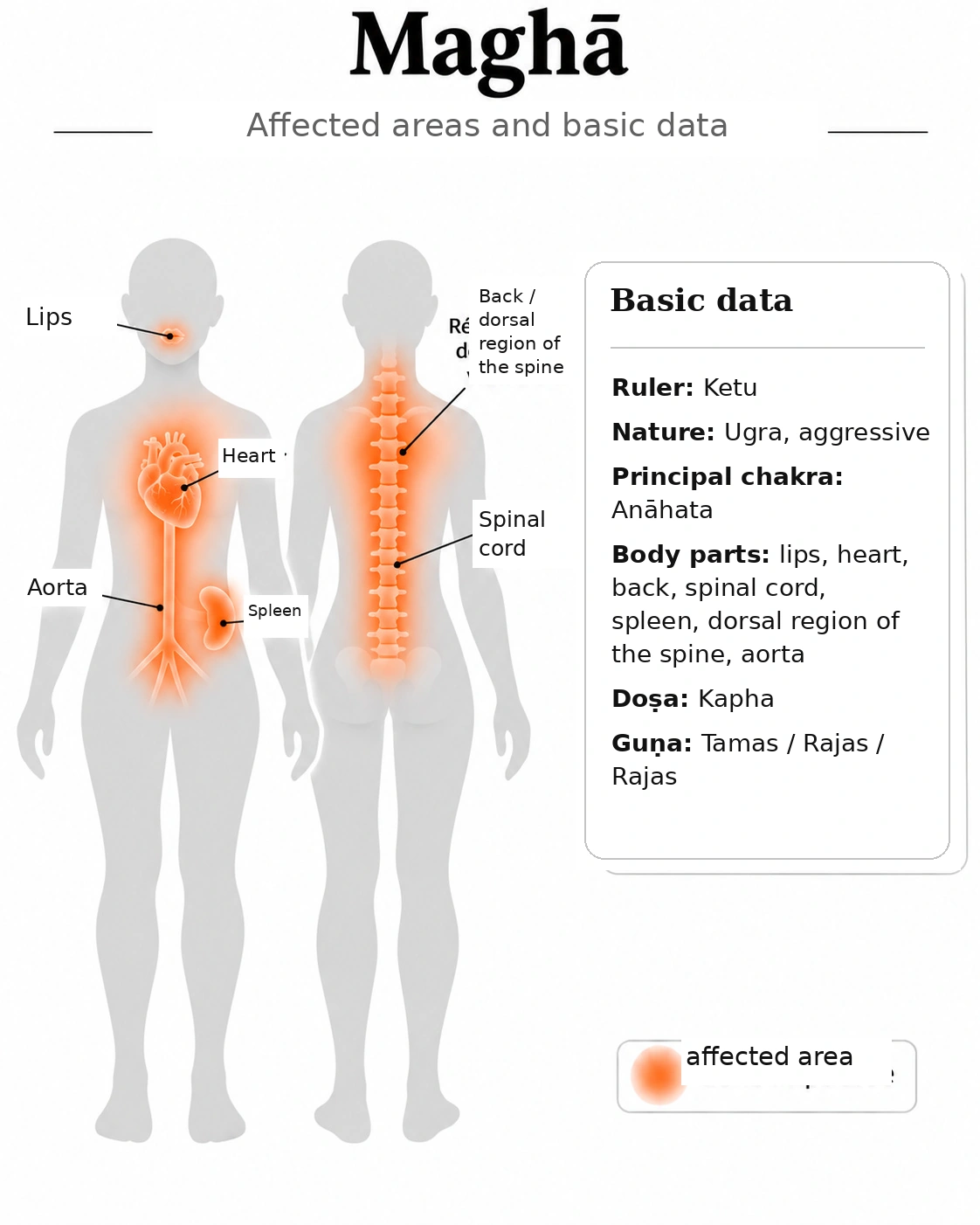
The three stages of the kriyā
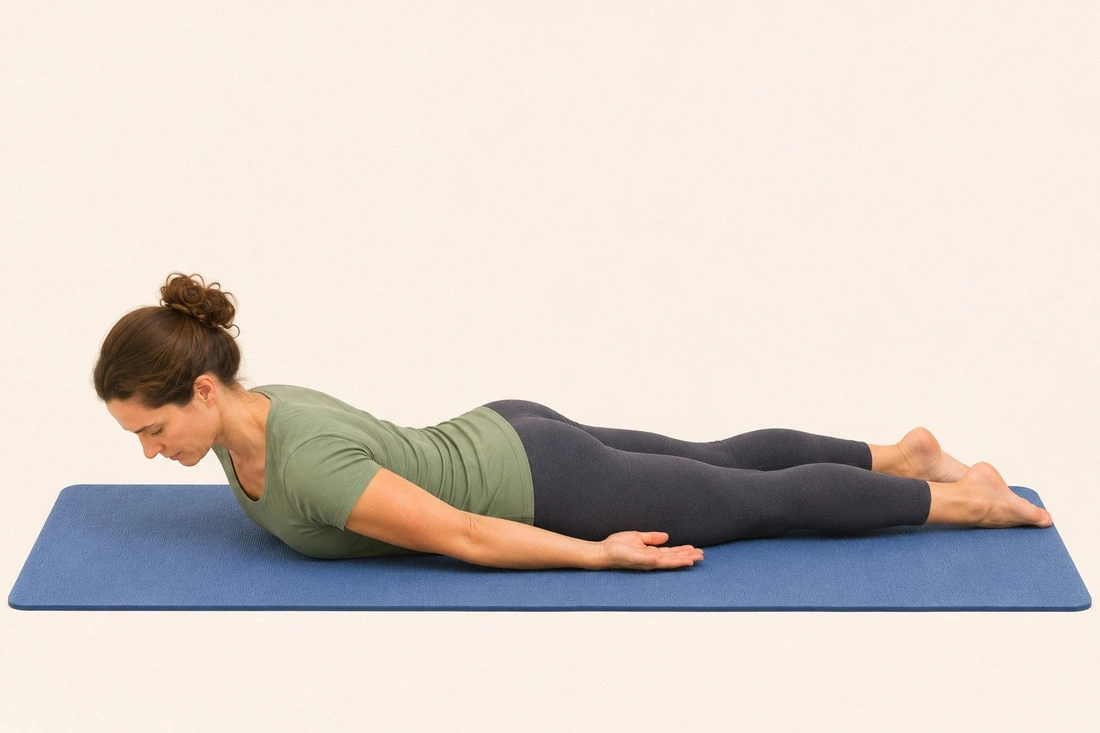
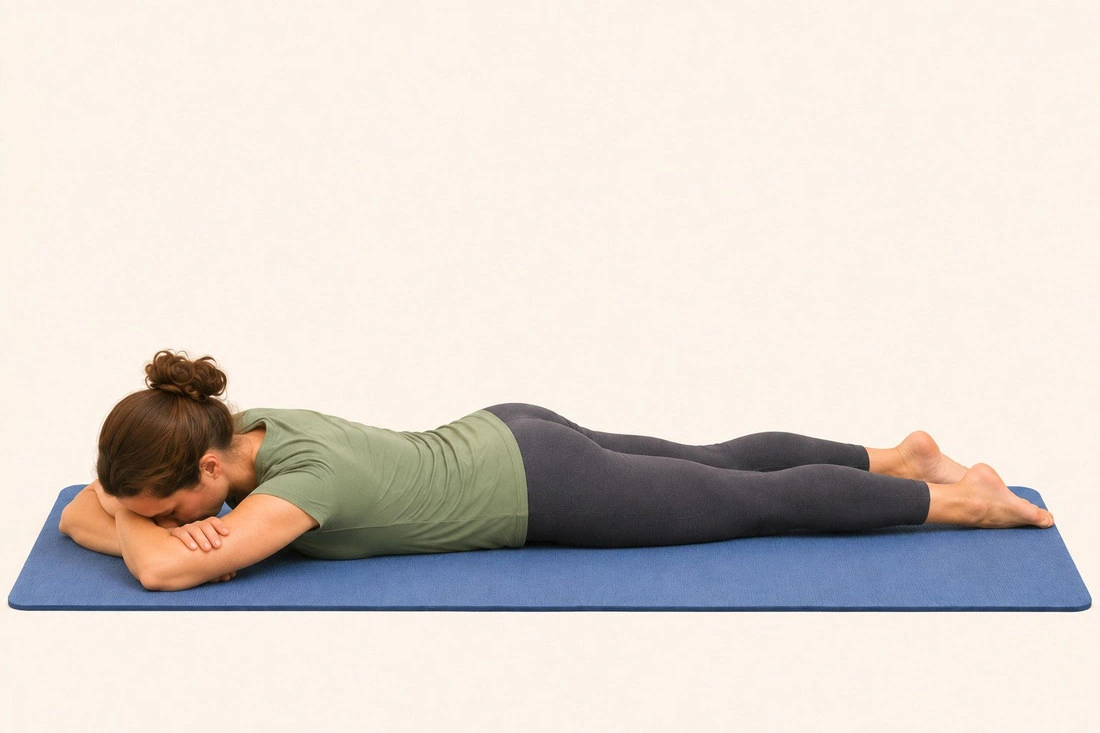
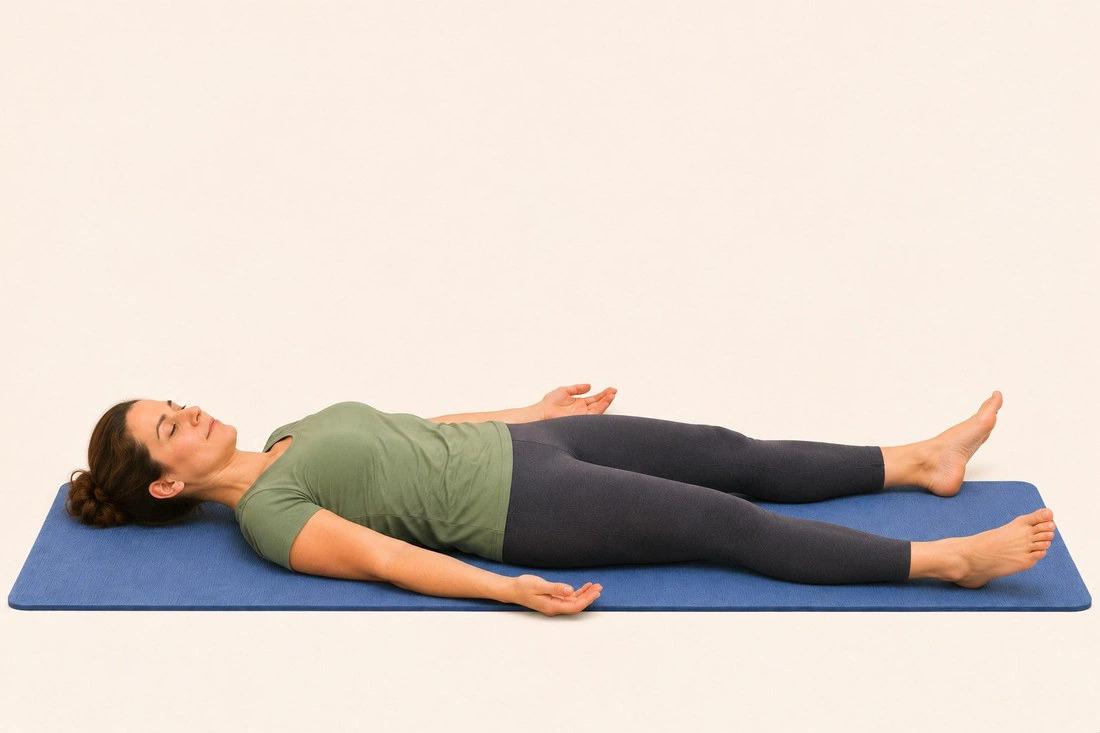
Step-by-step guidance
SUPPORT
Come to rest on your belly by turning through one side, with the help of your forearms. Let the pelvis, belly and legs meet the mat. Feel which parts of the body are already supported. Do not hold the breath. If it remains easy, let the breath become slightly textured at the back of the throat. Attention may gather along the inner axis of suṣumṇā. The chest is still resting; the active holding has not yet begun.
Make room for your head and place the arms close to the body, palms turned towards the thighs. On an easy inhale, let the chest find a little space without yet trying to lift it. Notice the muscles of the upper back that will be able to take part in the action. Keep the head aligned, without thrusting the chin forward. The breath accompanies this preparation; it is not a store of air to be saved for the effort.
On a comfortable inhale, lift only the upper chest a few centimetres while the legs remain on the mat. Feel the upper back making a real effort. Let the breath renew itself if necessary; do not hold the air to maintain the posture. Then gently guide the chest back towards the mat with an available exhale. This first small lift and its return have been experienced.
After a short rest, find the same small lift of the chest once more, and only once. Do not rise higher or try to prolong the hold. Feel the upper back working again, without pushing the head or deepening the arch of the body. The breath may remain perceptible if that stays easy, but it must not turn the effort into breath-holding. The chest remains lifted briefly: the body is still carrying this action through its own effort.
TARGET
With an easy exhale, begin to guide the upper chest slowly towards the mat. Do not try to complete the descent in a single exhalation. If several breaths are needed, let them come. Notice the change in the load: the upper back still accompanies the return as the chest approaches its support. The breath may grow quieter without determining the speed of the descent. The chest has not yet been received; the useful effort is still present.
Only when the chest is actually resting on the mat, release the head and bring the forearms in front of you to enter Makarāsana. Rest the forehead on the forearms, keeping the nose and mouth clear. Feel that the mat now receives the weight that the upper back had been holding. The mat truly supports the chest; only then may the effort lessen. If the face is free, the tongue may briefly brush the front of the palate (adapted Khecarī), then relax without changing the breath. Imagine the seal of handing the burden to the ancestors as the symbolic possibility of entrusting a load to support without losing the value of what was accomplished. Breathing may become more discreet as the body ceases to hold itself up.
Remain in this rest for two or three natural breaths. Notice whether the upper back still maintains a slight vigilance, as though it had to keep holding the chest up. Allow that activity to subside gradually. There is no need to press the chest into the mat to obtain more support. The breath may become quieter, then give way to spontaneous breathing. The holding ends when the mat fully carries the chest.
INTEGRATION
Gently free the head before changing the support of either arm. With the help of your hands, turn onto one side and then roll onto your back, without twisting the neck abruptly. Let as many breaths as necessary accompany this transition. Do not impose a slowed breath while the arms and trunk are still carrying out the transfer. The body leaves Makarāsana to find broader support in Śavāsana.
In supine rest, lengthen the legs if that is comfortable; otherwise keep the knees bent and feet on the floor. Allow the mat to carry the head, back, pelvis and legs. Breathing may become almost silent and settle at its own pace. Inner attention remains available without requiring a new contraction. If the eyes remain gently open in supine rest, let them look towards the ceiling without fixing on anything as attention turns inward: Śāmbhavī accompanies the transfer of the effort to the mat. Otherwise, simply let the eyes rest; no special state of absorption is sought. Laya, an inner dissolution, may symbolically illuminate this end of effort: there is no need to interrupt the air, seek a particular absorption, or produce an inner sound. The upper back has worked; the mat now supports the chest. Rest does not erase strength.
Closing guided meditation
The upper back worked to lift the chest a little; the mat now carries its weight. Inner strength can sometimes believe it must remain active to keep its value. Yet the handover has taken place. What was held can be entrusted, without being lost.
Silence
13-C — Maghā · chair
RELEASE
Kriyā reference plates
The three stages of the kriyā
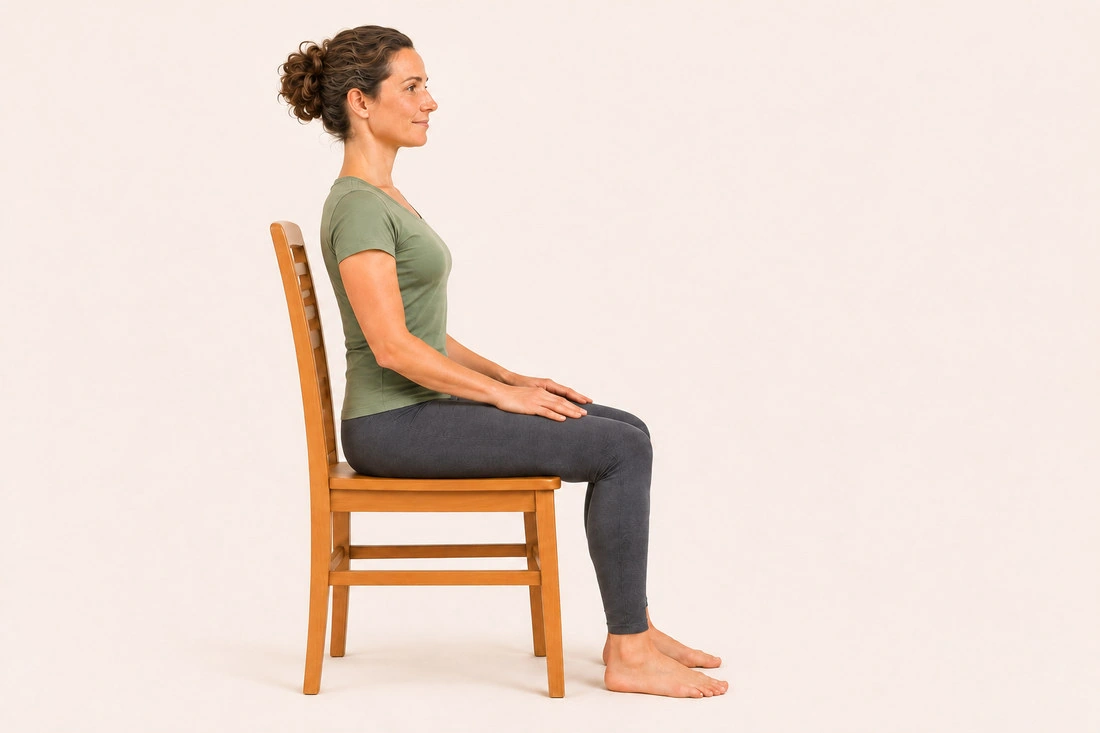
Step-by-step guidance
SUPPORT
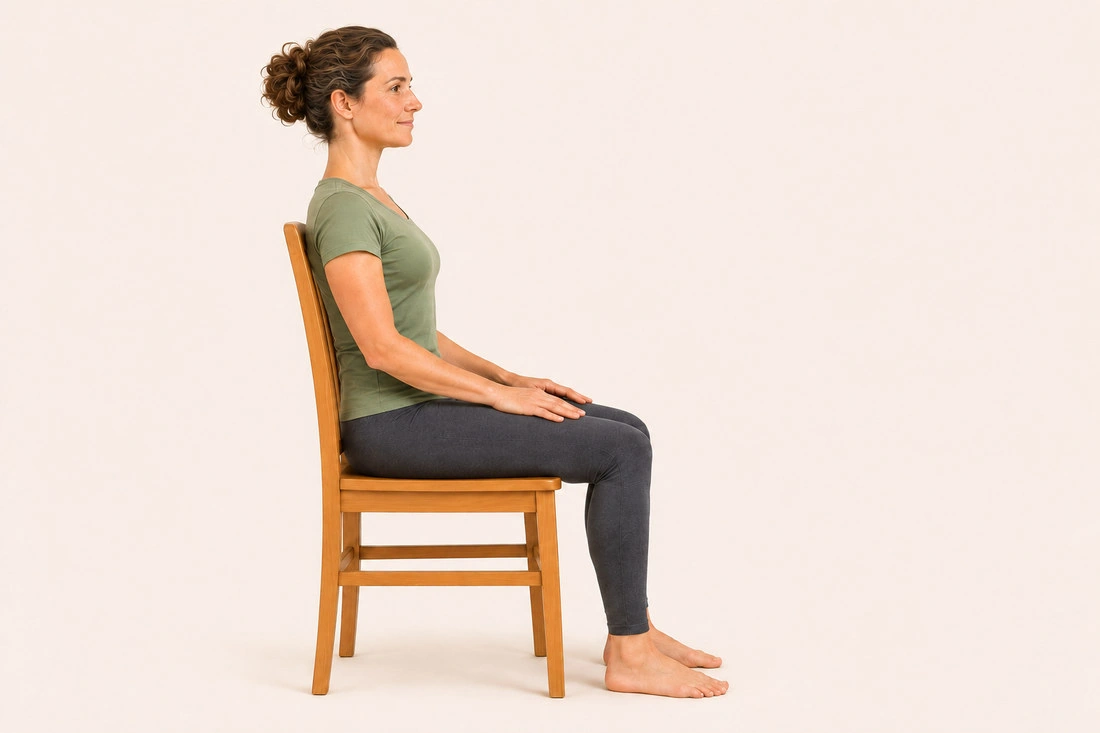
Sit with your feet on the floor and the pelvis supported, slightly forward of the backrest if this distance stays comfortable. Notice the supports already present: the feet and seat carry part of the body, while the back has not yet been received by the backrest. If the throat is free, inhale gently through the nose, then allow one exhale to become a very soft Bhrāmarī humming, lips closed, without extending the sound or emptying the lungs. Do not hold the breath. One cycle is enough. Allow the humming to end before any active holding begins. If this practice does not suit you, keep spontaneous breathing. The vibration ends before the back begins its active work.
Establish a slight active upright position: the trunk stands above the pelvis, with the head following gently, without searching for an arch or additional height. Feel the upper back taking a real part in maintaining this position. If comfortable, allow a softly perceptible breath, slightly textured at the back of the throat. Attention may recognize the inner axis of suṣumṇā. Do not hold the air to sit upright. The back is indeed holding itself a little away from the backrest.
Recognize what this position requires. If holding upright already costs too much effort, let the backrest receive the back; then, if still easy, move forward a smaller distance to find the same slight active holding just once more. If that renewed effort is uncomfortable, remain supported without continuing. Breathing accompanies these adjustments without deciding how long the effort must last. The aim is not to sit upright for a long time, but to recognize clearly the act of holding before the transfer.
From the accessible slight upright position, let the trunk gradually approach the backrest, keeping the pelvis on the seat. Maintain the organization needed to accompany this movement backwards. Do not drop the body's weight suddenly behind you. The breath may remain perceptible, renewing itself as needed during the movement. When the back meets the backrest, recognize that first contact. Touching the backrest does not yet necessarily mean that it bears the full weight of the trunk.
TARGET
Allow the backrest progressively to receive a real share of the trunk's weight. Distinguish between the back simply touching the backrest and the moment when the backrest actually begins to carry it. Keep whatever effort remains necessary until the transfer is secure. Breathing accompanies this shift without speeding up the backward movement. The effort decreases only when the backrest genuinely starts to bear the load.
Once the backrest is truly bearing the back, let the voluntary activity of the upper back diminish. Stop sitting upright as though the backrest were not there. If the back is really supported, let the gaze remain natural and briefly gather attention inward (adapted Śāmbhavī), without testing the transfer again. Imagine a light gradually leaving the effort of the upper back and settling in the chest as support is received. An exhale may accompany this reduction of effort, but must not be prolonged to make it happen. The breath may grow quieter. Active holding ends as the backrest takes over the load.
Recognize whether the trunk is really supported and whether the work of holding has come to an end. Feel the pelvis on the seat, feet on the floor and back entrusted to the backrest. Notice whether a residual tension persists in the upper back, as though the body were still trying to hold itself alone. Allow it to subside without pressing harder into the backrest. If the support has not genuinely been received, do not pretend the handover is complete: return to a stable, comfortable position. In that case, remain at rest with the necessary aids and go to the alternative meditation, without continuing steps 8 and 9. Breathing remains free during this recognition.
INTEGRATION
Remain in the supported seated position, feet planted and hands at rest. Do not move forward again to prove that upright holding could be repeated. Let the breath become progressively subtler if the chest can breathe freely against the backrest. The function of active holding may remain complete.
Let the backrest fulfil its role, without trying to press the back farther into it. Feel the chest breathe while the upper back no longer has to maintain the posture on its own. The breath may become almost silent and then natural again. Laya, understood here as a symbolic image of dissolution, suggests letting the effort merge into available support; it is not an invitation to force absorption or manufacture an inner sound. If the seated position remains stable, briefly direct a gentle gaze to the point between the eyebrows (bhrūmadhya-dṛṣṭi). Then let the eyes rest calmly ahead, with the inward attention of Śāmbhavī mudrā towards the upper back and chest. As the backrest bears the trunk, the tongue may briefly touch the front of the palate during this same nasal breath (adapted Khecarī), then relax without seeking laya. Relax the eyes. The backrest continues to carry the body. There is no need for the trunk to straighten again to confirm its strength. The transfer is complete; the value of the action remains without its effort.
Closing guided meditation
The back straightened, then the backrest took its share. The chest can breathe without having to hold itself up alone. Perhaps this evokes the relief of finally entrusting a burden to support. Strength is not diminished when it accepts being supported.
ALTERNATIVE MEDITATION · If the backrest did not receive the load
The backrest did not receive the expected load. The seat and floor remain supports, with the aids kept in place. Perhaps the wish persists to entrust what still needs to be held. A handover can wait. For now, the useful supports keep their place.
Silence
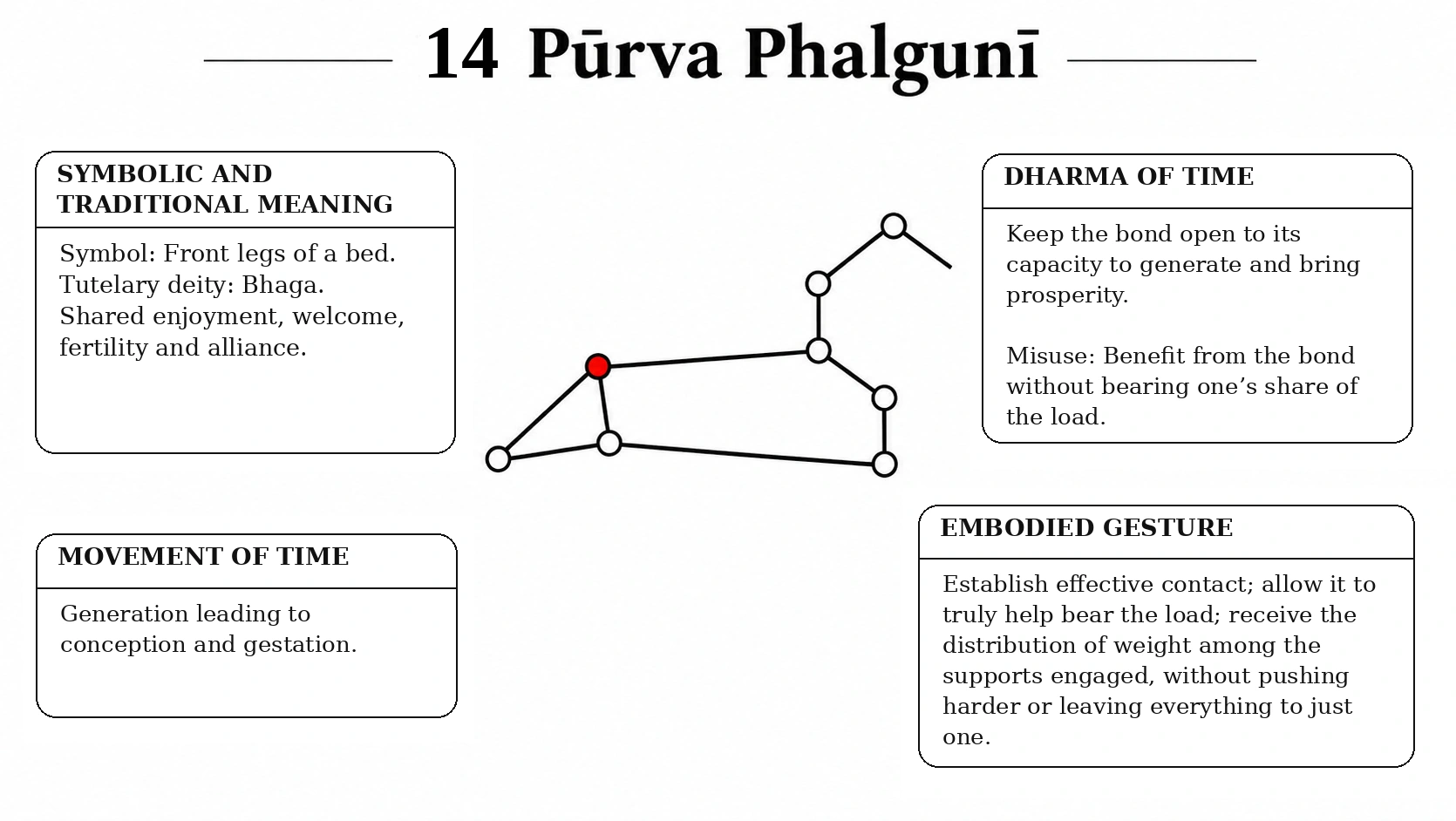
14-T — Pūrva Phalgunī · mat
GENERATE
Kriyā reference plates
The three stages of the kriyā
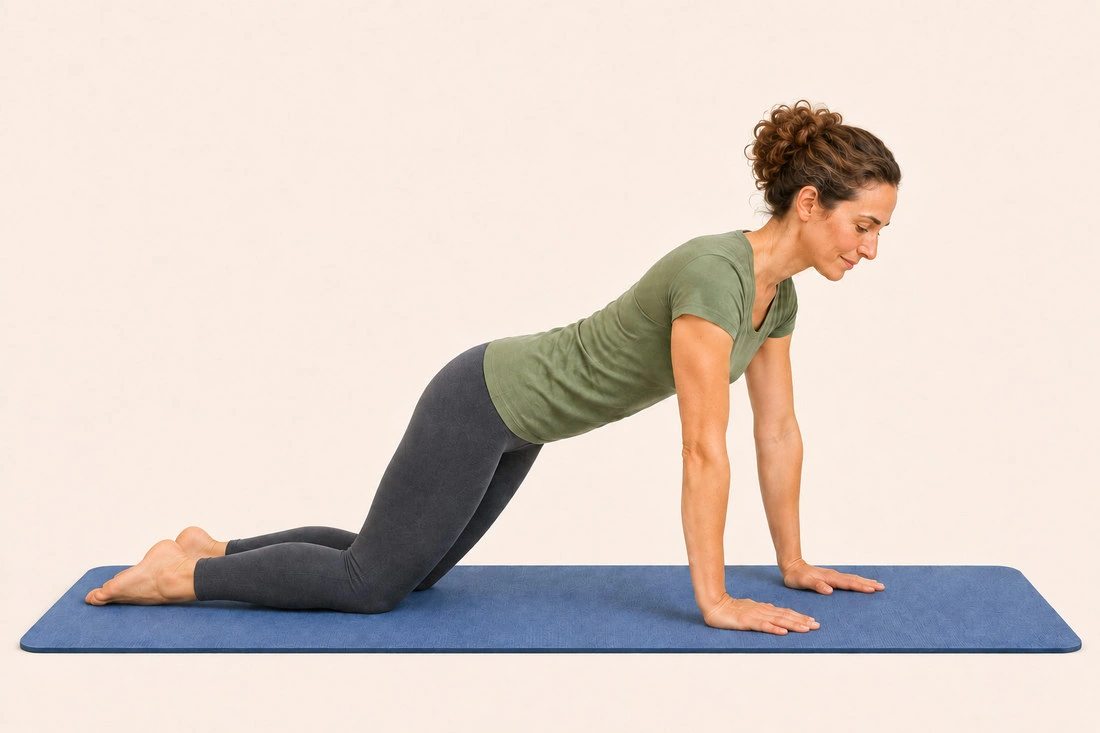
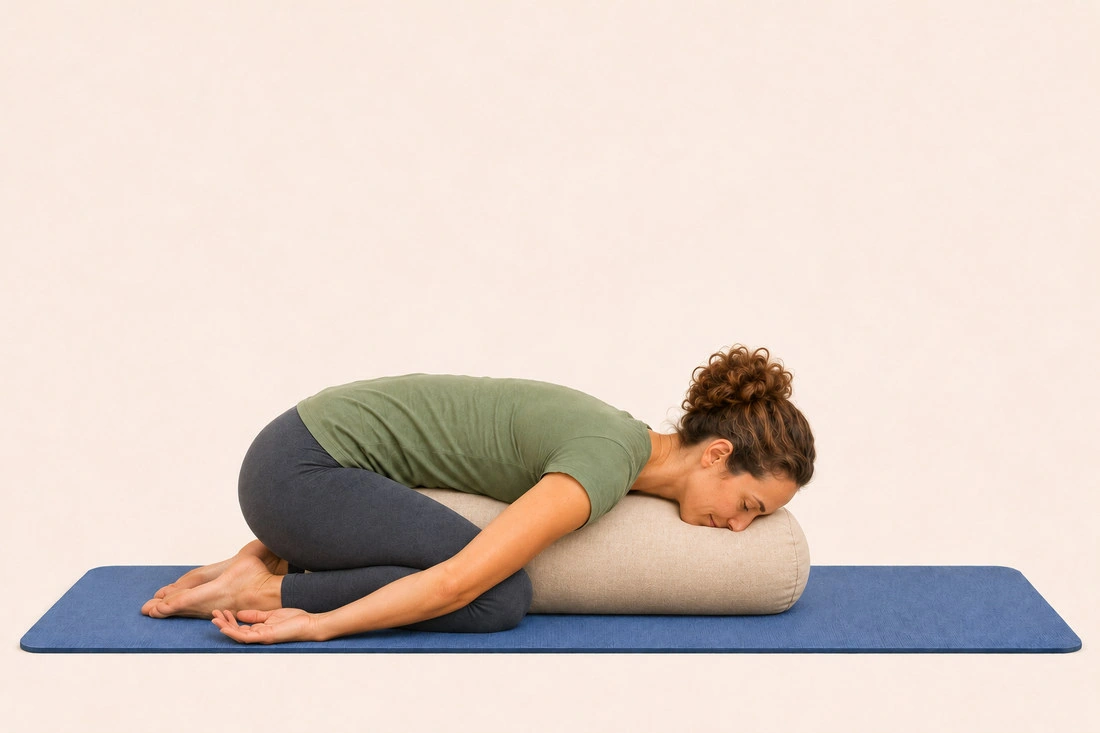
Step-by-step guidance
SUPPORT
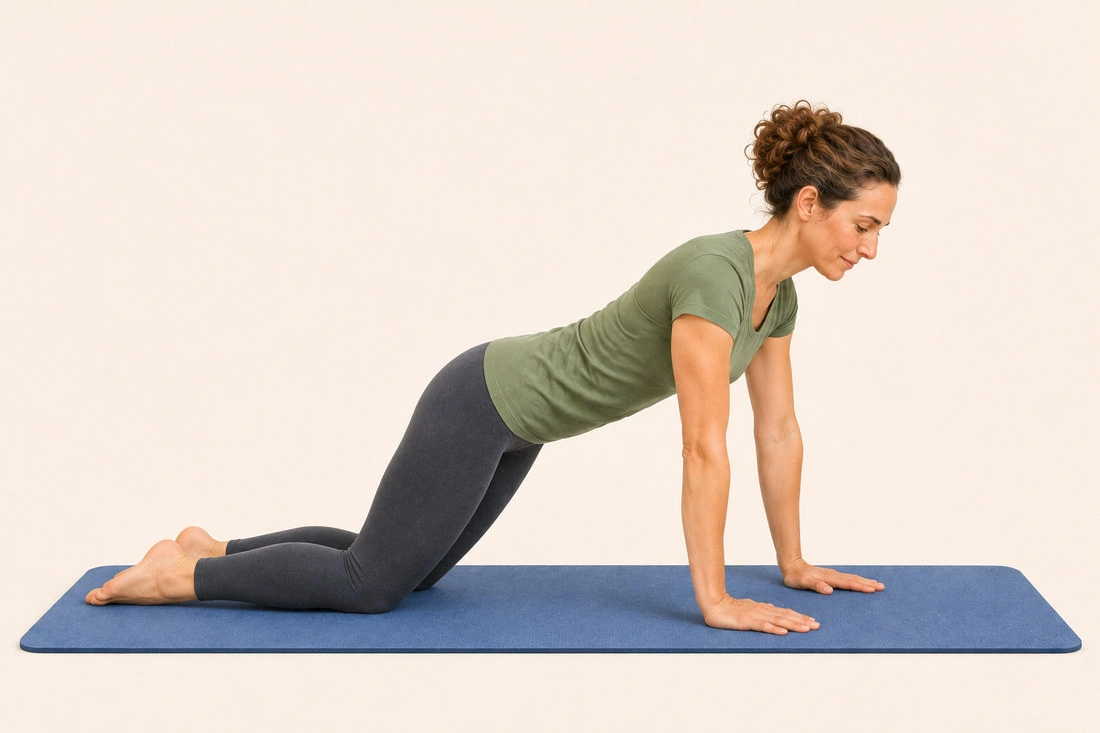
Come onto hands and knees by a route that is accessible to you. Place the palms comfortably apart, with relaxed fingers and knees well supported by the mat. Feel all four points of support contributing to the body's base before the plank has even been formed. Bring attention to the inner axis of suṣumṇā. The breath passes through the whole body. No limb is yet required to take more load than the others. Do not hold the breath. If it remains easy, let it become slightly textured at the back of the throat.
On a natural exhale, if one arises, move the knees slightly backwards to form a short plank on the knees. Organize a workable line from head to pelvis and on to knees, without hollowing the back or over-pushing the shoulders. Feel palms and knees bearing weight together. The breath may stay softly audible if that remains easy. Do not lengthen the exhale to maintain the shape; welcome the next inhale without abruptly moving the supports. Palms and knees have carried a first plank.
Gradually move the pelvis back towards the knees, keeping the hands available until the weight has truly returned to its base. Bring the knees back underneath the pelvis if needed, and receive a clear moment of rest. Let breathing accompany the return without an imposed rhythm. Recognize what the palms have just carried, without separating their contribution from that of the rest of the body.
Return to the same short knee plank once, and only once. Move the knees moderately backwards with the same organization of pelvis, back and shoulders. Do not increase the length or intensity of the posture. Let breathing renew itself at the pace needed; no retention is used to stabilize the plank. The palms and knees once again support the plank.
TARGET
In this second plank, feel especially how the right palm receives its share of the weight. Recognize its actual pressure against the mat without trying to push harder. The left hand and both knees continue carrying their own shares. No contribution is withdrawn to make the right hand's part more important. Bhaga, a figure of the share received and given, inspires the seal of the shared gift here. The breath remains available throughout the body, without being artificially directed towards any one hand.
Remain briefly in this distribution if shoulders, wrists and breathing are comfortable. Do not increase the push of the right hand or let all the weight shift to the left. Imagine prāṇa circulating between palms and knees as a load carried together. The breath may remain faintly perceptible. Inhalation and exhalation pass through a shared structure; they do not successively direct the right hand, then the left hand, then the knees. Each support keeps its function in this common load.
Recognize what this short duration brings to light. Perhaps there is a wish to hold longer, push harder through one hand, or let another support take almost all the load. Do not act on that wish. Let breathing continue freely. There is no need to tighten the belly, close the throat or hold the breath to portray a convergence of forces. When the distribution has been sufficiently felt, prepare to return before one support becomes exhausted. The shared strength has been experienced; it has nothing to prove through greater intensity.
INTEGRATION
Gradually move the pelvis backwards towards the knees without suddenly removing the hands. The palms continue to serve as supports for as long as the body bears weight on them. The knees progressively receive a different distribution of weight. Allow as many breaths as the movement requires. The breath may soften as the arms are genuinely unloaded. The plank is released in stages, without the palms withdrawing too soon.
If comfortable, come into Bālāsana, bringing the pelvis towards the heels only as far as accessible, with a resting support if needed. Otherwise, come to a stable resting seat by an assisted route. Allow hands, shoulders and knees to be freed from the particular effort of the plank. The breath may gradually settle, then become natural again. Do not add humming or another breathing technique. The shared participation has reached its end. Each support may rest without its contribution being erased.
Closing guided meditation
The hands and knees carried part of the body together before returning to rest. Sometimes one part of us would like to take on everything. Yet every support contributed without taking the place of the others. There is gentleness in this fair distribution.
Silence
14-C — Pūrva Phalgunī · chair
GENERATE
Kriyā reference plates
The three stages of the kriyā
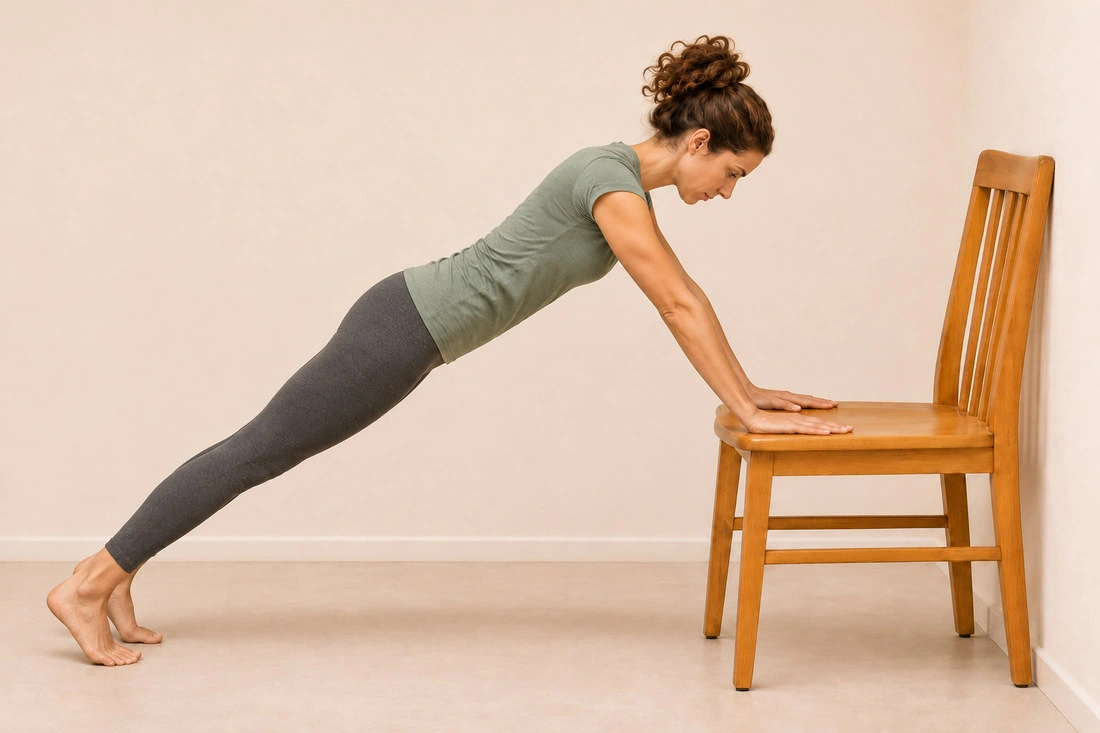
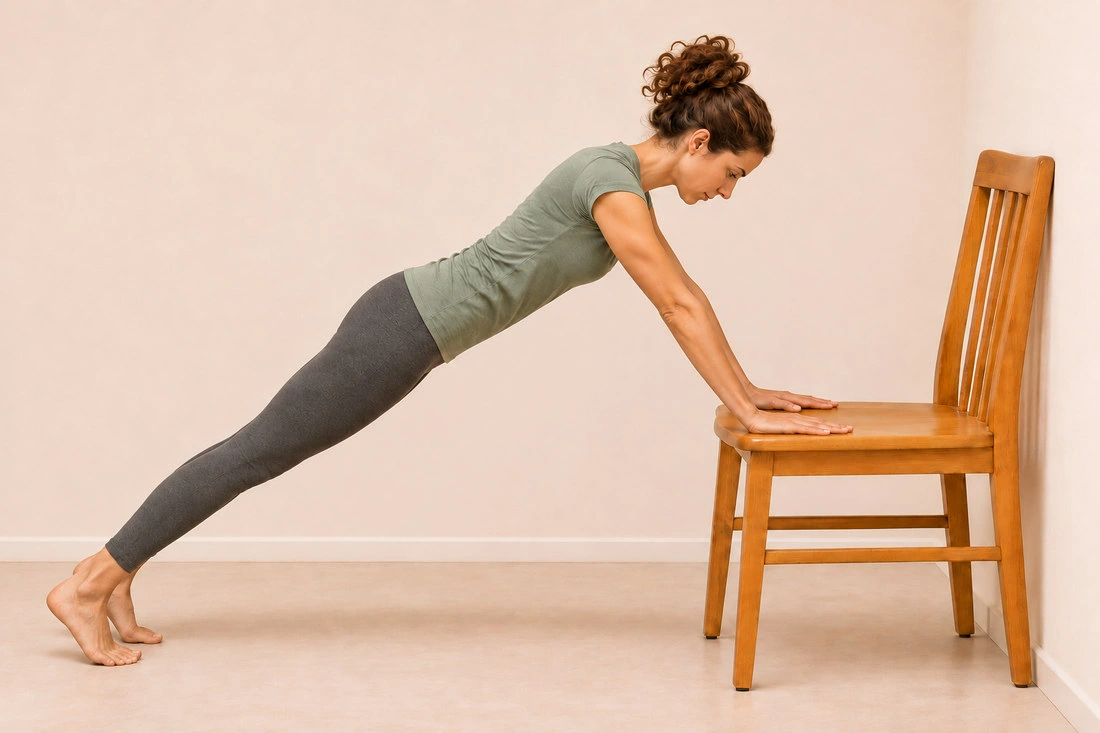
Step-by-step guidance
SUPPORT
Sit on the chair, both feet on the floor and the pelvis fully supported. Feel breathing free in the chest. Do not hold the breath. If the throat is comfortable, inhale naturally through the nose, then let an exhale become a very soft Bhrāmarī humming with closed lips, without extending the sound. One cycle is enough. The humming ends completely before standing. Then stand up with the planned aids, and turn around in small steps to face the now-free seat of the chair. Check that the chair is immobilized, stable and able to bear part of your weight through the hands. Let the breath freely accompany rising and turning, without dictating how the supports move.
Place both palms on the seat at a comfortable distance apart. Once this support is established, step one foot back, then the other, to make a first short inclined plank. Keep both feet on the floor. Find a manageable line from head to pelvis, without collapsing into the shoulders or seeking the greatest possible incline. Feel both hands and both feet sharing the load. If it remains easy, allow a softly perceptible breath, slightly textured at the back of the throat. Do not try to breathe more strongly into one hand to give it greater power. Hands and feet begin to bear weight together.
Gradually step the feet closer to the seat while keeping the palms available. Find stable standing before lessening pressure through the hands and then releasing them. Allow as many breaths as the first return requires. If seated rest is useful, turn around in small steps and return to the seat in a controlled way. Otherwise, remain standing steadily facing the support. This first journey out and back has tested both weight-bearing and its release.
Return to the same short inclined plank a second time. If you have rested seated, stand up with the necessary aids, then turn around in small steps to face the free seat. Otherwise, begin from the standing position already established. Place the palms on the same stable support and step back into the same accessible incline. Do not seek a longer or lower plank. The breath renews itself freely. The second position prepares a conscious experience of sharing the load, not an increase in effort.
TARGET
In the inclined plank, feel the right palm truly loaded against the chair seat. At the same time recognize the support of the left hand and both feet. Do not shift weight towards the right to make its contribution more visible; nor diminish it by leaving the left hand to do all the work. Bhaga here illuminates the fair share received and given. Breathing accompanies the whole structure. No particular breath is assigned to one hand or foot.
Keep this distribution briefly if wrists, shoulders and supports remain comfortable. Do not push more strongly into the seat or let the trunk collapse between the arms. Imagine prāṇa circulating between hands and feet as a common strength belonging exclusively to no single support. Breathe freely under load, without trying to preserve any sound. Do not restart the preparatory Bhrāmarī. Do not apply a lock of the throat, belly or perineum to represent Mahābandha. The plank is sustained through the simultaneous contribution of hands and feet.
Recognize when this sharing has been enough. Perhaps a temptation appears to prolong the hold, load one palm further, or let another limb compensate. Do not wait for fatigue or the loss of an easily maintained support. Breathing must remain free within this brief demand. When every contribution has genuinely been experienced, prepare to return. Common strength need not become more intense to be complete.
INTEGRATION
Gradually step the feet closer to the seat, keeping the palms bearing weight for as long as necessary. Let the trunk rise in stages without suddenly removing the hands. Once the feet truly support standing, reduce the pressure of the palms and then release them. Breathing accompanies this transfer without having to finish on any particular exhale. It may grow quieter as the arms cease bearing weight. The load returns to the feet before the palms are released.
Once standing steadily, turn around in small steps to prepare to sit again. Find the edge of the seat with the planned aids and sit down in a controlled way. Let the pelvis receive the weight of the body; the feet remain on the floor and the backrest may support the back. Both hands rest. Notice especially the right palm, which no longer needs to bear its share of the plank. The breath may gradually settle and then become natural again. If the seat stays stable, briefly direct a gentle gaze to the point between the eyebrows (bhrūmadhya-dṛṣṭi). Then let the eyes rest peacefully ahead with the inward attention of Śāmbhavī mudrā towards the right hand and centre of the chest. If the tongue remains free, its tip may brush the front of the palate for one nasal breath (adapted Khecarī), at the same time as this attention, then relax without pressure. Relax the eyes. Pelvis, feet and back find their supports again. The hands no longer need to participate in the plank. Each support has carried its share without replacing the others.
Closing guided meditation
The right hand, the other hand and the feet shared the effort; the seat now supports the pelvis. The idea of having to hold everything on one side can recede. Each contribution had its measure. Giving your share requires neither taking on everything nor disappearing.
Silence