Support
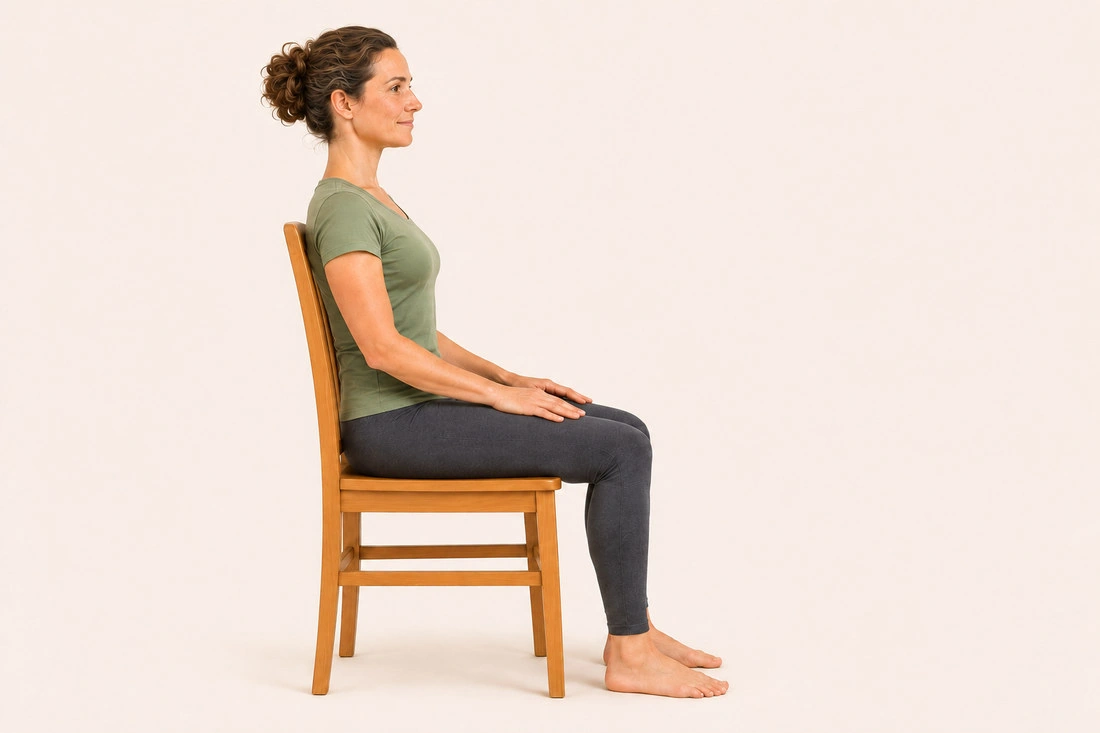
Sit on the chair, both feet on the floor and the pelvis fully supported. Feel breathing free in the chest. Do not hold the breath. If the throat is comfortable, inhale naturally through the nose, then let an exhale become a very soft Bhrāmarī humming with closed lips, without extending the sound. One cycle is enough. The humming ends completely before standing. Then stand up with the planned aids, and turn around in small steps to face the now-free seat of the chair. Check that the chair is immobilized, stable and able to bear part of your weight through the hands. Let the breath freely accompany rising and turning, without dictating how the supports move.
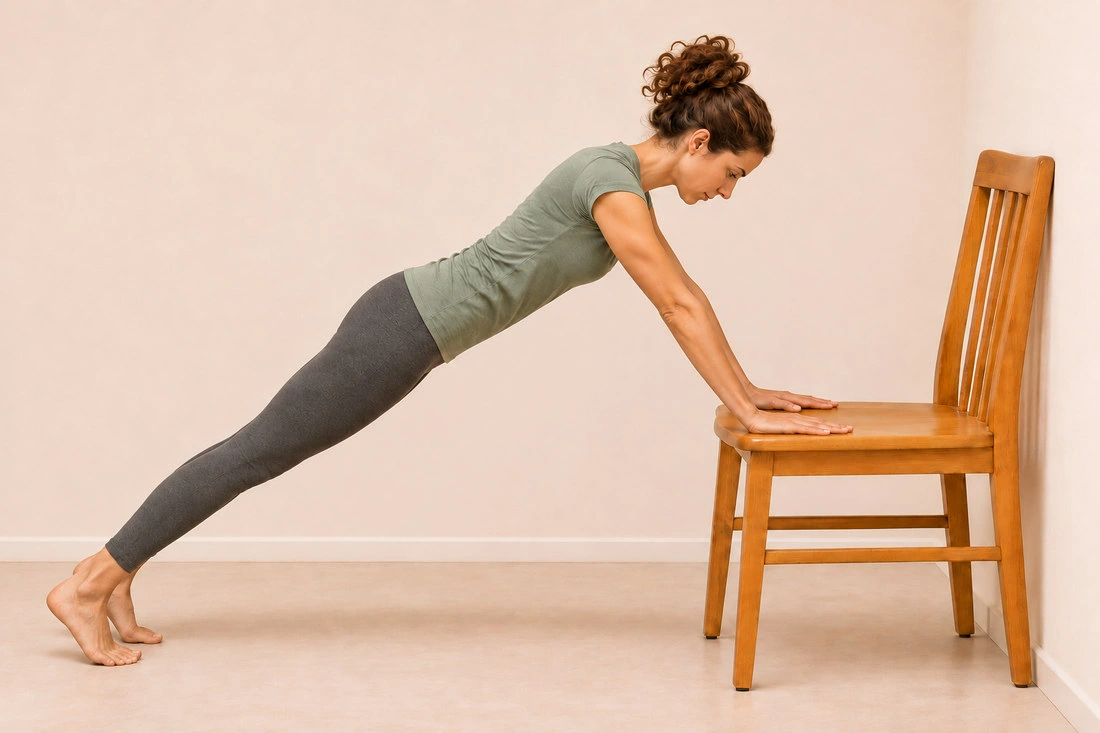
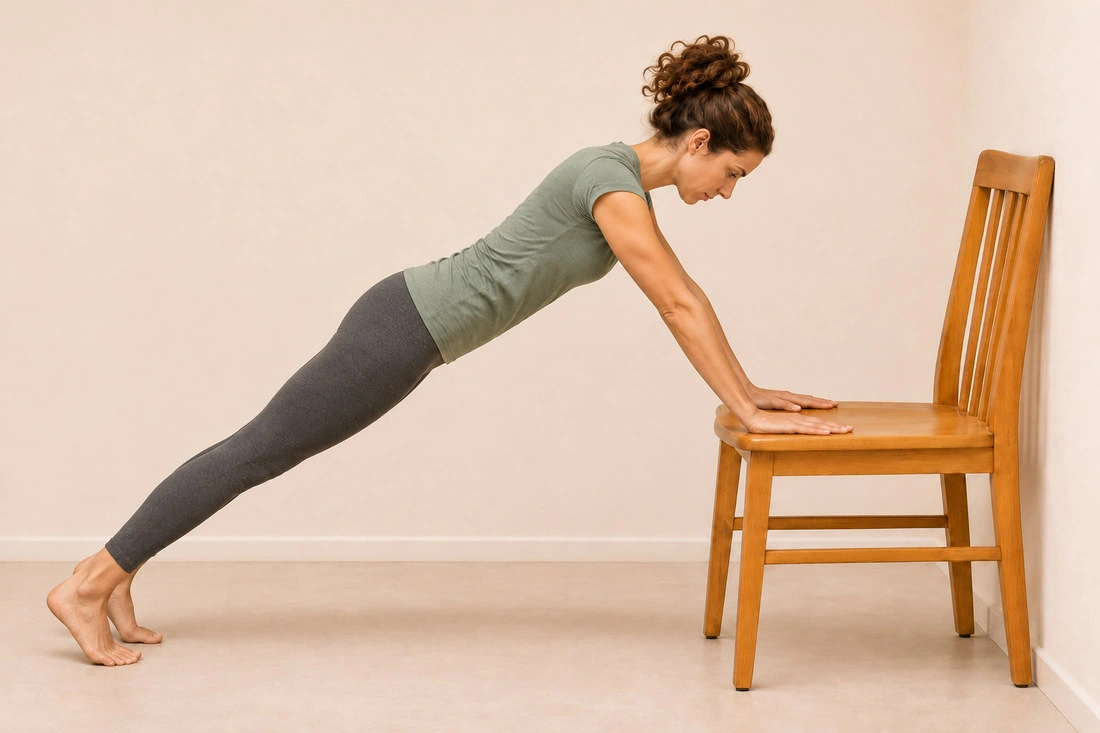
Place both palms on the seat at a comfortable distance apart. Once this support is established, step one foot back, then the other, to make a first short inclined plank. Keep both feet on the floor. Find a manageable line from head to pelvis, without collapsing into the shoulders or seeking the greatest possible incline. Feel both hands and both feet sharing the load. If it remains easy, allow a softly perceptible breath, slightly textured at the back of the throat. Do not try to breathe more strongly into one hand to give it greater power. Hands and feet begin to bear weight together.
Gradually step the feet closer to the seat while keeping the palms available. Find stable standing before lessening pressure through the hands and then releasing them. Allow as many breaths as the first return requires. If seated rest is useful, turn around in small steps and return to the seat in a controlled way. Otherwise, remain standing steadily facing the support. This first journey out and back has tested both weight-bearing and its release.
Return to the same short inclined plank a second time. If you have rested seated, stand up with the necessary aids, then turn around in small steps to face the free seat. Otherwise, begin from the standing position already established. Place the palms on the same stable support and step back into the same accessible incline. Do not seek a longer or lower plank. The breath renews itself freely. The second position prepares a conscious experience of sharing the load, not an increase in effort.