← All guidesAstroYoga practiceChair version →

AstroYoga · Kriyā on the mat

Āśleṣā

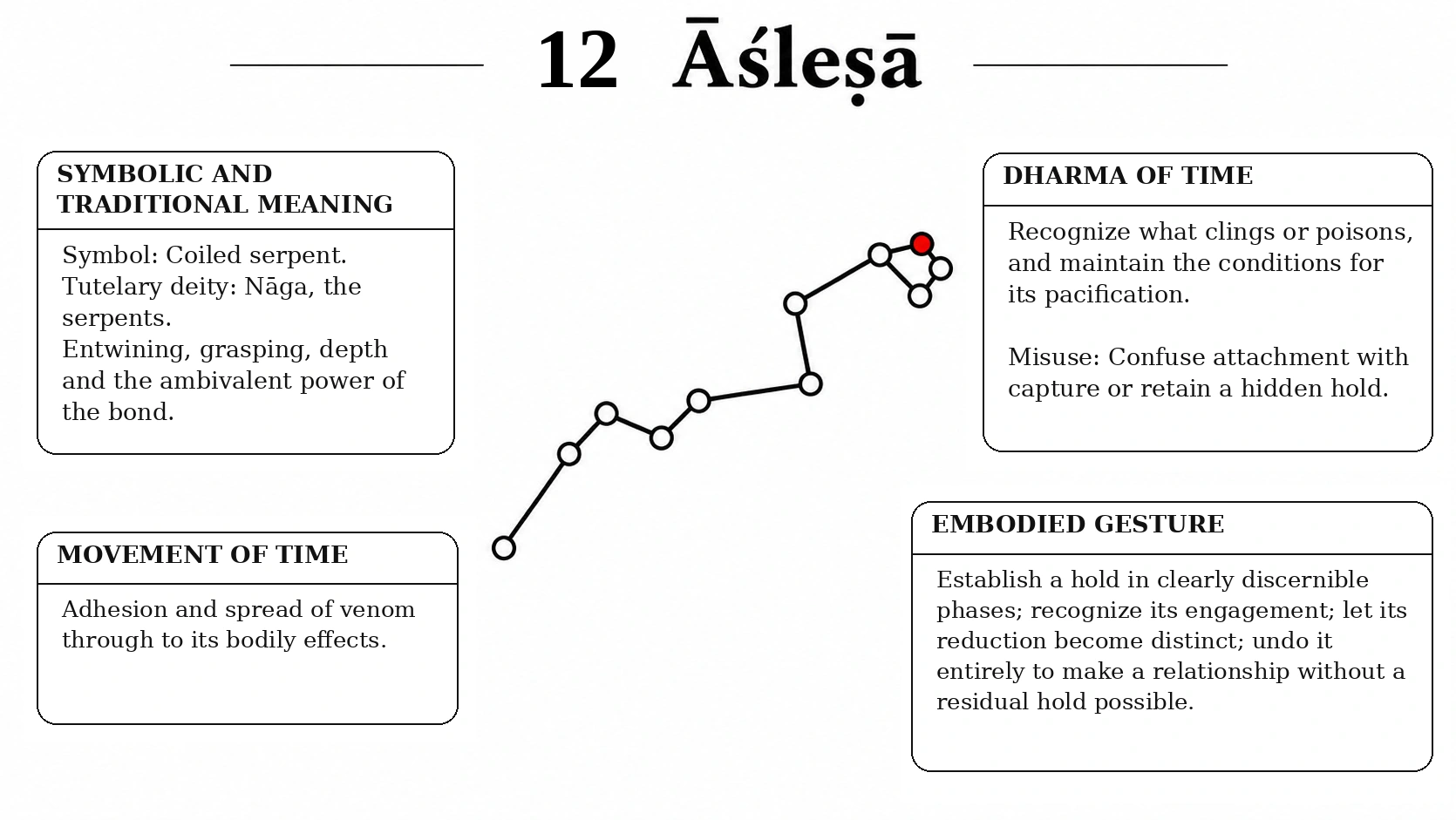
BIND

Support → Target → Integration
Practices
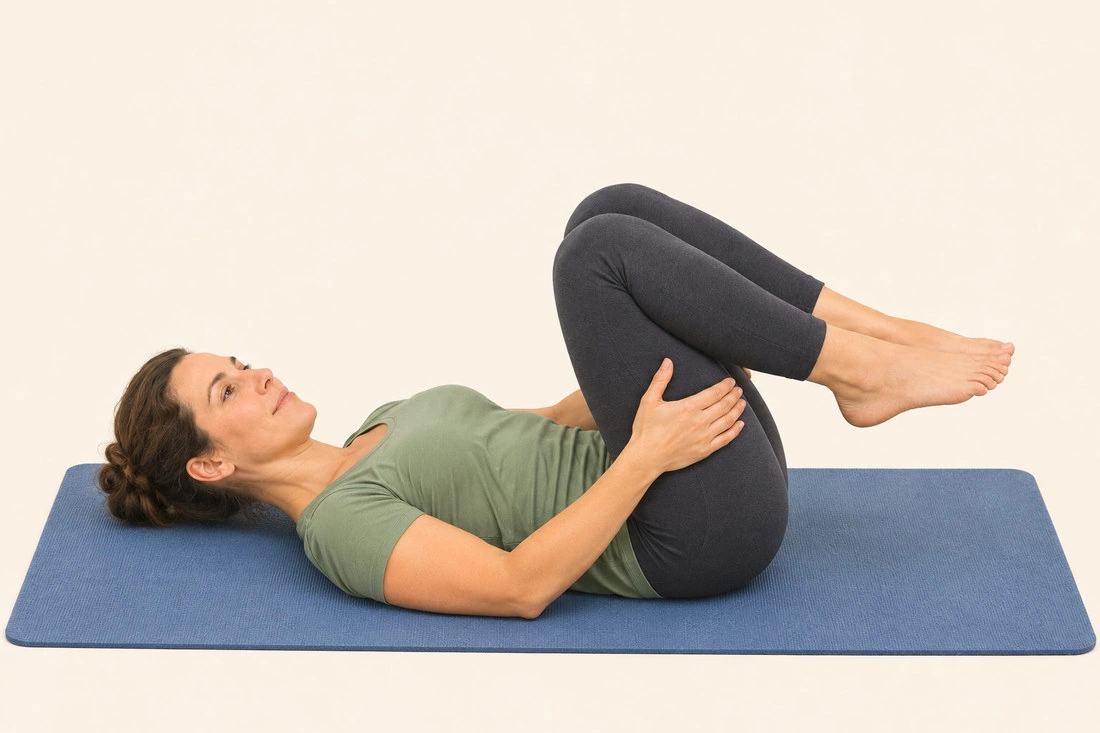
Parivṛtta Jānu Śīrṣāsana — small seated side bend · Apānāsana — knees drawn towards the belly.
Mudrā and seal
Śāmbhavī and bhrūmadhya at step 1 · Jñāna mudrā — optional brief thumb-index contact at step 7 after release, undone before moving onto the back · mṛgī — optional with Nāḍīśodhana at step 1, hand set down before any change of support or direction · AstroYoga seal — the grip, then its release · Mūla bandha — an energetic reference, not performed; Śakticālana — an analogy, not performed.
Supports
Secure seated position · right leg opened slightly · right hand on its own thigh · very small side bend · move onto the back through one side.
Āśleṣā · BIND
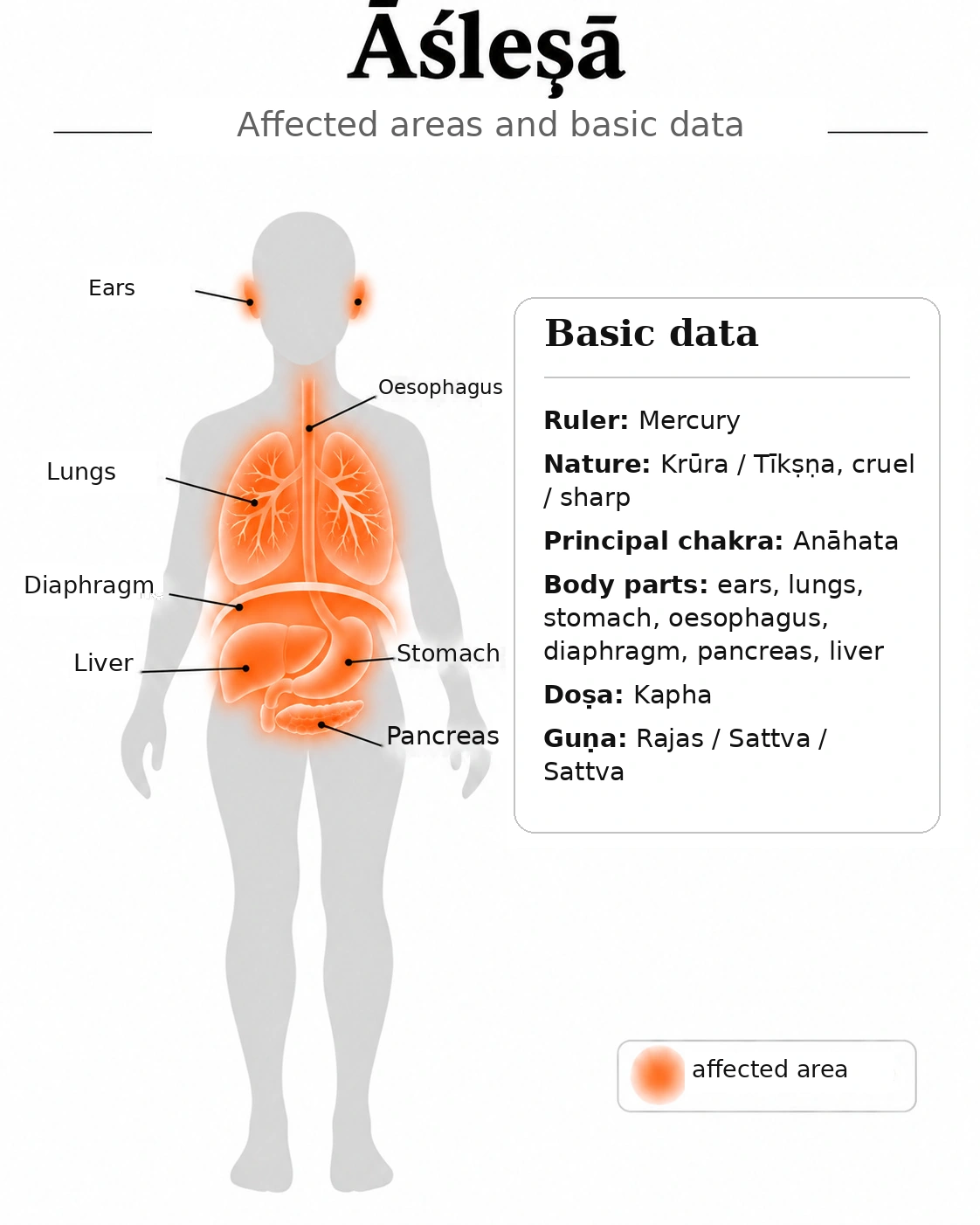
Body zonesBody zones · Āśleṣā
01

Support

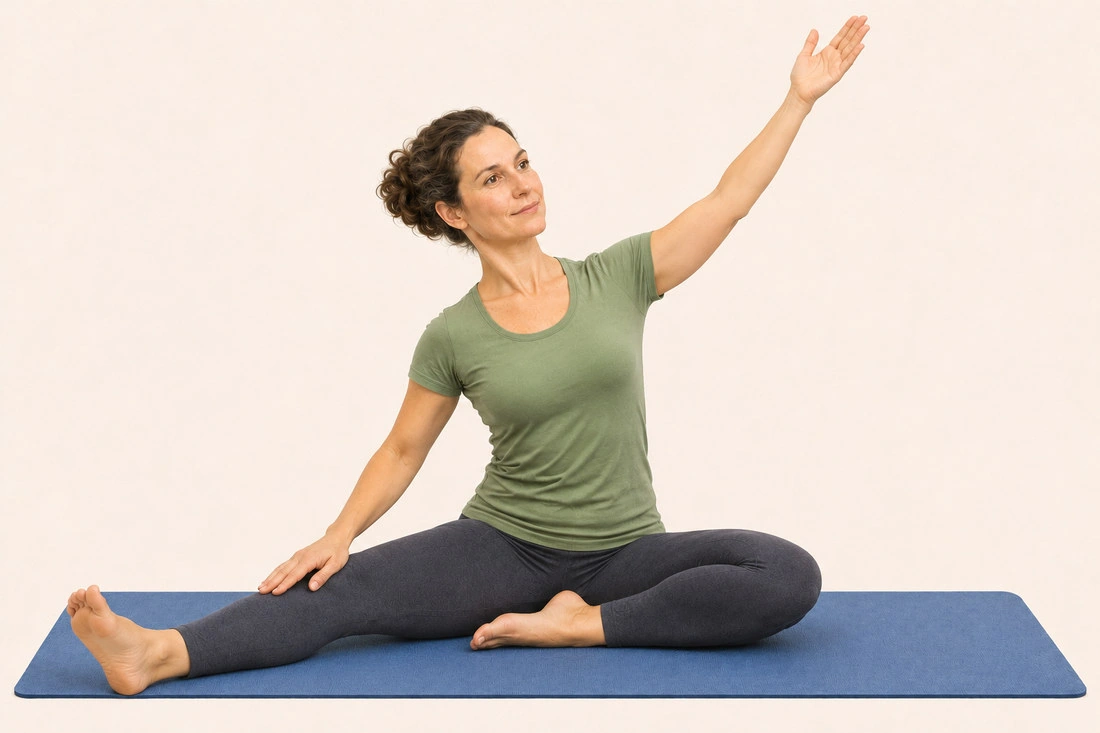
Small rightward side bend, with the hand on its own thigh. Parivṛtta Jānu Śīrṣāsana.
  1. Sit on the mat or on a firm raised surface, with the right leg opened slightly and the left leg bent without pulling. Feel the pelvis supported and both legs in a stable position. If the seat is stable and the right hand free, optionally form mṛgī mudrā (thumb to the right, ring finger to the left), then perform one gentle alternate-nostril cycle of Nāḍīśodhana with a slightly textured breath at the back of the throat, without retention. Afterwards, let the breath be free and put the hand down before looking for support. Attention recognizes the inner continuity of suṣumṇā without trying to keep a particular breathing pattern. If the seat is stable, briefly direct a soft gaze to the point between the eyebrows (bhrūmadhya-dṛṣṭi). Then let the eyes rest ahead and Śāmbhavī mudrā turn attention inward, towards the ears and upper belly. Relax the eyes. The preparatory breathing practice is complete.

  2. Rest the right palm on the upper part of your own thigh. Recognize this contact as an available support, not a grip meant to pull the trunk. The palm touches the thigh while the pelvis remains supported. Let the breath accompany this first relationship without changing the body's position. The link is prepared through this simple contact.

  3. Raise the left arm to a comfortable height, then allow a gentle exhale to accompany a small bend of the trunk to the right. The right palm remains in contact with the thigh. It helps organize the movement without pulling the chest. Feel the left side lengthen slightly while the pelvis stays supported. The breath passes through this direction without controlling its range. Return to the centre with whatever breath is available, even if another breath is needed.

  4. Make the same small side bend just once more, without trying to go farther. The left arm accompanies the movement; the right hand remains available on the thigh. The breath stays continuous. The grip is experienced in its actual function: it accompanies a direction and makes it possible to return. Do not deepen the bend to feel the connection more strongly.
02

Target

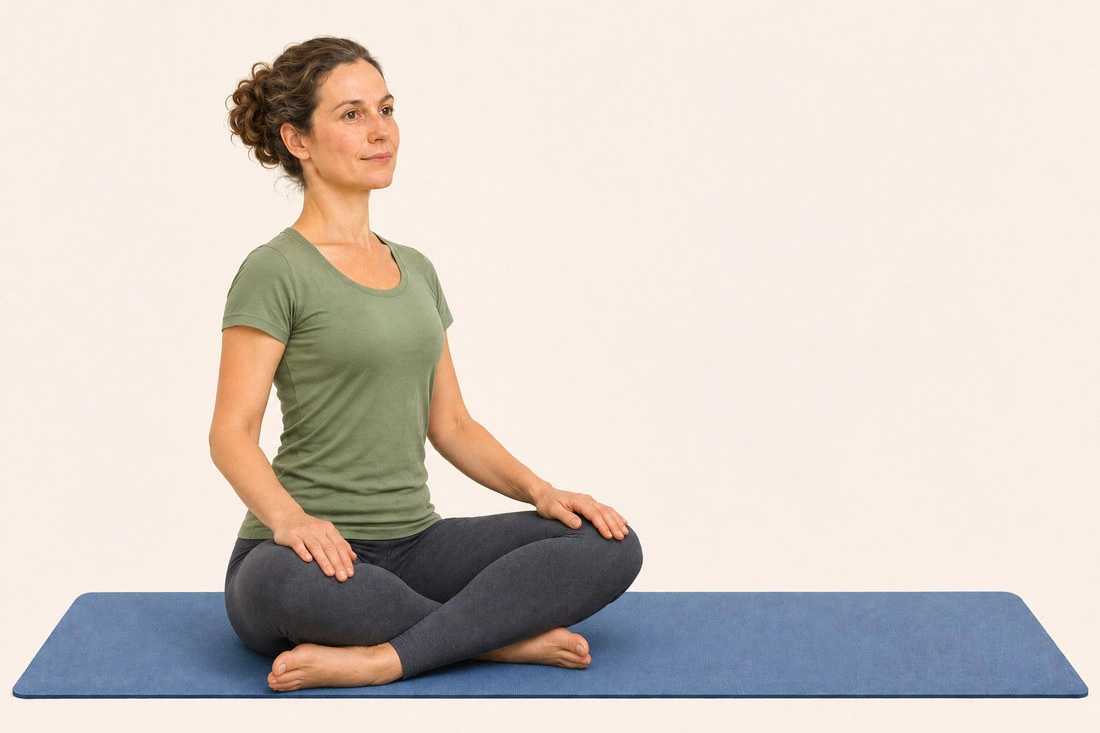
Return to the axis, legs released and hands resting.
  1. From this second small side bend, begin bringing the chest back towards the centre. Keep the right palm available for as long as it helps organize the return. Let breathing accompany this straightening, taking as many breaths as needed. Do not remove the hand prematurely on the pretext that the gesture ought to end. The hand remains useful until the trunk has actually returned to the axis.

  2. Once the chest is facing forward again, let the left arm come down. Then gradually reduce the pressure of the right palm, but only when it is no longer contributing to support. Feel this transition: the hand was useful, and can now become light. The breath may become quieter as the fingers release, without determining how fast they do so. The relationship to support remains even when the pressure stops.

  3. Once the hands are available again, gently release the legs and return to a simple seated position. Let as many breaths as needed accompany this change. The pelvis remains supported; the thighs and feet find a position that no longer calls for the previous bend. The breath may become subtler. The grip has fulfilled its purpose; there is no need to re-establish it. If the hands are free in this settled seat, thumb and index finger may lightly brush for just one breath in Jñāna mudrā, without squeezing. Release the fingers before using the hands to move down onto the back.

03

Integration

Accessible Apānāsana, before the feet are set down.
  1. With the help of the hands, gently move through one side of the pelvis to come to rest on the back. Let the breath accompany the transfers without imposing a slower pace. Once the back is received by the mat, feel that the arms and legs no longer have to maintain the previous relationship. The breath may become quieter without the body having to manufacture a new sensation of release.

  2. Resting on your back, bring the knees a little closer to the belly if that remains comfortable. The hands may support the backs of the thighs without pulling. Receive this closeness briefly, then set the feet down one after the other, breathing at your own pace. Let the palms open and return to rest. Allow the breath to become almost silent, then return to its natural course. The back remains supported. The legs no longer need to draw in, and the hands have no grip left to exert. No contraction of the perineum, belly or throat is added to represent Mūla bandha or Śakticālana. The connection was experienced and then released. Support remains without any need to tighten.

Closing meditation

The hand let go of its grip; the side of the body and the pelvis returned to rest. An attachment can sometimes last after its reason for existing has disappeared. Here the connection was felt, then undone without abruptness. Staying close does not require holding tight.

Silence