← All guidesAstroYoga practiceMat version →

AstroYoga · Kriyā on a chair

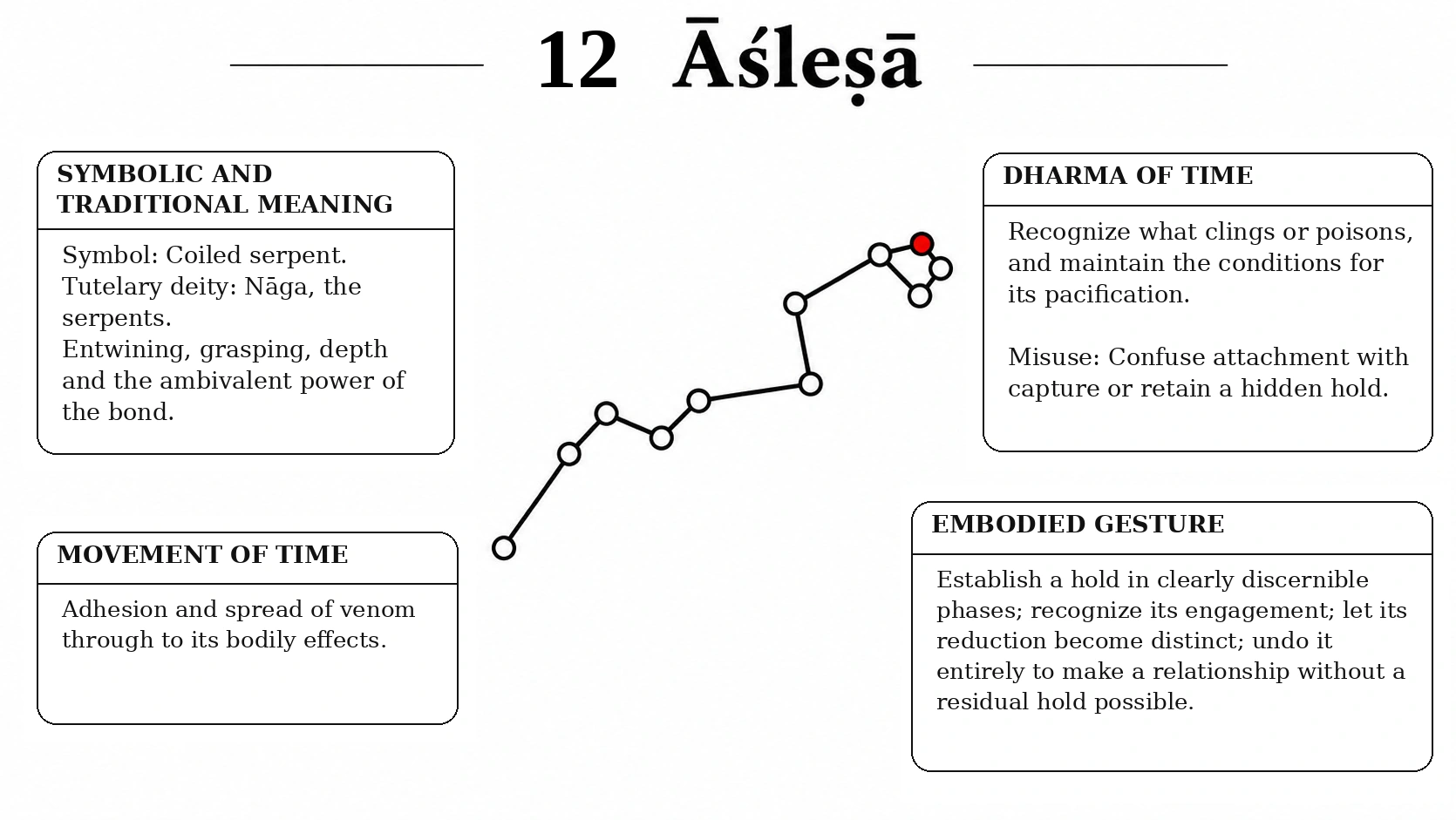
Āśleṣā

BIND

Support → Target → Integration
Practices
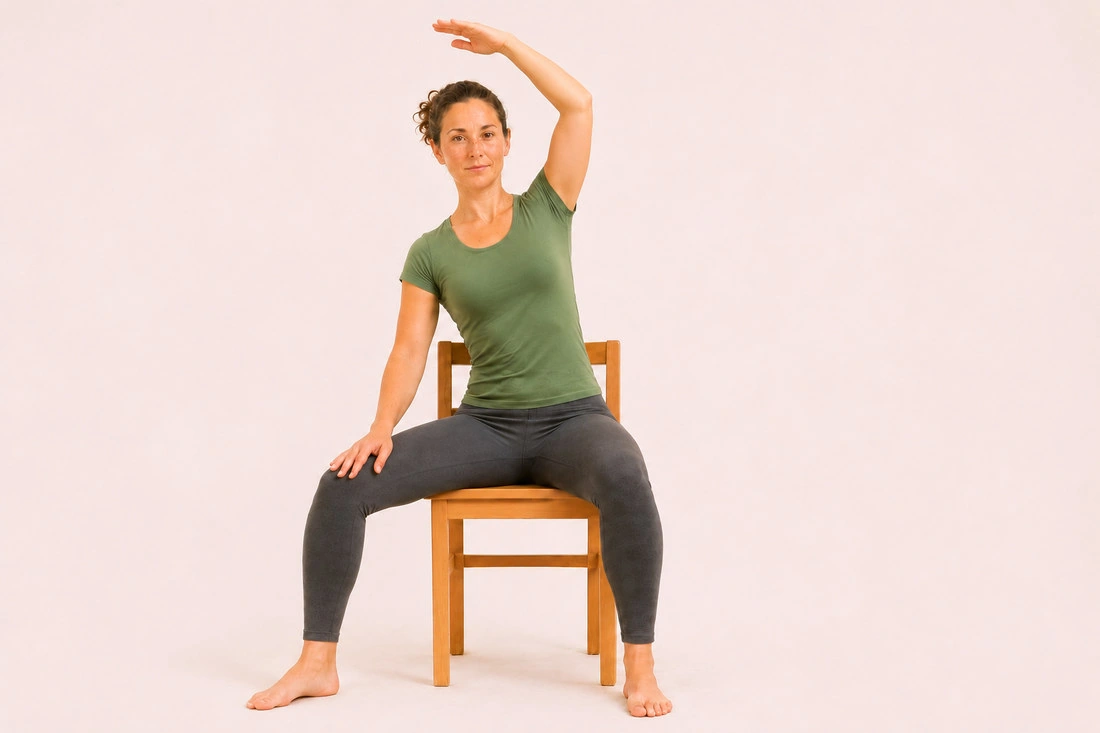
Supported seated position — small side bend to the right.
Mudrā and seal
Śāmbhavī and bhrūmadhya at step 9 · Jñāna mudrā — optional thumb-index contact at step 8 after the hand stops bearing weight, then fingers open at step 9 · mṛgī — optional with Nāḍīśodhana at step 1, hand returned to rest before any change of support or direction · AstroYoga seal — the grip, then its release · Mūla bandha — energetic reference not performed; Śakticālana — analogy not performed.
Supports
Pelvis and feet bearing weight · right hand on its own thigh · left arm at a comfortable height · very small side bend.
Āśleṣā · BIND
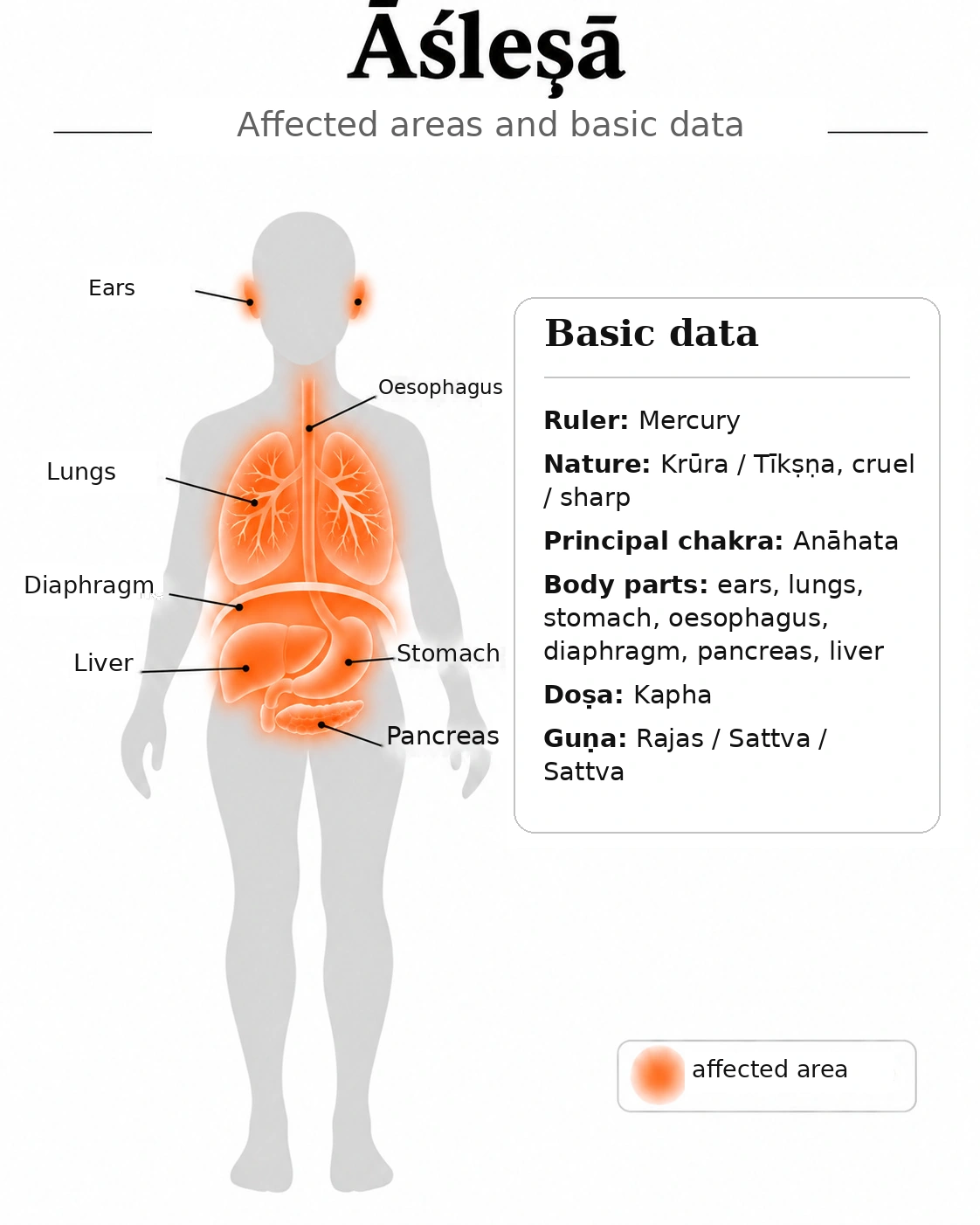
Body zonesBody zones · Āśleṣā
01

Support

Small side bend, with the right hand on its own thigh.
  1. Sit facing forward with the pelvis fully supported by the chair and both feet on the floor. Move the right foot slightly to the right, lifting it if necessary rather than sliding it. Recognize the supports of the pelvis and feet. If the right hand is free and the seat is supporting the pelvis well, optionally form mṛgī mudrā (thumb to the right, ring finger to the left) for one short round of Nāḍīśodhana with a slightly textured breath at the back of the throat, without retention. Finish the alternate-nostril breathing and rest the hands. Bring attention towards the inner axis of suṣumṇā. The supports are ready for the first side bend.

  2. Place the right palm on the upper part of your own thigh. Feel this contact without gripping the leg or pushing to move the trunk. The hand becomes a support that is available. The pelvis remains received by the chair. Let the breath accompany this relationship without trying to strengthen it. The contact prepares a help without tension for the bend to come.

  3. Raise the left arm only to an accessible height. On a gentle exhale, lean the trunk very slightly to the right. The right palm accompanies the gesture without pulling. The pelvis continues to support the body. Allow the breath to pass through this small direction without making the movement larger. Return to the centre with as many breaths as needed, keeping the right hand available on the thigh.

  4. Make the same small bend to the right just once more. The left arm accompanies the familiar direction; the right hand remains in contact with the thigh. This repetition keeps the same small range. The breath stays gentle. The grip is genuinely felt in its function of accompanying the movement.
02

Target

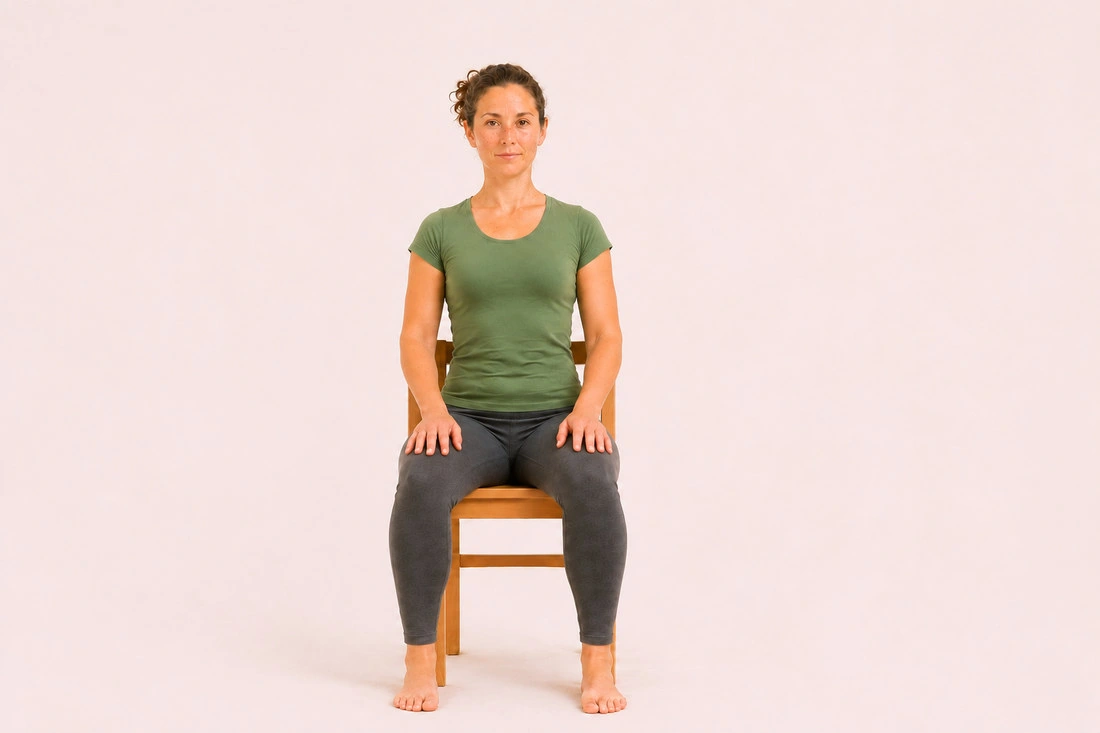
The return is received: arms resting, feet brought back.
  1. From this second bend, begin to bring the trunk gently back into an upright seated position. Keep the right palm on the thigh for as long as it helps with the return. The breath accompanies this straightening. If several breaths are needed, let them come. Do not rush the gesture in order to free the hand sooner. The hand remains available until the trunk is back in its axis.

  2. Once the chest is facing forward, let the left arm come down. The right palm can now reduce its pressure, provided it is no longer bearing any weight. Feel the instant when contact is still possible though the hand's effort has become unnecessary. The breath may become quieter during this release of load. Do not slow the exhale to prolong the letting go, nor open the fingers before it is appropriate. The grip ends without the seat ceasing to support the body.

  3. Gently bring the right foot back under its knee, using any aids that make this easier. Rest both hands on the thighs. The pelvis remains supported; the feet find a comfortable base once again. Let the breath become quieter. The release is complete; no further bend is needed to check it.

03

Integration

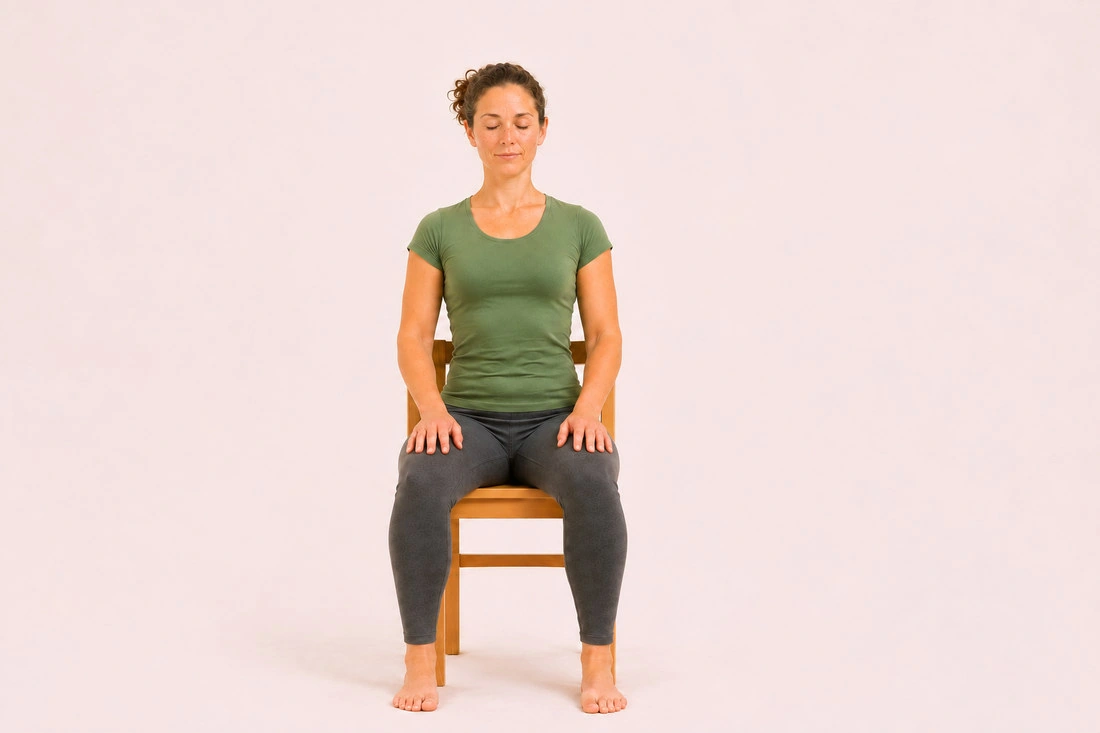
The same supported seated position, without another side bend.
  1. Stay in the same stable seated position. If it helps, let the backrest gently receive the back without lifting the feet from their base. The hands remain resting. If they are not carrying any load, thumb and index finger may brush for one breath in Jñāna mudrā without squeezing, then the fingers open again. Feel the difference between the grip that was needed before and the supports still present. The breath may become almost silent. Its pace may settle when the body no longer has to organize a return. The connection has changed; it has not been broken abruptly.

  2. Receive the weight of the pelvis on the seat and that of the feet on the floor. Keep the fingers open. The arms no longer need to accompany the side bend. If the seated position remains stable, briefly direct a soft gaze to the point between the eyebrows (bhrūmadhya-dṛṣṭi). Then allow the eyes to rest peacefully ahead and the inward attention of Śāmbhavī mudrā to turn towards the ears and upper belly. Relax the eyes. The breath may become almost silent or return to spontaneous breathing. Add no contraction of the perineum, belly or throat to represent Mūla bandha or Śakticālana. The hand no longer needs to hold on. The seat and floor continue to carry the body. The release is complete; the living relationship remains.

Closing meditation

The hand helping the side bend relaxed at the right moment; the seat still supports the body. Sometimes we confuse holding something dear with holding it back. The gesture showed another way: releasing a grip that is no longer needed without leaving the living support.

Silence