← All guidesAstroYoga practiceChair version →

AstroYoga · Kriyā on the mat

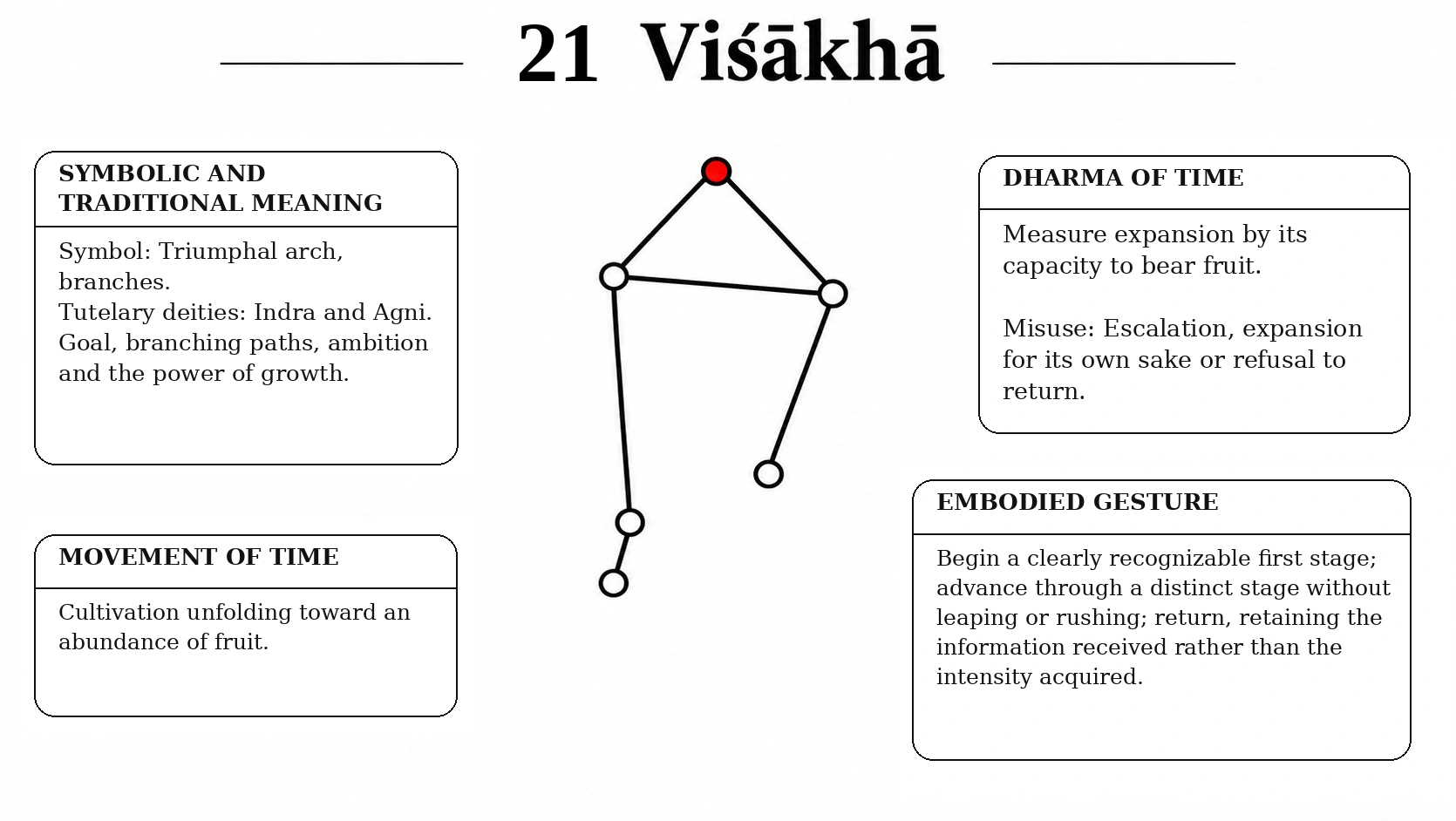
Viśākhā · Libra

DEPLOY

Support → Target → Integration
Practices
Vīrabhadrāsana I — small Warrior I stance · Apānāsana — knees drawn towards the abdomen, if accessible.
Mudrā and seal
AstroYoga seal — the two thresholds · Śāmbhavī — natural gaze in stable rest after the two thresholds, optional at step 9.
Supports
Short lunge with left foot forward · arms low · first degree is enough · second is optional · same support during progression and return.
Viśākhā · Libra · DEPLOY

Reference date : 9 / 11 / 2026

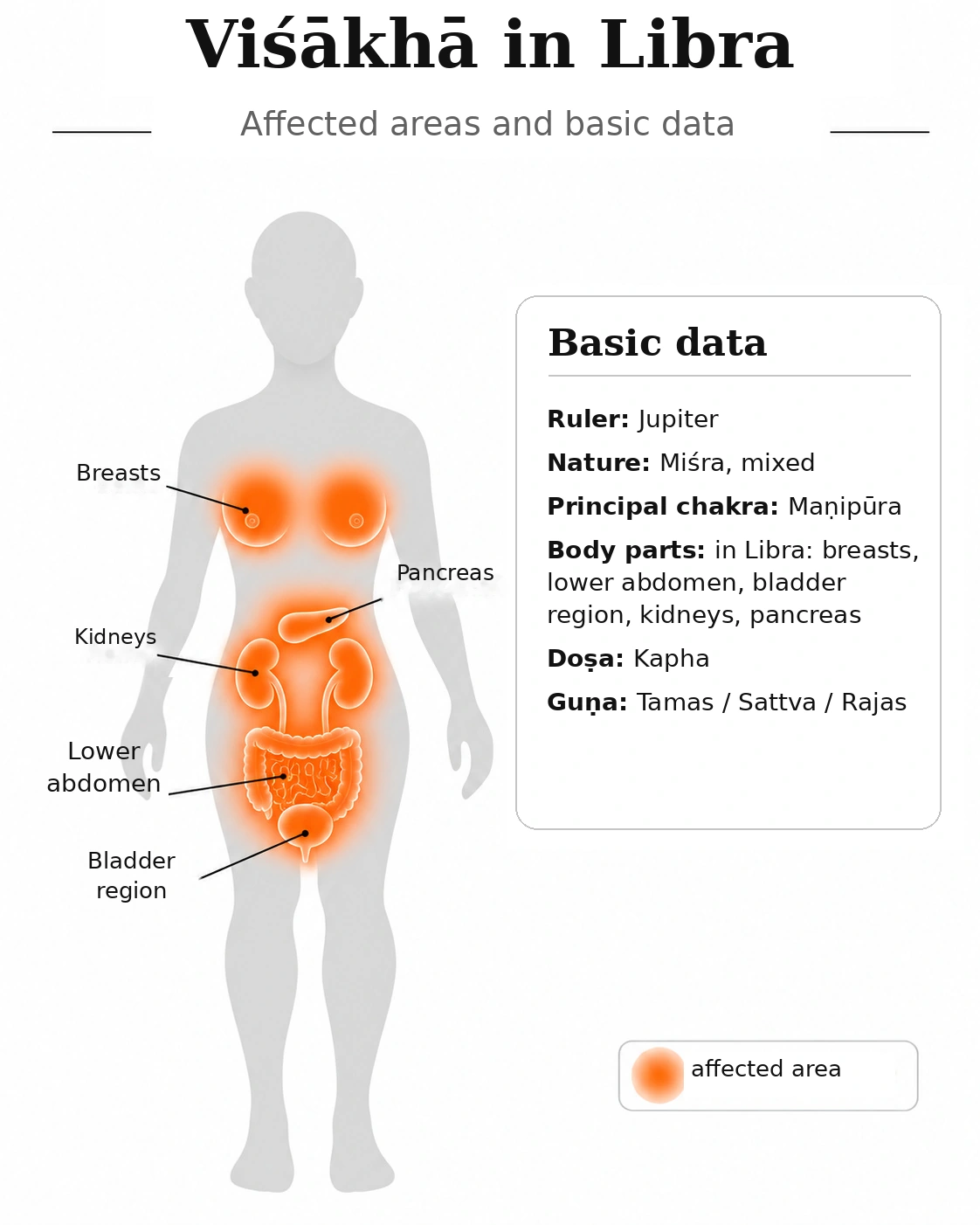
Body zonesBody zones · Viśākhā · Libra
01

Support

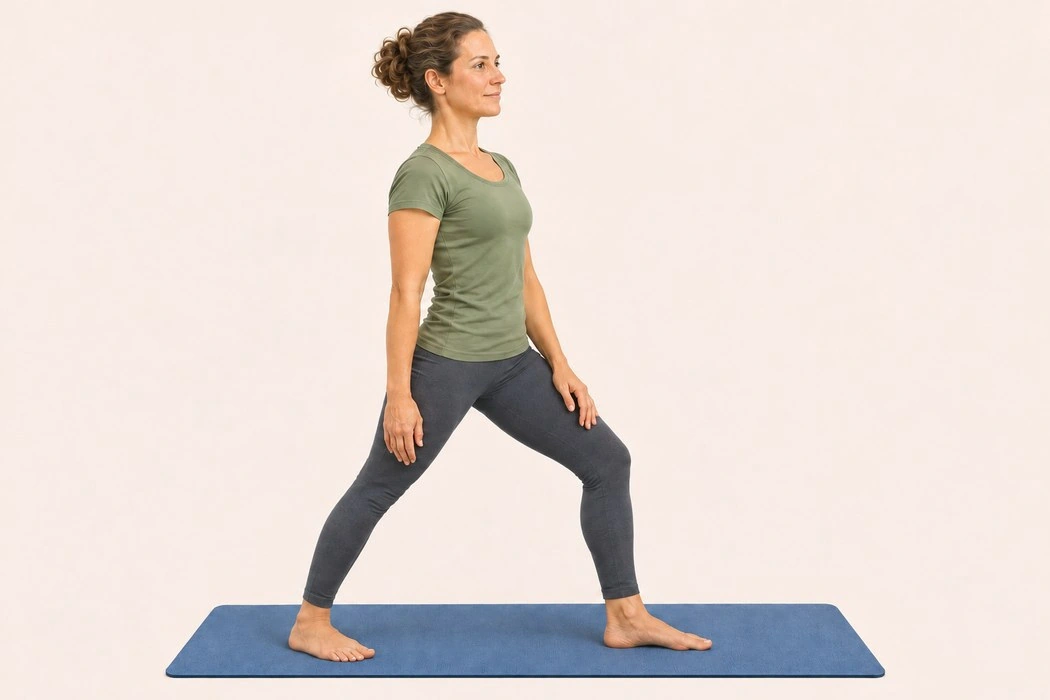
Standing, left foot forward, left knee slightly bent. Vīrabhadrāsana I, Warrior I.
  1. Stand near a stable support, with the feet a comfortable distance apart. Feel both soles taking the body's weight, the knees free to move and the chest unrestricted. Let a natural breath establish itself. Direct attention towards the inner axis of suṣumṇā. Do not hold the breath. If it remains easy, allow the breath to become slightly textured at the back of the throat. The breath prepares continuity without announcing any particular effort. Notice the support you have chosen and the possibility of returning to simple standing. The first level remains to be experienced; the second will remain optional.

  2. Step the left foot forward and place the right foot behind and slightly to the side, into a short lunge. Keep the arms down; the right hand may maintain contact with stable support if this helps. Bend the left knee slightly in the direction of the foot, without trying to bring the thigh parallel to the floor. Feel the load increase in the front leg while both feet continue to bear weight. An easy exhalation may accompany this small bend without determining its depth. If the movement needs several breaths, allow them to come. If breathing remains free, its slight sound may continue. Indra–Agni here evokes two powers within a single unfolding. The first degree already constitutes a complete action.

  3. Remain briefly in this first small bend, long enough to feel the real work of the left thigh. Do not descend further. Recognise the contribution of the feet and the pelvis remaining above this base. Then gradually straighten the left knee, with a comfortable exhalation if it accompanies the effort. Bring the feet closer together in small steps, keeping any useful support. Let breathing renew itself during the return. The first level has been experienced and then left, without needing to prolong the hold.

  4. Return to stable standing and prepare the entire second passage before starting again. Resume the same position of the feet, keep the right hand on the same support if it is needed, and use the first degree of bending as the reference. Acknowledge now the possibility of a second degree, only barely deeper, but also of returning directly from the first. Keep the breath comfortable, without trying to lengthen the inhalation in preparation for a greater descent. The body knows both ways out: remain at the first degree or briefly experience the second. No additional level is planned.
02

Target

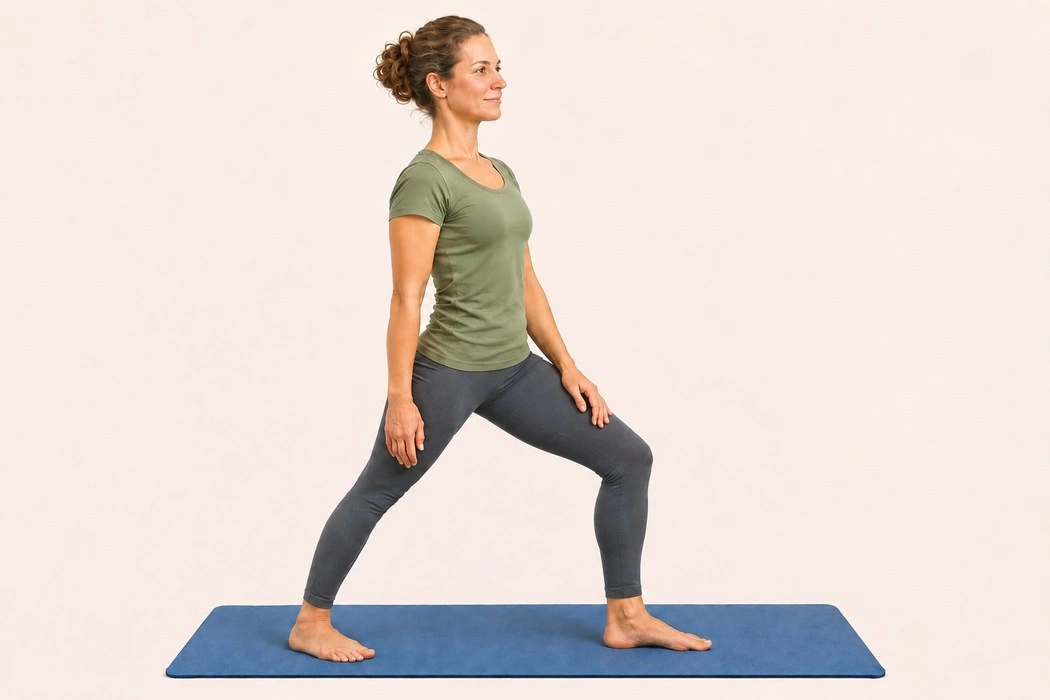
A second degree of bending, only if it is easy.
  1. Return to the same short lunge, left foot forward, right foot behind, arms down. Bend the left knee slightly to the first level experienced earlier. Receive its real load in the thigh and feet. If the posture, balance and breathing remain comfortable, allow a new soft exhalation to accompany a bend that is scarcely deeper. The feet remain in place. The chosen support does not change. Do not descend further to prolong the exhalation. If the second degree is unsuitable, keep the first or begin returning. This remains fully valid. The second degree is possible, never required.

  2. If the second degree was entered, briefly recognise the difference in effort. The left thigh works harder and the pelvis is slightly lower, but the feet must continue to bear weight without losing stability. At most one natural breath may pass through this degree if that remains easy. Do not wait for the end of a breath cycle before leaving if the legs need to return. Imagine prāṇa illuminating two small steps: the one already recognised, then the one that may have become accessible. The breath does not have to produce more intense heat or confirm progress through additional effort. If only the first degree was experienced, clearly receive its own duration. One level genuinely experienced is enough.

  3. If the second degree was entered, ease the left knee open a little to return first to the first degree. Notice this intermediate return: the thigh bears less, but the feet continue their work. Let the breath accompany the reduced effort without imposing a long exhalation. Then gradually straighten the left leg until standing. If the second degree was not attempted, return directly from the first. The breath may become less audible as the load decreases. It must not artificially slow the rise. Do not repeat the bend to compare the two degrees one final time. The passage has taken place; its intensity no longer needs to be maintained.

03

Integration

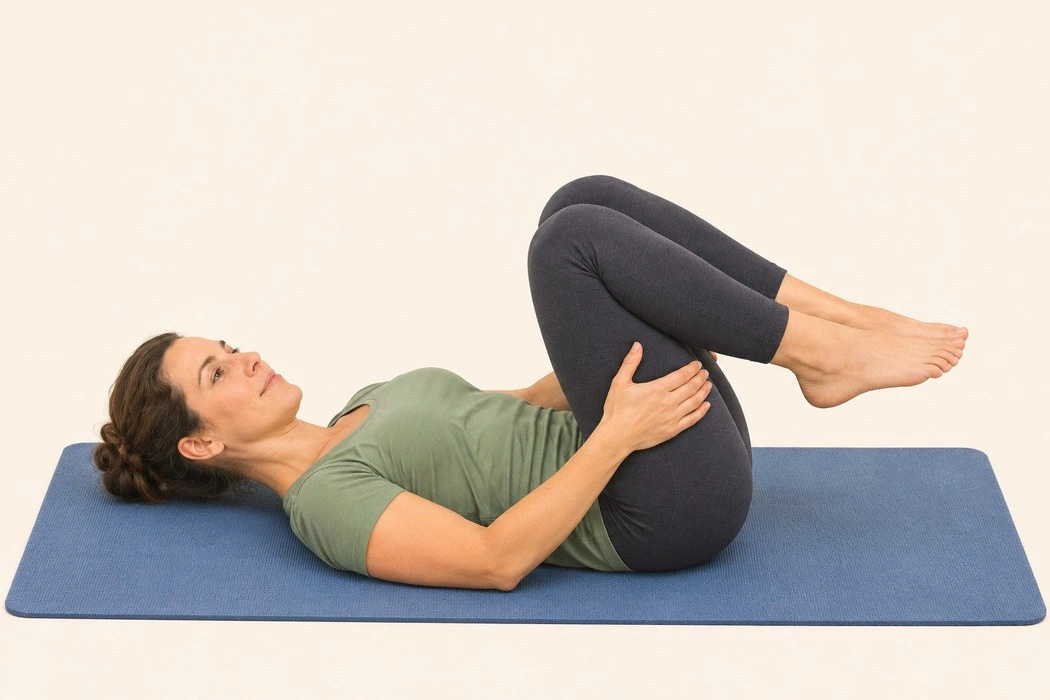
Resting on the back or seated, with the legs able to rest. Apānāsana, knees drawn towards the abdomen.
  1. Finish straightening if necessary, then bring the feet together in small steps. Keep the planned support until standing is genuinely stable. Feel both legs return to a simple sharing of weight. Let the breath accompany this final movement. Breathing may become quieter as the thighs stop their particular work. The two thresholds become known landmarks, with no new bend to perform.

  2. If the journey down to the mat is accessible, use stable support to sit down first, then turn onto the side and lie on the back. Once the back is supported, gently draw the knees towards the abdomen only if Apānāsana feels comfortable. The hands may support the backs of the thighs without pulling. Then place the feet down again one after the other. If moving to the floor or this bend is unsuitable, rest in a stable seated position or remain on the back with the feet planted. Allow breathing to renew itself freely with each change of support. Once the body is received, the breath may become almost silent, gradually settle into a more peaceful rhythm, then give way to spontaneous breathing. Feel that the thighs no longer have to support either degree of bending. If rest has truly been reached, keep the eyes open with a peaceful gaze only if comfortable; attention may then turn inward: Śāmbhavī recognises the two thresholds without repeating their effort. Otherwise, simply retain the supports and spontaneous breath. The seal of the two thresholds may dissolve. Their knowledge remains without prolonging their effort. If only the first level was experienced, choose the alternative meditation.

Closing meditation

The thighs felt a first degree of effort, then perhaps a second. The feet now rest without trying to descend further. Sometimes a step makes us want to leap to the next. The two levels have become known. Progress can remain present without becoming a test.

ALTERNATIVE GUIDED MEDITATION · If only the first level was experienced

The thigh bore a first degree of effort, then the supports received the return. The second level remained a possibility. Perhaps the desire to go further is still there. The degree actually experienced can be known without the legs having to perform another.

Silence