← All guidesAstroYoga practiceMat version →

AstroYoga · Kriyā on a chair

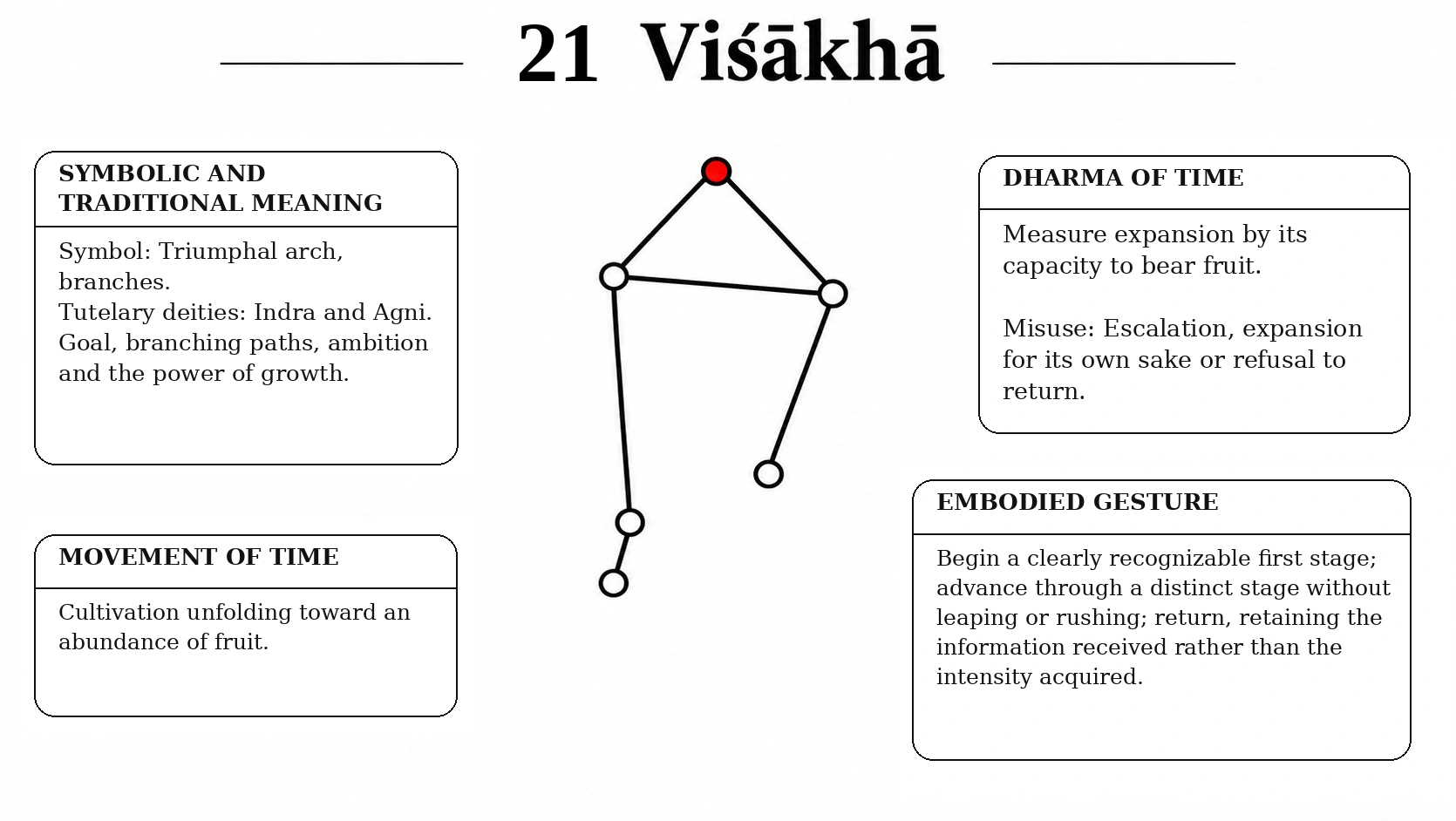
Viśākhā · Libra

DEPLOY

Support → Target → Integration
Practices
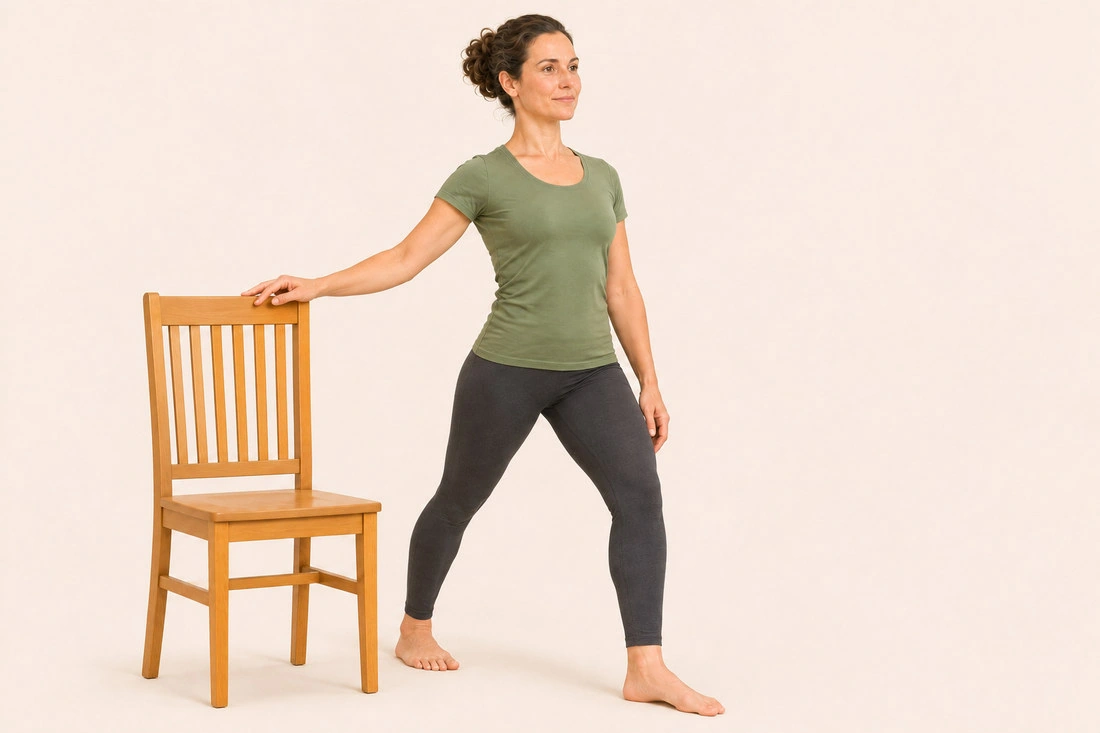
Assisted Vīrabhadrāsana I — a short standing lunge beside a stable chair.
Mudrā and seal
Śāmbhavī and bhrūmadhya at step 9 · AstroYoga seal — the two thresholds.
Supports
Stable chair · supportive right hand · left foot forward, right foot behind and slightly to the side · optional second level · support kept until standing is stable again.
Viśākhā · Libra · DEPLOY

Reference date : 9 / 11 / 2026

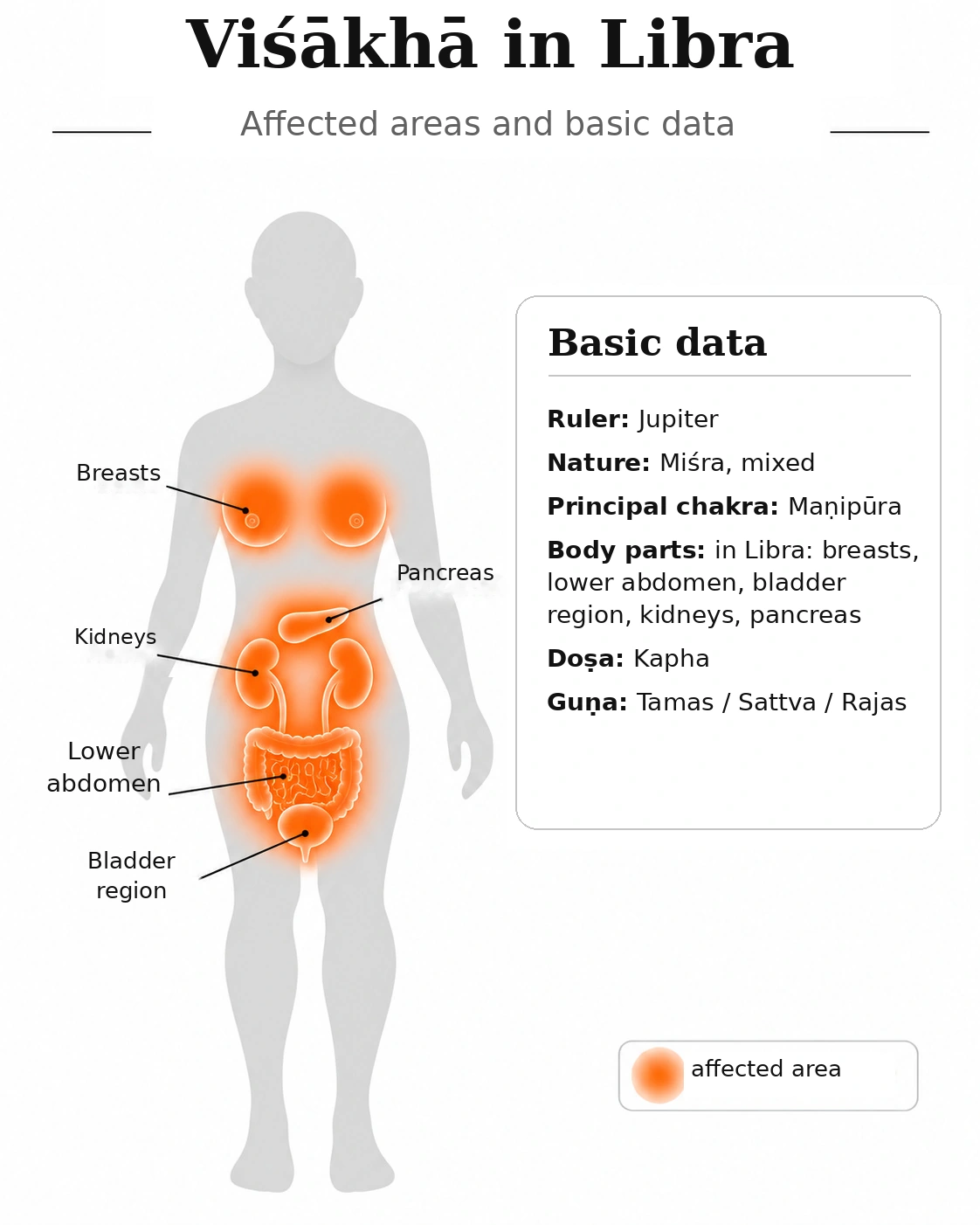
Body zonesBody zones · Viśākhā · Libra
01

Support

First level, with right-hand support available.
  1. From a seated position on a stable chair, prepare the aids needed to stand up. Rise with these aids, then find a secure standing position with a fixed support available to the right hand. Feel the feet and legs taking part in bearing weight. Let the breath accompany standing up without trying to slow it. Do not hold the breath. Direct attention towards the inner axis of suṣumṇā. The first level will be experienced before considering a second degree.

  2. Step the left foot slightly forward and place the right foot behind, a little to the side, in a comfortable base. Keep the right hand on its support. Bend the left knee slightly in the direction of the foot. A soft exhalation may accompany this action without determining its depth. If it remains easy, allow the breath to become slightly textured at the back of the throat. Feel the real work of the left thigh and the contribution of the feet. The first level is reached. The image of Indra–Agni evokes the ability to engage strength without making every degree an obligatory intensification.

  3. If the position is comfortable, let a natural breath pass through this first bend. Do not look for another degree during this initial experience. Then gradually straighten the left knee. Bring the feet closer together in small steps, keeping the right hand on its support until standing is stable. Let the breath accompany the return, taking as many breaths as needed. The first level has been left through a safe return to standing.

  4. From the standing position you have regained, prepare for a possible second passage. Resume the same base, with the left foot forward, the right behind, and the right hand on the same support. Recognise the conditions necessary for a slightly deeper degree: available foot support, free breathing and an uncomplicated return. If the first attempt was too demanding, do not seek a second position; return to seated rest with the planned aids. In that case, do not continue with steps 5 to 8; at step 9 resume at ‘Let the pelvis receive the body's weight,’ without repeating the journey. The first level suffices when a second entry is not suitable.
02

Target

Second degree, same support and the feet in the same places.
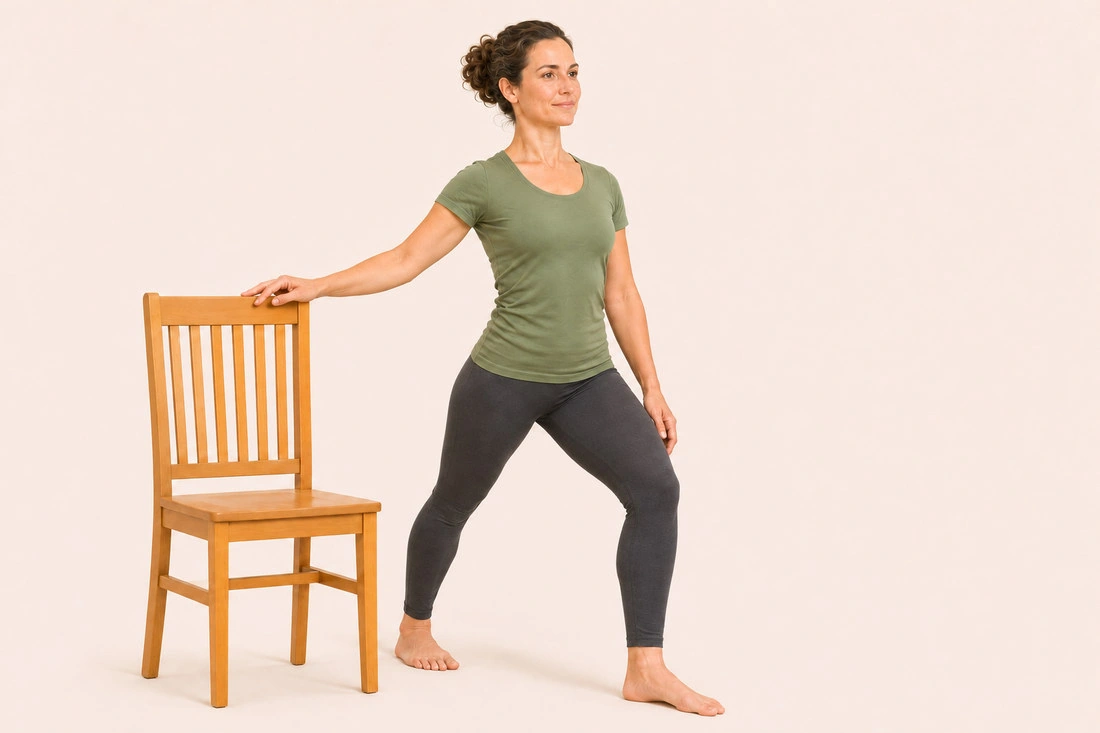
  1. If the first passage was accessible, return to the same short lunge. Bend the left knee to the first level, with the arms resting and the right hand continuing to support. Feel the familiar load in the thigh. If the supports remain secure and the breath free, bend the knee scarcely further on an available exhalation, without moving the back foot forward or shifting the hand that supports you. The second step alters the load slightly without seeking depth. If progression is unsuitable, remain at the first degree or begin the return.

  2. Briefly recognise what changed between the two levels, if the second was entered. The left thigh bears a little more. Yet the feet and right hand keep performing their roles. Imagine two small steps of light between the pelvis and lower abdomen. The first represents the degree already experienced; the second, only if it was accessible, distinguishes a slightly greater load. Let the lower back remain free and the breath renew itself. Breathing may stay supple, but must neither immobilise the abdomen nor prolong the hold. The second degree adds no obligatory value to the first.

  3. If the second degree is present, gradually straighten the left knee a little to return first to the first level. Receive this decrease in effort without changing the right-hand support. Then gradually straighten the leg until standing is stable. If only the first degree was entered, leave it directly. Let the breath accompany every transition without waiting for a particular breath. The passage from second to first degree, or from first to standing, retains all its value. There is no need to repeat it to demonstrate progress.

03

Integration

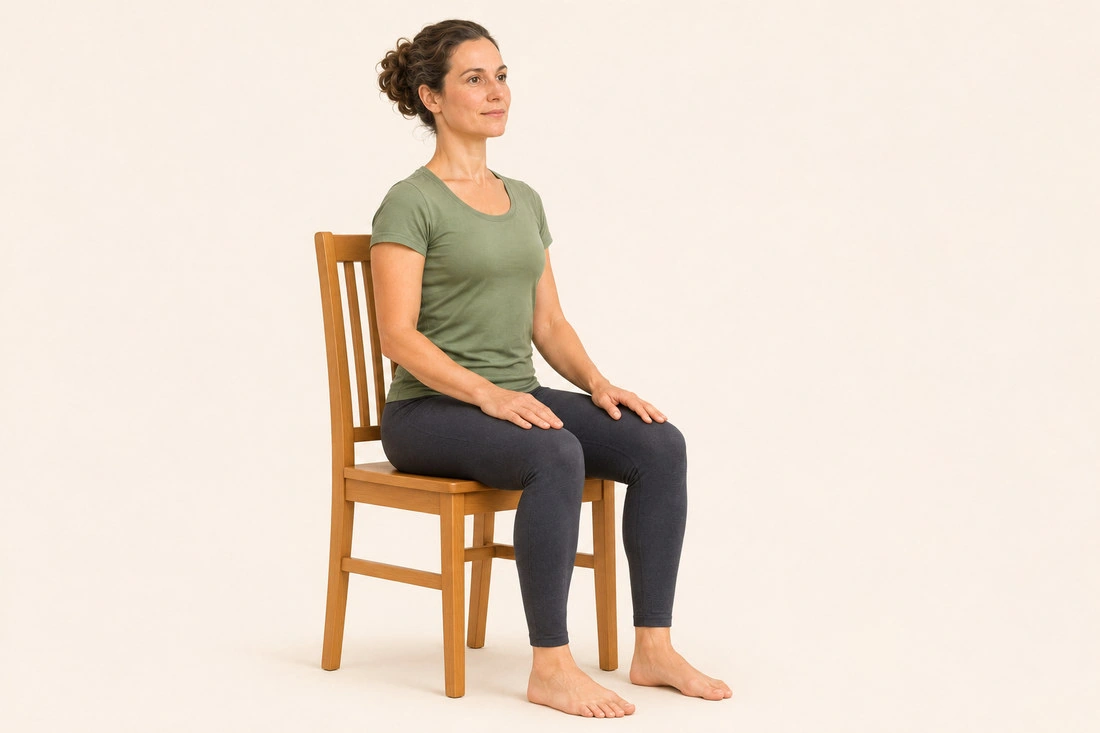
Seated again on the same chair.
  1. Bring the feet together in small steps, keeping the chair's support. Return to a standing position in which both legs bear weight comfortably. The right hand may reduce its pressure once balance is genuinely secure, while remaining available for the exit. The breath may become quieter. The legs no longer need to maintain the lunge.

  2. With the planned aids, turn towards the seat in small steps without pivoting on a heavily loaded foot. Find the edge of the chair and sit down in a controlled way. Let the pelvis receive the body's weight. The backrest may support the back if helpful. Let the hands rest and keep the feet planted. The breath may become almost silent, then natural again. If sitting is stable, briefly direct a soft gaze to the point between the eyebrows (bhrūmadhya-dṛṣṭi). Then let the eyes rest quietly ahead and the inward attention of Śāmbhavī mudrā settle towards the chest and lower abdomen. Relax the eyes. The seal of the two thresholds is complete. The first step, and perhaps the second, can remain known without the thigh bearing their effort.

Closing meditation

The front leg may have crossed a second small level, with help still available. The pelvis is supported by the chair again. An advance may awaken the wish to go further. Here, knowing the next step does not mean having to remain there. Support also accompanies the return.

Silence