← All guidesAstroYoga practiceChair version →

AstroYoga · Kriyā on the mat

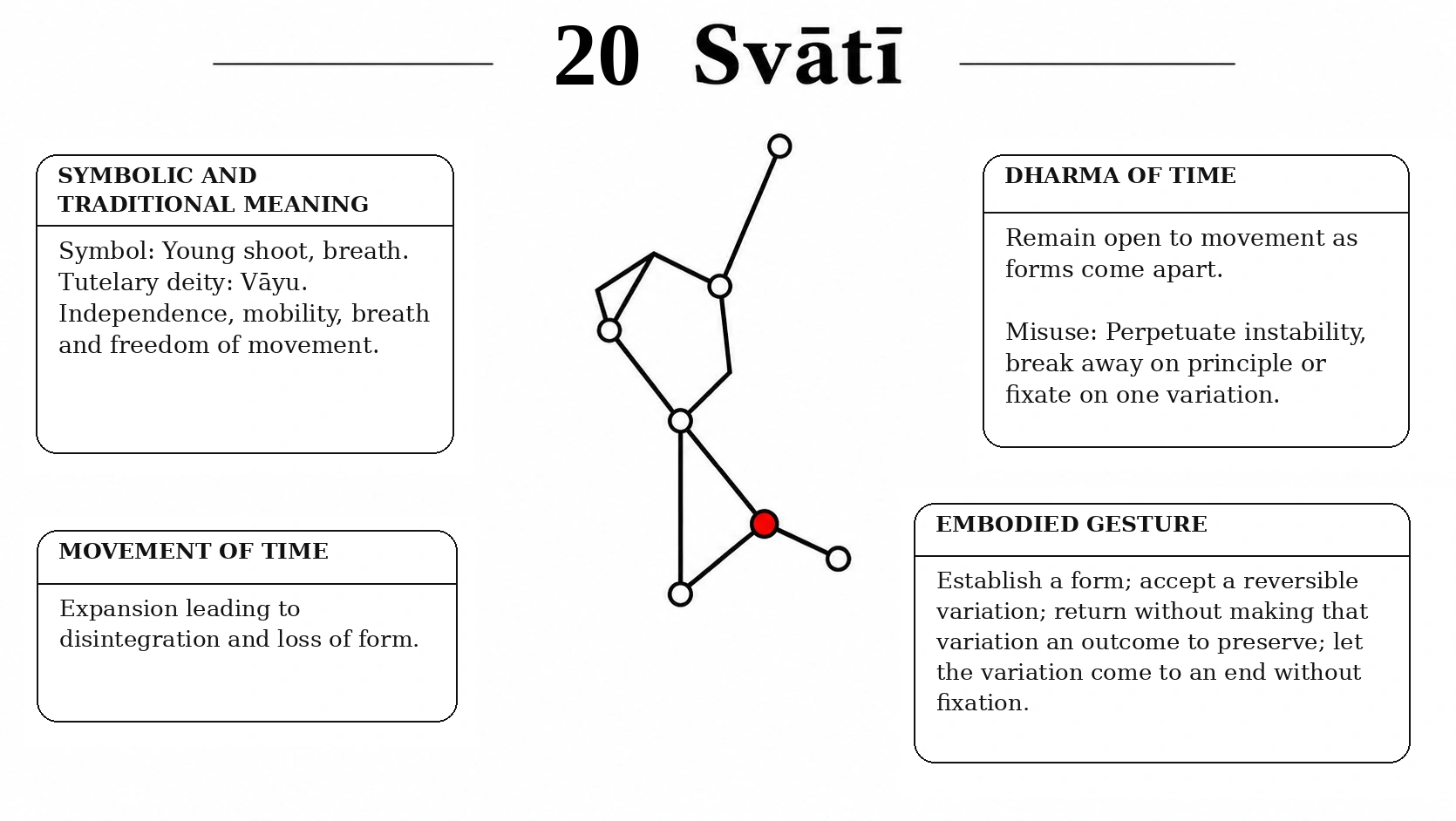
Svātī

DISPERSE

Support → Target → Integration
Practices
Vīrabhadrāsana II — Warrior II · Utthita Pārśvakoṇāsana — moderate Lateral Angle · Śavāsana — supine rest · Named but not performed: Vīrabhadrāsana I — Warrior I.
Mudrā and seal
AstroYoga seal — the free wind · Śāmbhavī — natural gaze after the variation, only when standing is stable, step 8.
Supports
Moderate Warrior II base · right foot turned right, left foot slightly angled · right knee aligned with its foot · heels bearing weight · right forearm on the upper right thigh, away from the knee · exit prepared.
Svātī · DISPERSE
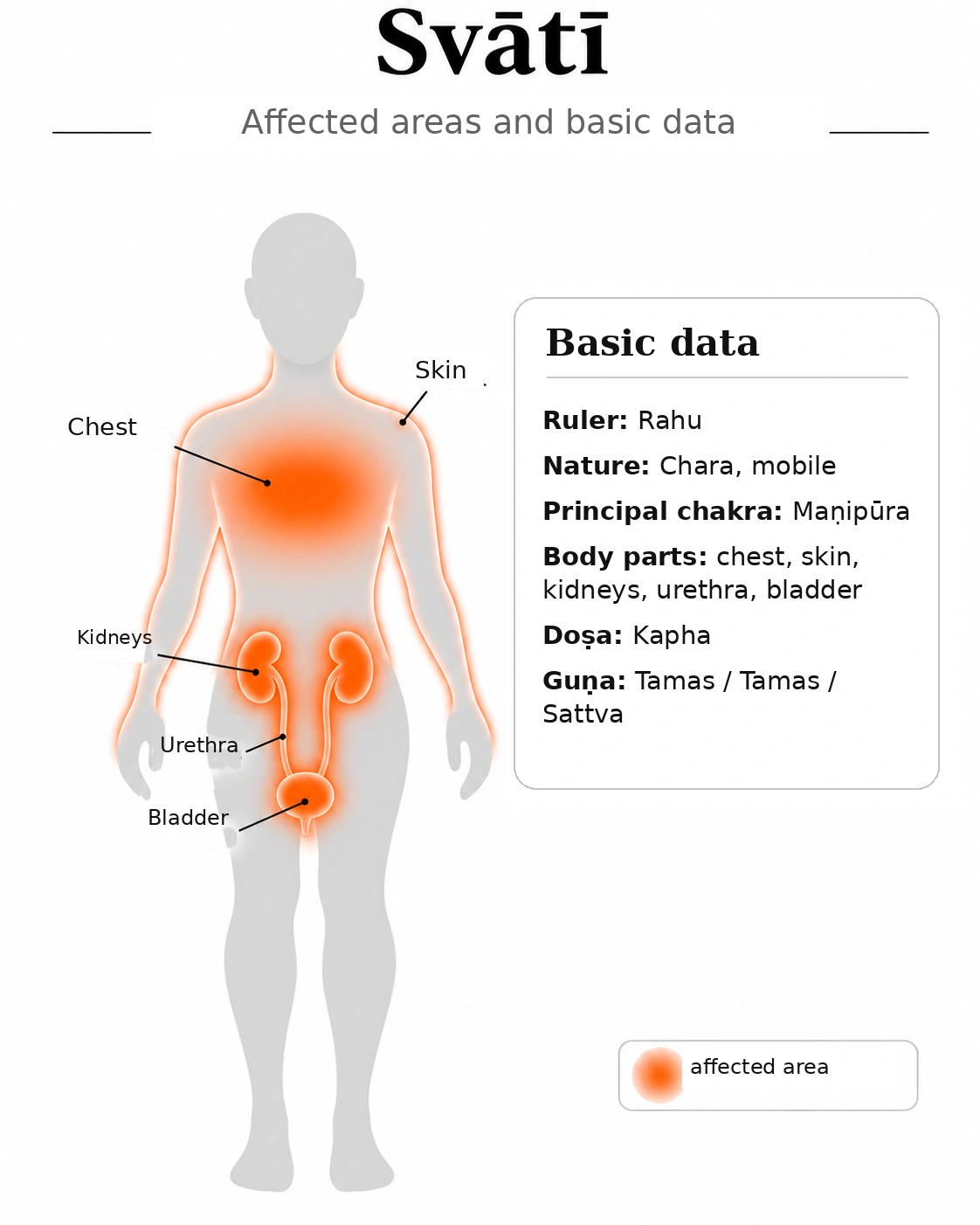
Body zonesBody zones · Svātī
01

Support

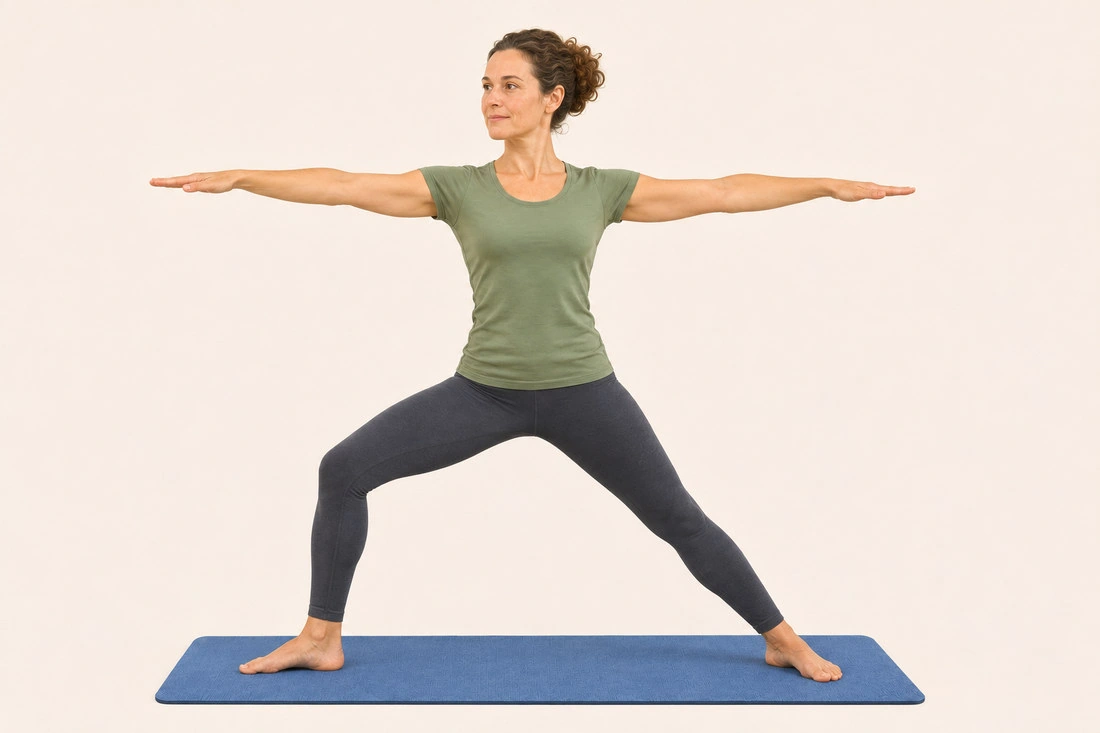
Moderate Warrior II with arms open. Vīrabhadrāsana II.
  1. Stand with the feet at a comfortable distance apart for balance. Turn the right foot towards the right and the left foot slightly diagonally. Bend the right knee moderately in the direction of its foot, without aiming for a deep lunge. Feel both feet supporting the body. The pelvis settles between the legs. Allow a natural inhalation and exhalation to accompany this arrangement. Do not hold your breath. If it remains easy, let the breath become slightly textured at the back of the throat. Keep the throat free. Inwardly recognise the axis of suṣumṇā. Warrior II is established; the variation towards Lateral Angle will follow.

  2. Open the arms to the sides to a comfortable height. Let the chest remain above the pelvis, without deliberately arching the back. Keep the gaze available in the direction of the right arm. Feel the legs carrying the body as the arms open. Breathing passes through the chest without trying to increase the opening. The breath may remain gentle and perceptible, but must not become a push outwards. Vāyu, the figure of wind, illuminates this first experience: the form is open but still supported by its base. Warrior II is established, with a return already possible.

  3. Gently lower the arms, then straighten the right knee. Bring the feet closer together in small steps, without pivoting on a heavily loaded leg. Take as many breaths as needed during the return. Recognise what has just ended: the legs no longer have to maintain the lunge, and the arms no longer have to trace the opening. The first form has been experienced and then left.

  4. Return once only to the same Warrior II base, without increasing the distance between the feet or the bend in the right knee. Open the arms again to a comfortable height. Feel the heels, legs and pelvis supporting the posture while the arms find their direction again. The breath may accompany this second entry without being artificially prolonged. The route into the posture and out of it is known. The variation can now arise without turning into a search for greater range.
02

Target

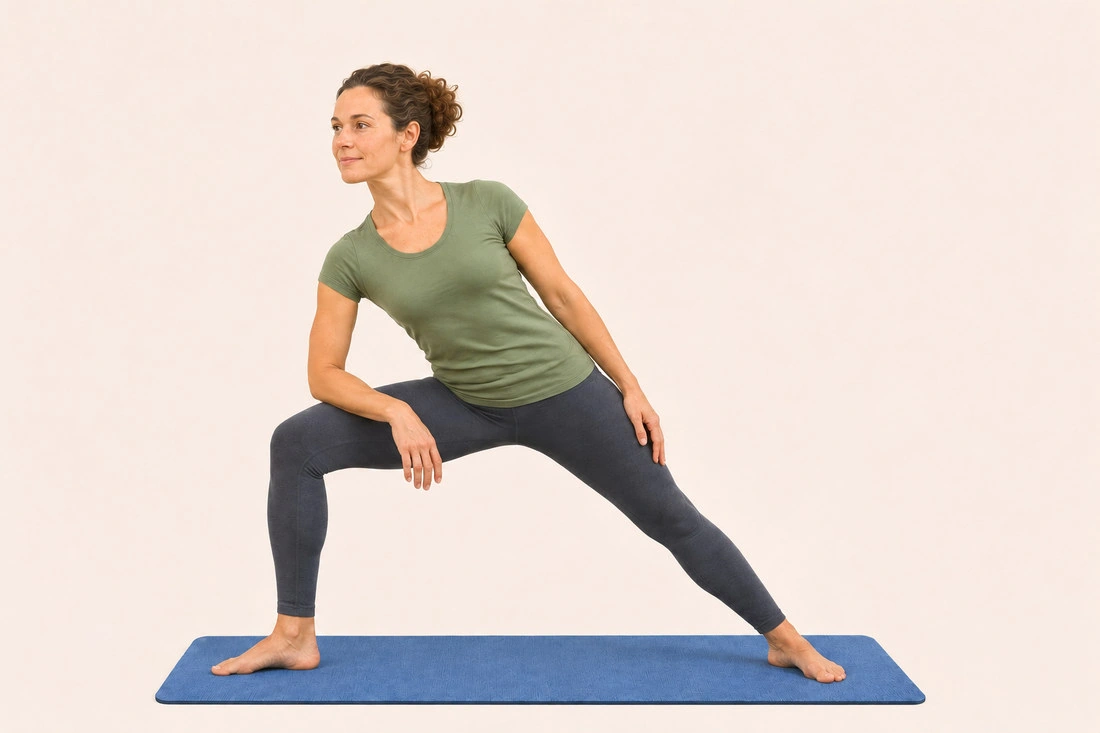
Lateral Angle received, right forearm resting on the upper right thigh. Utthita Pārśvakoṇāsana.
  1. From Warrior II, allow the trunk to incline slightly towards the right. Rest the right forearm on the upper right thigh, away from the kneecap, without pressing firmly on the knee. Keep the right knee pointing in the direction of its foot. Both feet maintain their weight-bearing contacts. The left arm accompanies the change of form in an available position; it is not required to reach above the head. A gentle exhalation may accompany the inclination if it comes naturally. If the movement needs another breath, allow it. Recognise the genuine change: the legs continue to bear weight, but chest, pelvis and arms no longer perform quite the same task. Breathing accompanies the passage without determining the depth of Lateral Angle.

  2. Remain briefly in the variation for the span of one natural breath if the posture stays comfortable. Feel the work of the legs, the support of the thigh beneath the forearm and the chest's new direction. Lateral Angle is genuinely inhabited; it is not merely a transition back. Let the breath pass through this different form. It may remain softly perceptible, but must neither fix the trunk nor prolong the hold. Imagine prāṇa following this different sharing of supports, like a current passing through a form without needing to remain in it. Perhaps satisfaction arises with the variation obtained, or a desire to go a little further to experience more of its beauty. Do not turn that desire into greater range. The variation has existed. It does not have to become permanent.

  3. Keeping the feet and legs participating, gradually raise the trunk. Leave the right forearm available on the thigh for as long as it helps the rising movement, and then release it once the trunk has regained its support. Return to a comfortable Warrior II, with the arms open only as high as remains comfortable. Let breathing accompany this transition, even if several breaths are needed. Do not seek another inclination in order to recover the previous sensation. The breath can soften, but must not be forcibly slowed while the legs are still working. Lateral Angle has been left. Warrior II has returned, while the experience of passing between them remains. The seal of the free wind begins to be fulfilled in this reversibility.

03

Integration

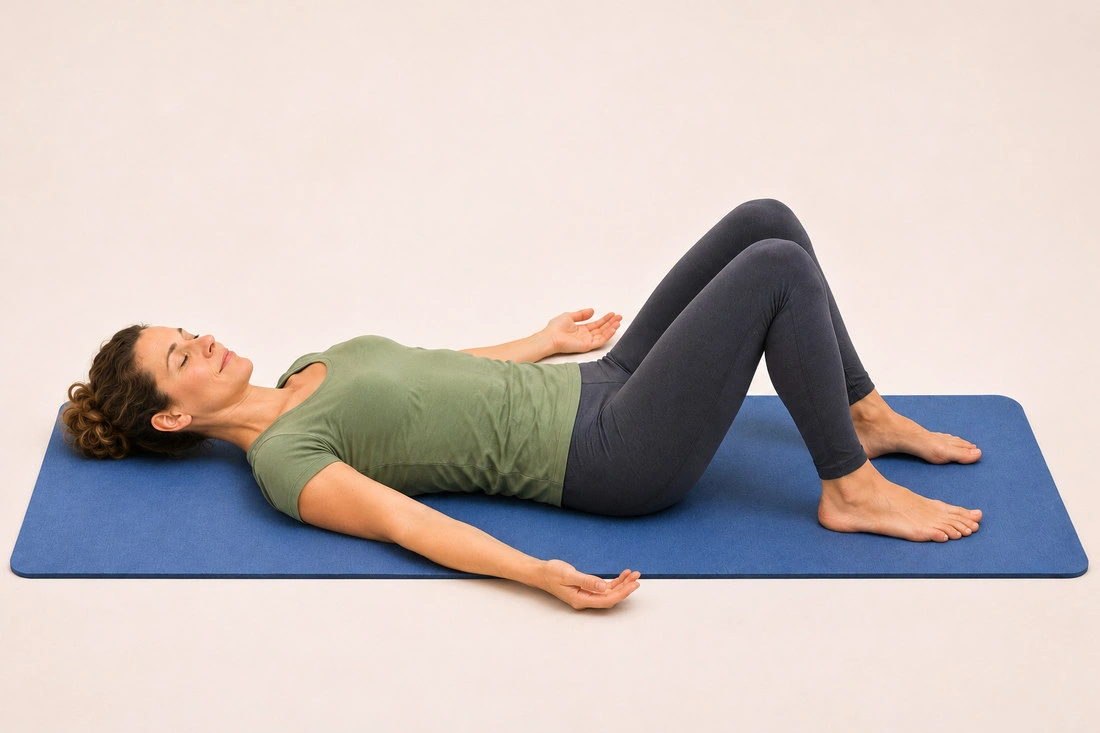
Rest on the back after a supported exit. Śavāsana.
  1. Lower the arms, then gently straighten the right knee. Bring the feet together in small steps, with a stable support available if needed. Let breathing accompany each move. No long exhalation is required to complete the exit. Feel the legs gradually freeing themselves from the lunge. The breath may become quieter as standing becomes simple and stable again. The Warrior's form no longer needs to be maintained. The change has been fully experienced and then received in its ending. Only once standing is secure again may the eyes remain naturally directed forward while attention briefly turns inward: Śāmbhavī accompanies the completed variation without holding the breath. Release this gesture before moving towards the floor; omit it if the gaze is still needed for balance.

  2. If reaching the mat is accessible, use the support prepared and enter a small low lunge, then bring one knee and the other to the mat with the help of the hands. Next move through one side to reach rest on the back, without rushing the change of support. If this descent is not safe, return to a stable resting seat with whatever assistance is needed. In Śavāsana, let the back and pelvis be received. Keep the knees bent with the feet grounded if that is preferable. The arms no longer need to express Warrior's opening; the legs no longer need to maintain its base. Breathing may gradually settle and then return to its natural course. Attention may recognise the forms passed through without trying to reproduce them. The seal of the free wind is complete: the variation has passed, and the body returns to rest without holding onto it.

Closing meditation

The legs supported the Warrior; the trunk changed shape and then came back. A desire to keep the most beautiful variation may arise. The movement showed something else: no form needs to become permanent. The breath lets change pass like a light wind.

Silence