← All guidesAstroYoga practiceMat version →

AstroYoga · Kriyā on a chair

Svātī

DISPERSE

Support → Target → Integration
Practices
Adapted Vīrabhadrāsana II — seated Warrior II · Adapted Utthita Pārśvakoṇāsana — seated Lateral Angle.
Mudrā and seal
Śāmbhavī — natural gaze after the trunk returns (7), then optional bhrūmadhya at rest (9) · AstroYoga seal — the free wind.
Supports
Stable chair · pelvis fully supported · feet apart at a comfortable width · knees directed along the feet · right forearm on the upper right thigh, away from the knee · return possible at any time.
Svātī · DISPERSE
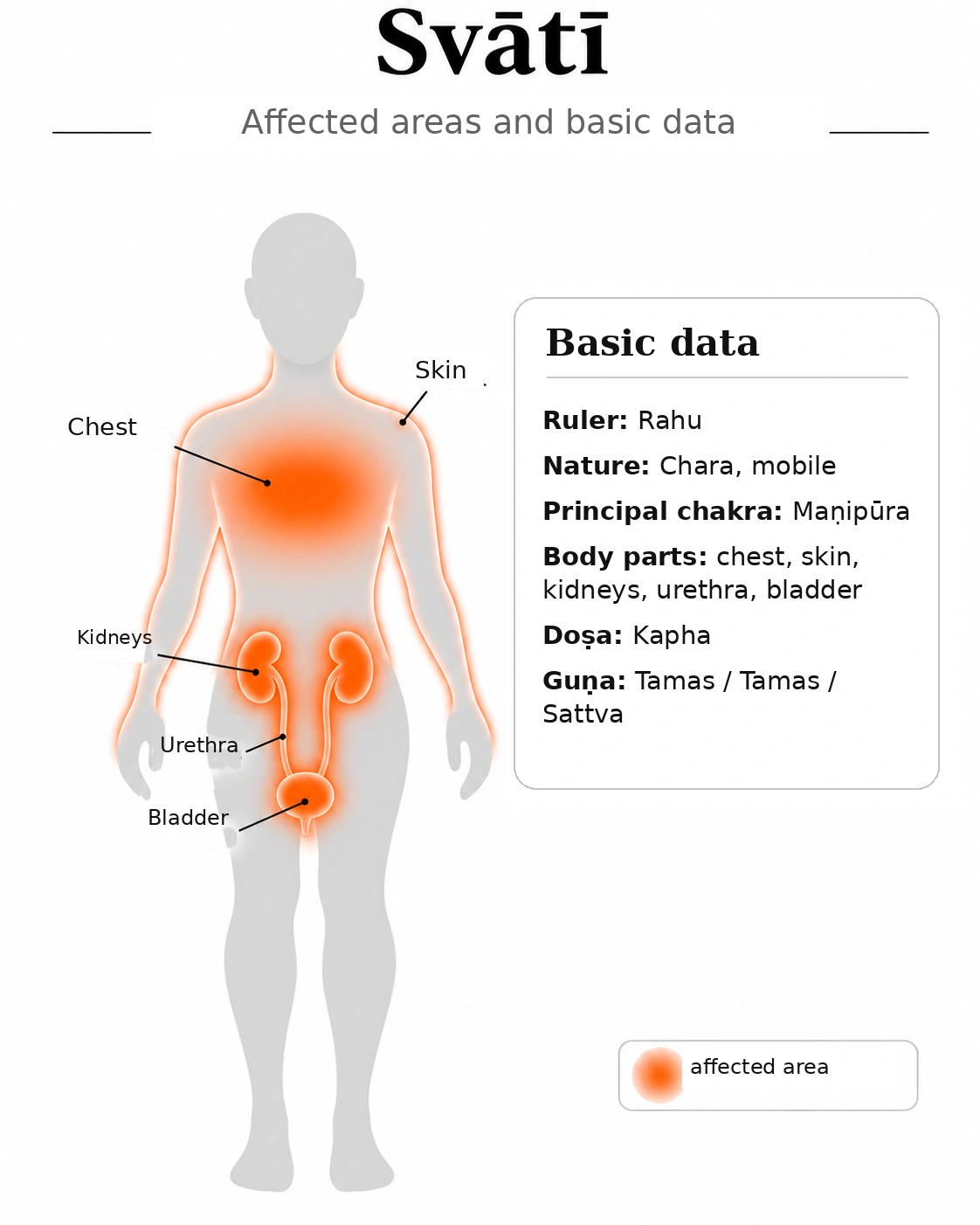
Body zonesBody zones · Svātī
01

Support

Pelvis supported, feet apart and arms available.
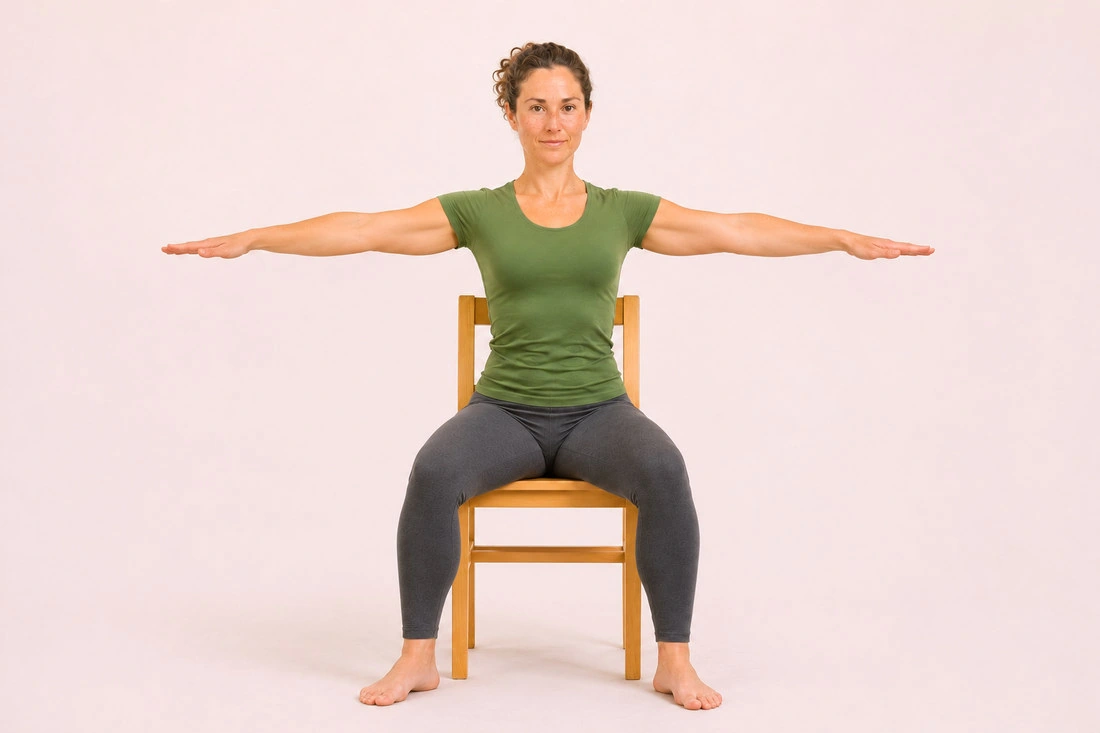
  1. Sit facing forward on a stable chair, with the pelvis fully supported and both feet on the floor. Open the feet slightly apart, turning the right foot a little towards the right, with the knees following the direction of the feet. Keep a width that requires neither sliding the pelvis nor forcing the hips. Feel the supports already present: the feet contribute to the base and the seat bears the pelvis. Allow a natural inhalation and exhalation to pass through the chest. Do not hold your breath. If it remains easy, let the breath become slightly textured at the back of the throat. Direct attention towards the inner axis of suṣumṇā. The pelvis is supported before the first movement of the arms.

  2. Gently open the arms to the sides at a comfortable height. Let the trunk remain over the pelvis, without seeking an arch in the back. Feel the activity of the shoulders and the chest's new direction, while the feet and seat continue to support the body. The breath accompanies this opening without giving it greater range. It may remain quiet; it must not become a means of keeping the arms raised through respiratory effort. The form of seated Warrior II genuinely exists. This first opening can be received without extending the hold.

  3. Observe what this first opening costs. If the shoulders or trunk already require too much effort, lower the arms, bring the feet closer and return to comfortable sitting. Receive a moment of rest. If this first form remains easy, keep it without seeking a wider opening. Allow breathing to circulate freely. The return remains available; the form need not be preserved.

  4. If the posture was left, optionally return just once to a slightly smaller opening of feet and arms. If it was left and no comfortable return is chosen, remain in the resting seat with useful aids and proceed to the alternative meditation, without continuing with steps 5 to 9. If the first posture remained comfortable, simply keep that arrangement. In either case, feel the pelvis genuinely supported, the feet available and the arms engaged at a modest height. Do not make another repetition to enlarge Warrior. The breath may accompany this availability, without counted breathing. The seal of the free wind is prepared by the possibility of changing form without losing the supports.
02

Target

Right forearm on the upper part of its thigh, with the base preserved.
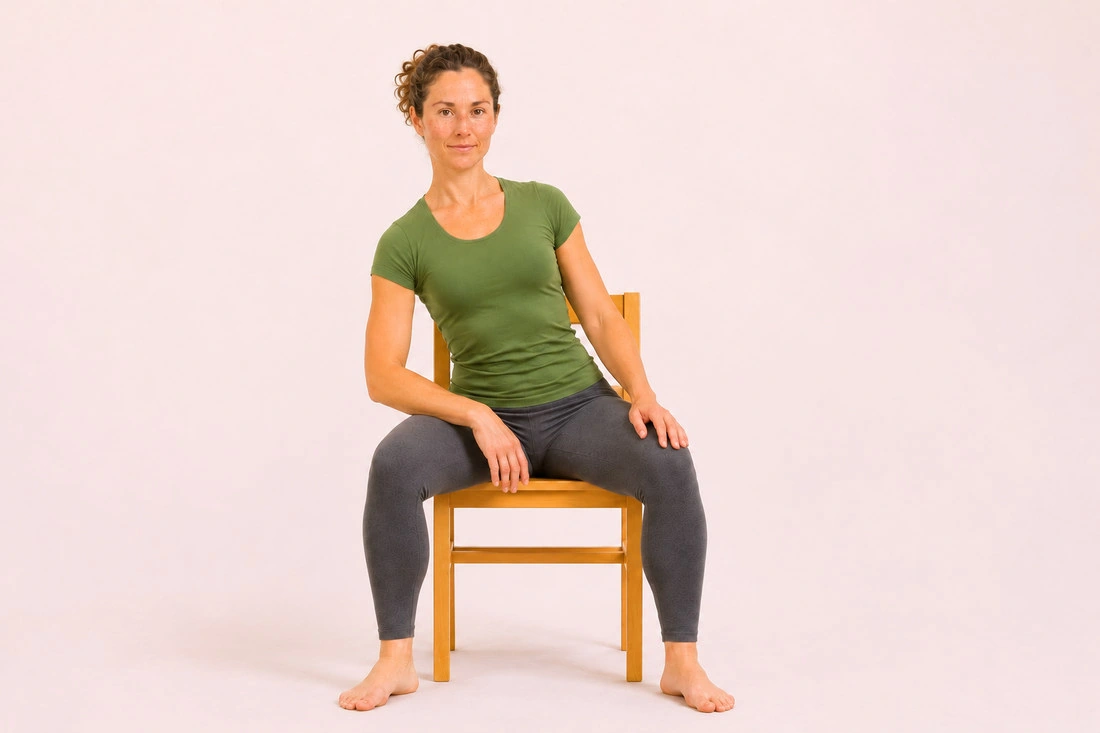
  1. From seated Warrior II, let the trunk incline slightly towards the right. Rest the right forearm on the upper right thigh, away from the kneecap, without pressing heavily. The left arm naturally accompanies the change and may move to a comfortable resting position. Keep the pelvis fully supported by the seat and the feet where they are. A gentle exhalation may accompany this small shift if it comes freely. Do not prolong the exhalation to obtain a deeper inclination. Feel that the chest, arms and support of the thigh no longer perform precisely the same tasks as in Warrior II. Lateral Angle is real even when the inclination stays small.

  2. Remain briefly in this new form for one natural breath if it stays comfortable. Feel the supported pelvis, the right thigh available beneath the forearm and the slightly directed trunk. Allow breathing to move through this different organisation. It may remain very gentle, but need not preserve the angle or produce any special sense of power. Imagine a wing of light accompanying the passage from one form to another, without dictating the extent or duration of the gesture. The variation has genuinely been inhabited. Perhaps you want to remain there because it seems more open, more successful or simply different. Recognise that wish without trying to prolong the tilt. Lateral Angle is no higher achievement than Warrior II; it is a form passed through.

  3. Using the necessary movements of the trunk and the help of the right forearm for as long as useful, gradually rise upright. Do not pull with the left arm or swing the chest. Let breathing accompany this return for as long as needed. When the trunk finds its place above the pelvis again, free the right forearm from its supporting role. Return to a modest opening of the arms, corresponding to a comfortable seated Warrior II. The breath may become less audible when the body no longer needs to support the slight incline. The pelvis and feet still bear weight. Lateral Angle has been left; Śāmbhavī may receive the return, with a natural gaze, without holding onto the form. The ability to vary remains. Do not repeat the same inclination to recover its effect.

03

Integration

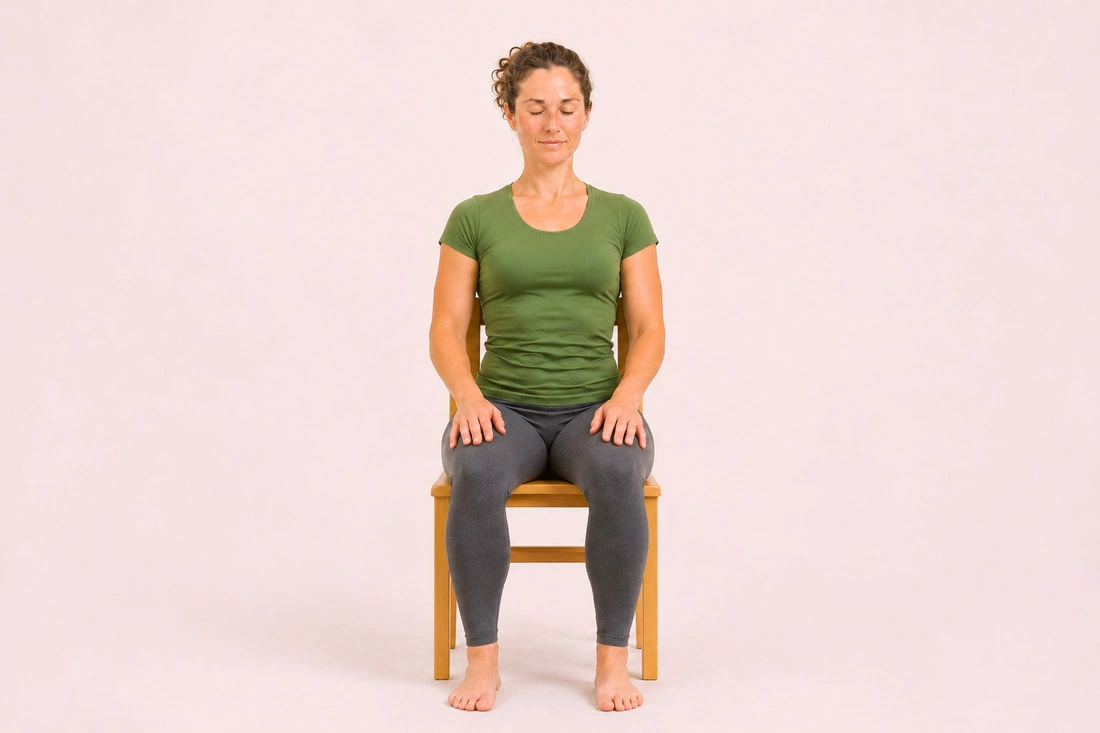
Feet closer together and rest against the backrest.
  1. Gently lower both arms. Then bring the feet closer together in small moves until seated on a comfortable base, the knees following their direction. The pelvis continues to rest on the chair. Let breathing accompany these adjustments without trying to complete them in a single exhalation. The breath may become quieter as the shoulders and trunk stop their work. Feet, seat and body return to a simple organisation. The variation has ended without needing to be repeated.

  2. Let the backrest receive the back if helpful, without pushing the chest or sliding the pelvis. Rest the hands on the thighs. Feel the shoulders, skin of the chest and lower back return to rest. Breathing may become almost silent, with a gradually calmer pace, and then give way to spontaneous respiration. Breathing continues freely; no further opening is requested. If sitting remains stable, briefly direct a soft gaze towards the point between the eyebrows (bhrūmadhya-dṛṣṭi). Then allow the eyes to rest quietly ahead and bring the inner attention of Śāmbhavī mudrā towards the skin of the chest and lower back. Relax the eyes. The seal of the free wind can dissolve: the first form, variation and return have been experienced. The body no longer needs to hold the arms or the inclination. The variation has taken place and can now disappear without being held.

Closing meditation

For a moment, the body left its seated Warrior shape for an inclination, then returned. Perhaps there is a wish to keep the successful variation. The feet and the seat already offer another right form. Freedom enters this passage without asking us to possess the movement.

GUIDED MEDITATION · ALTERNATIVE — if the inclination was not undertaken

The arms opened, then returned to rest. The pelvis remains carried by the seat; the feet have found a comfortable position again. The inclination was not undertaken. Perhaps there is still a desire to reach the planned form. Freedom can also let a sequence of gestures end where the body is supported.

Silence