← All guidesAstroYoga practiceChair version →

AstroYoga · Kriyā on the mat

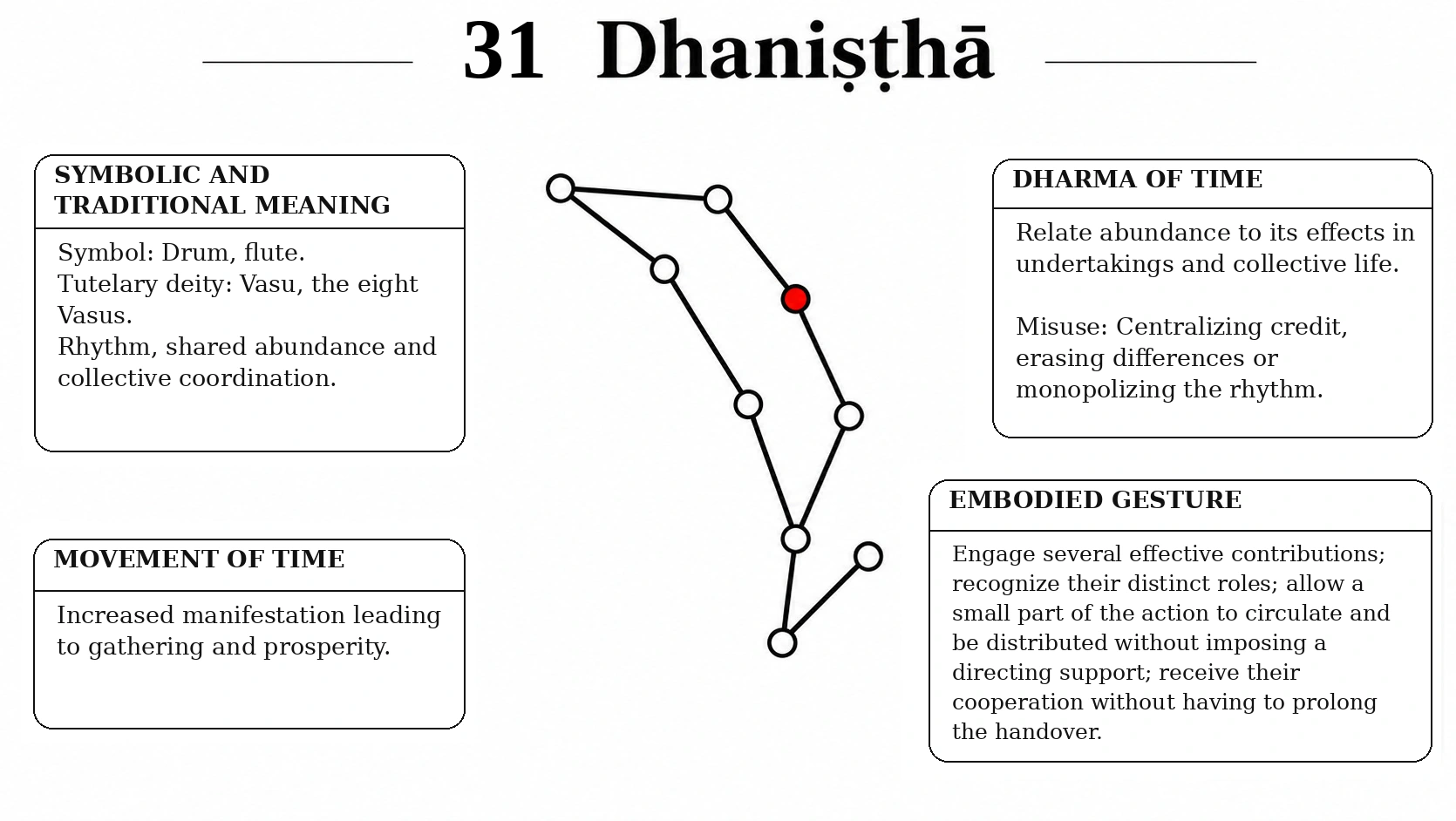
Dhaniṣṭhā · Aquarius

GATHER

Support → Target → Integration
Practices
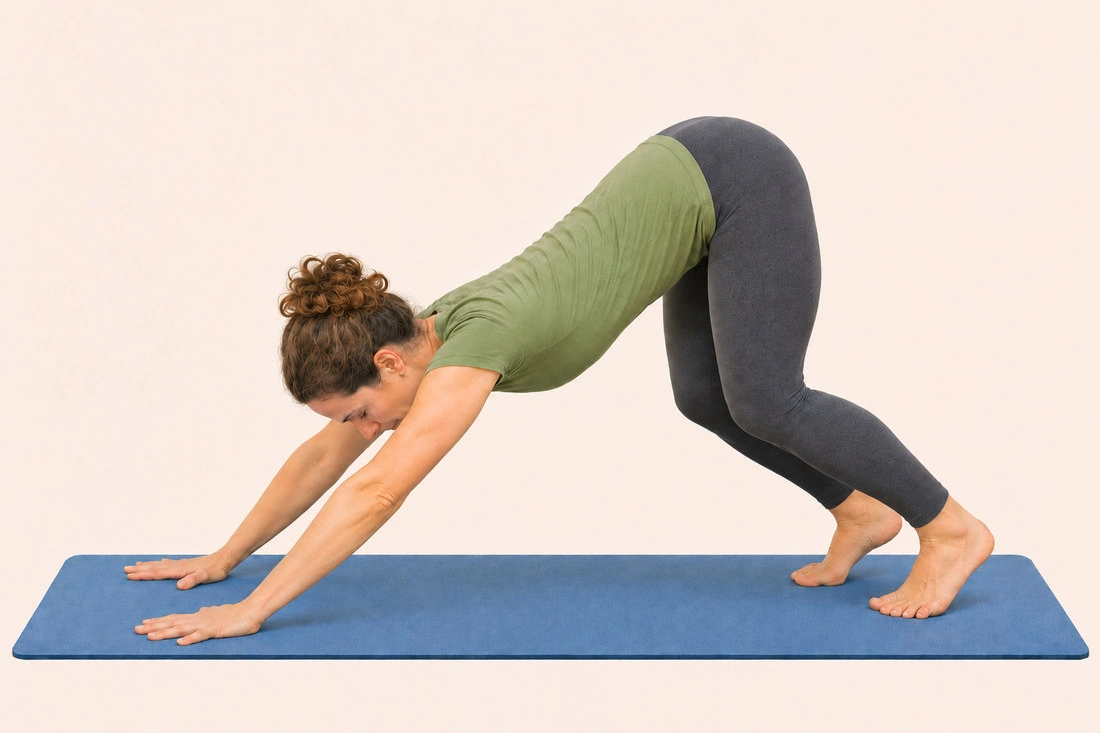
Adho Mukha Śvānāsana — adapted Downward-Facing Dog · Uttānāsana — small standing forward fold, if the transition is accessible.
Mudrā and seal
AstroYoga seal — gathering the currents · Mahābandha — symbolic convergence, not performed · Khecarī — optional partial tongue contact at step 3, only if the first return leads to stable sitting, after any optional Bhrāmarī.
Supports
Weight-bearing palms and feet · soft knees · heels free · knees to the mat for an accessible exit · hands retained until weight has actually transferred.
Dhaniṣṭhā · Aquarius · GATHER
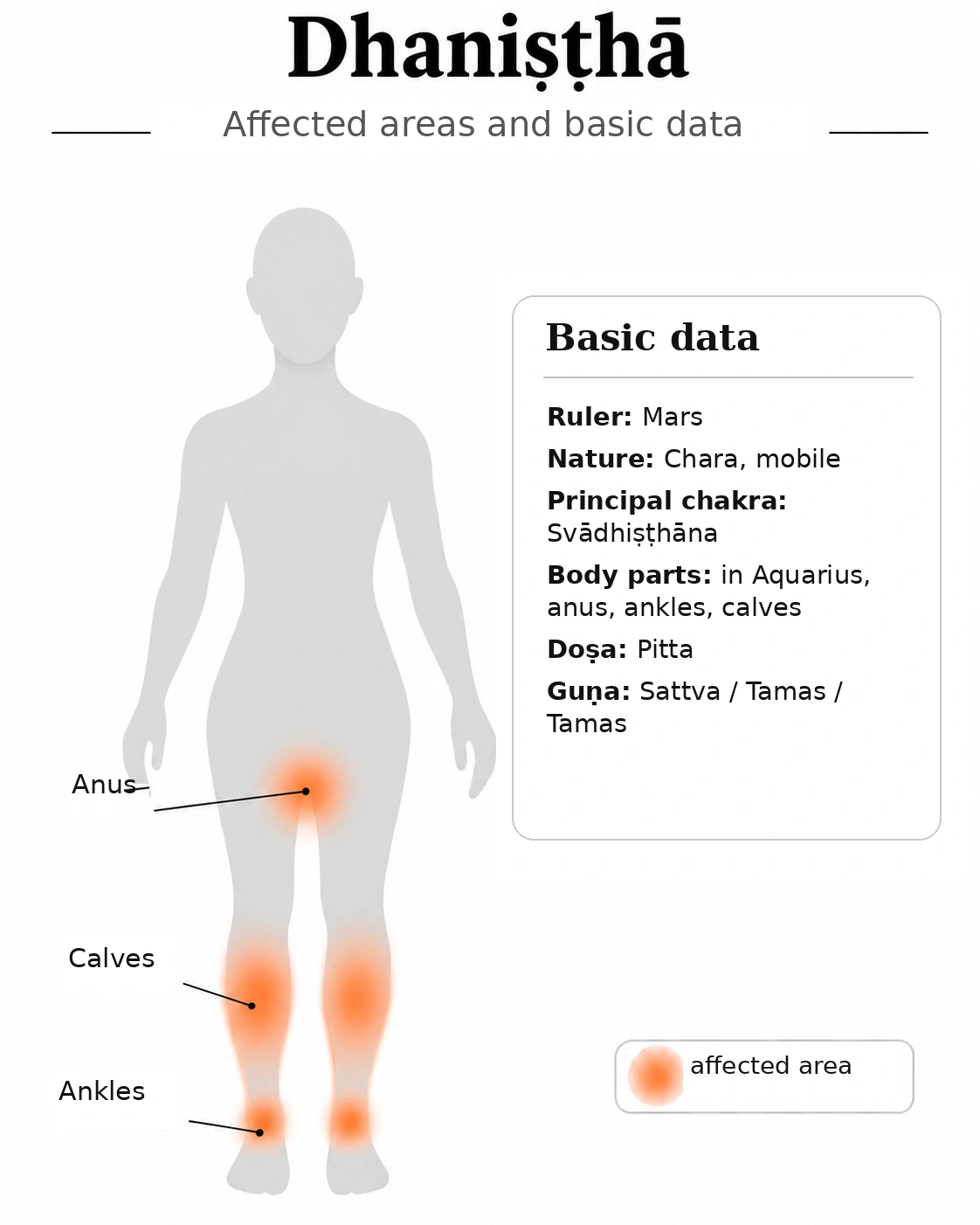
Body zonesBody zones · Dhaniṣṭhā · Aquarius
01

Support

Adapted Dog, hands and feet bearing weight.
  1. Come onto the hands and knees with whatever assistance is needed. Set the palms a comfortable distance apart, fingers spread and elbows free. Protect the knees and allow the pelvis to be supported in this first organization. Let one natural inhalation and exhalation move through chest and abdomen; do not hold the breath or prepare an unusually long breath for the movement ahead. Recognize that the hands could gently press into the ground while legs and feet take part in a different direction. The body has not yet left the all-fours position. This preparation establishes supports without requiring breathing to order their movements.

  2. Tuck the toes under to establish support through the feet. On an easy exhalation, if it comes, gently push the mat away with the palms and guide the pelvis backward and upward. Keep the knees as bent as necessary and let the heels remain free; do not try to set them fully on the ground. Form a small, accessible Downward-Facing Dog. Feel the arms support the upper body while feet and legs follow the direction of the pelvis. Notice calves and ankles in this new relationship to the ground. Then let the breath renew itself freely. Do not prolong the push of the palms to match a longer exhalation. Palms and feet bear weight together, with no imposed breathing rhythm.

  3. Gradually lower the knees to the mat, keeping the hands weight-bearing for as long as the descent requires. Let the pelvis regain a supported base. Only if this rest already brings you into a stable, comfortable sitting position with free breathing may a single very gentle humming exhalation inspired by Bhrāmarī accompany the pause. Do not move into another posture merely to produce the sound. If you are still resting on the knees without a comfortable seated position, keep breathing naturally. If sitting is stable and the hands are unloaded, after any optional Bhrāmarī, one very gentle breath slightly rough at the back of the throat may accompany an exhalation and then cease; the tongue may subsequently touch the front of the palate lightly for one nasal breath (adapted Khecarī), then release. Otherwise continue natural breathing without retention. Feel the knees taking back part of the weight as palm pressure lessens. The first Dog is finished. The body now knows how to leave the cooperation without abandoning a support too soon.

  4. Return to all fours with the prepared protection and assistance. Tuck the toes again and enter the same adapted Dog just once more. Keep the knees supple; the heels do not need to touch the ground. Do not aim for a higher pelvis or a longer back than during the first passage. Feel that hands and feet are truly carrying weight. If Bhrāmarī was practised at the previous rest, it is over; no additional humming is produced. Breathing remains available. The second Dog revisits the same load without requiring a longer hold.
02

Target

Same view: distinct contributions cooperating.
  1. In the adapted Dog, feel first the right palm and then the left. Do not deliberately move weight to make either one more important. Both hands retain contact with the ground and their supporting function. Recognize the direction of support transmitted through the arms while the feet continue to participate. Breathe naturally: no inhalation commands the push of one hand, and no exhalation commands the other. Dhaniṣṭhā's drum offers an image for this recognition: several presences share a resonance without taking turns. Do not increase palm pressure in search of a stronger sensation. All four supports are already engaged.

  2. Bring attention to the feet, ankles and calves, sensing how they help keep the pelvis directed backward and upward. The hands stay on the mat and the arms continue to carry the upper body. Do not straighten first one leg and then the other, and do not assign a push of the feet to an inhalation or exhalation. If the wrists tire or the posture becomes difficult to sustain, immediately lower the knees. In that case, skip step 7 and do not repeat the exit in step 8; go straight to the stable sitting position planned in step 9, with the hands assisting the transition from the knees. Otherwise let breathing continue naturally. Recognize these streams of support as distinct yet connected actions: feet do not replace hands, and arms do not cancel out legs.

  3. If the posture remains comfortable, let one final natural breath pass through all four contacts. Feel palms and feet supporting simultaneously. Arms, ankles and calves share one organization even though they exert different efforts. Do not seek equal pressure between hands and feet or hold the breath to freeze their relationship. The seal of gathering the currents symbolically recalls the convergence associated with Mahābandha; no lock, retention or extra contraction is performed. If fatigue begins to make one support dominant as compensation, end the Dog. A single breath of cooperation is enough when genuinely available. Gathering has been experienced; no limb needed to direct the others.

03

Integration

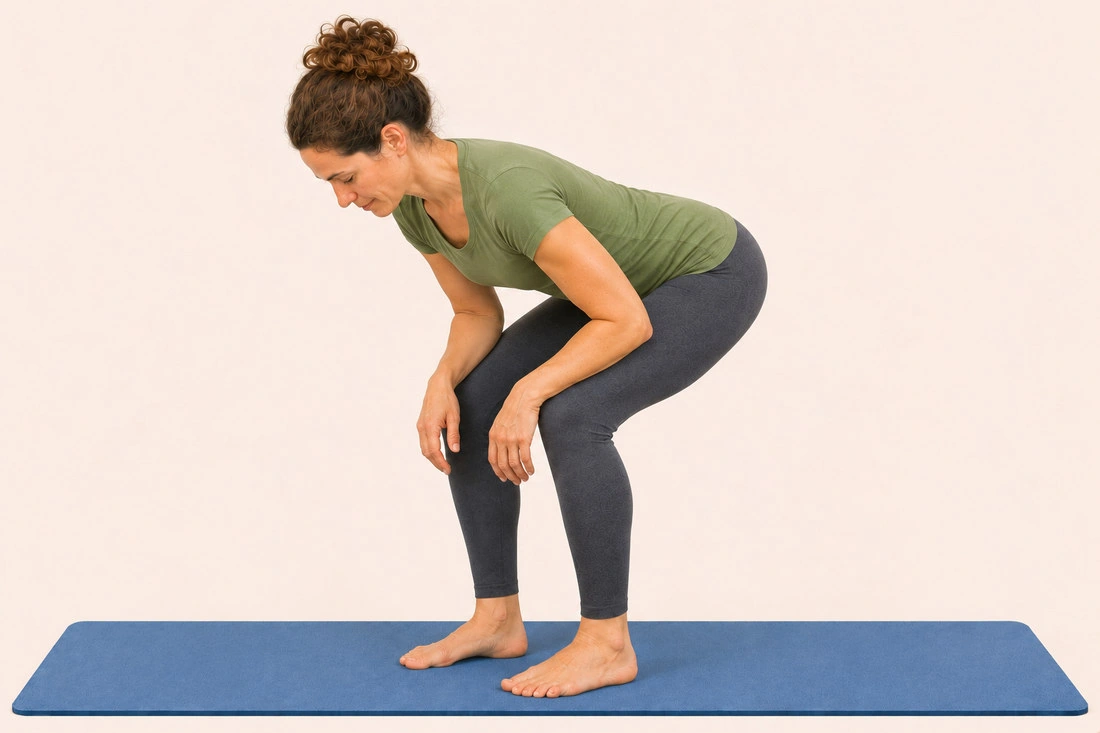
Supported forward fold, forearms resting on the thighs.
  1. Identify the genuinely accessible exit. If hands and legs can help bring the feet closer without losing balance, walk the feet toward the hands in small steps, with knees soft and palms still carrying weight. Let weight return progressively toward the feet; do not try to complete the transfer in a single exhalation. If this route is not safe enough, lower the knees to the mat while the hands still support the body, then move into the prepared rest. In both cases, keep each contact for as long as it serves a necessary purpose. Let breathing follow the exit freely. The cooperation of the Dog can end without prematurely abandoning a hand or a foot.

  2. If the feet have reached a stable standing base, let the legs genuinely bear the weight before unloading the hands. Find a small forward fold, knees soft, forearms resting on the upper thighs or on the prepared stable support. Keep this Uttānāsana modest: the chest need not descend deeply. Feel the feet carrying you while the hands no longer bear the Dog's weight. Once the rest has been received, gradually straighten the torso with the legs and any prepared assistance. If you exited through the knees, move directly from that base to stable sitting, assisted by the hands. Keep breathing naturally through each transfer; do not repeat Bhrāmarī. Palms carried, feet responded, and the body found a different support. The symbolic drumbeat may fall silent. Wrists, calves and ankles no longer need to maintain their former cooperation. The body has left the Dog; arms and legs may end their shared effort.

Closing meditation

In the Dog, the palms pressed and the feet responded; now all have returned to rest. A shared action can sometimes be disturbed by the desire to lead the movement alone. The body has known another rhythm. Each support had its place, and none had to disappear.

Silence