← All guidesAstroYoga practiceMat version →

AstroYoga · Kriyā on a chair

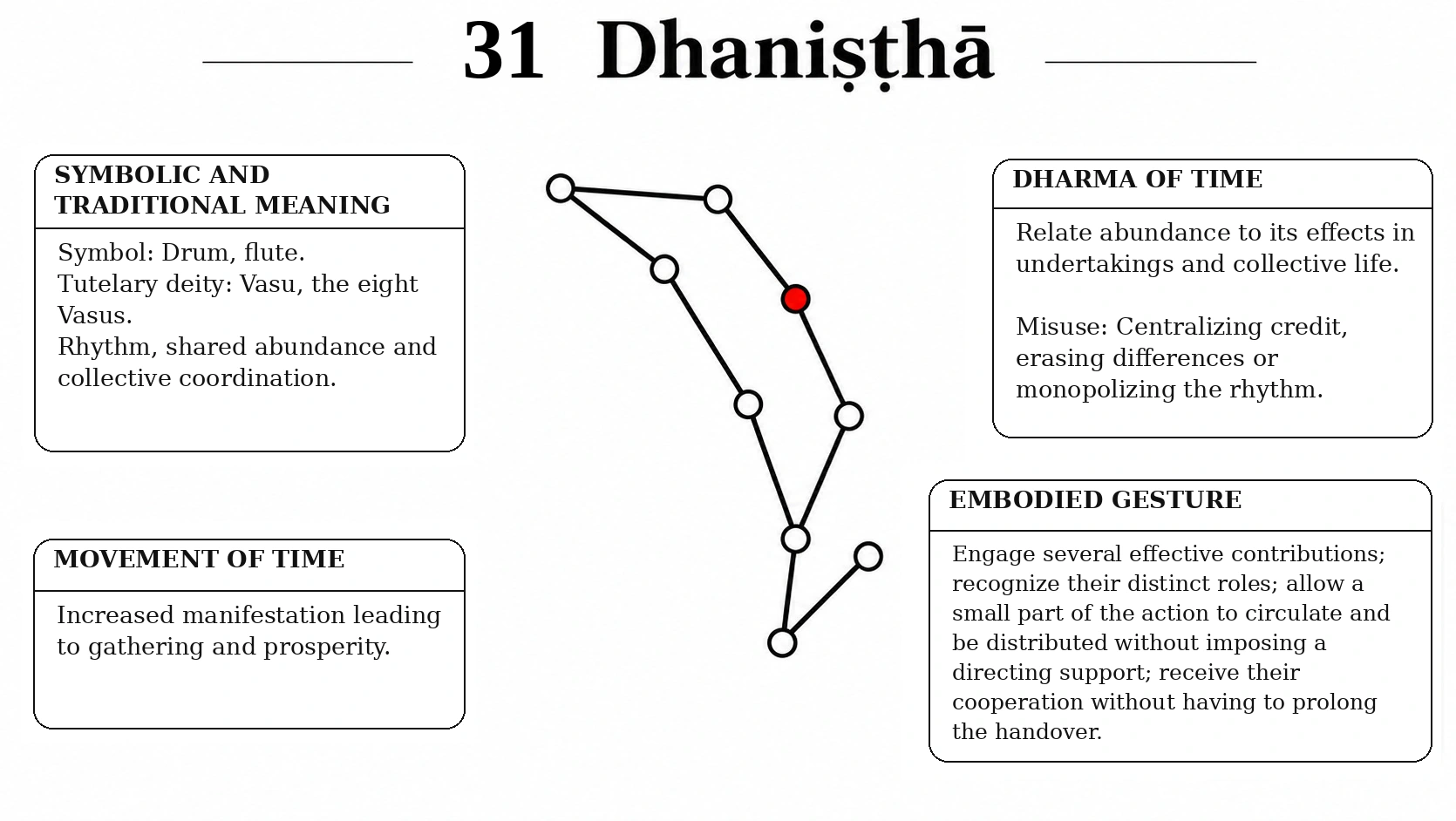
Dhaniṣṭhā · Aquarius

GATHER

Support → Target → Integration
Practices
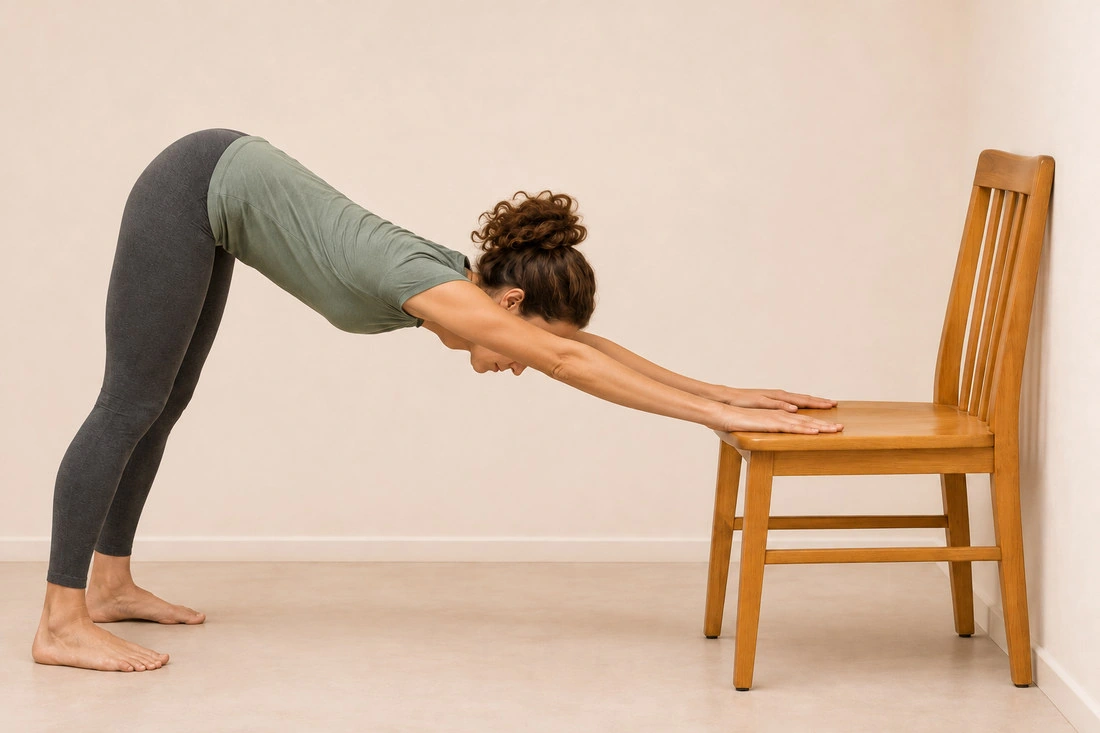
Adapted Adho Mukha Śvānāsana — assisted Dog, palms on the seat of a firmly immobilized chair.
Mudrā and seal
Śāmbhavī and bhrūmadhya at step 1 · AstroYoga seal — gathering the currents · Mahābandha — symbolic convergence only, not performed · Khecarī — optional partial tongue contact after any Bhrāmarī, at step 9.
Supports
Fixed, immobilized chair with no wheels · palms on the seat · feet bearing weight · pelvis drawn moderately backward · supported half-fold on return · stable sitting before any Bhrāmarī.
Dhaniṣṭhā · Aquarius · GATHER
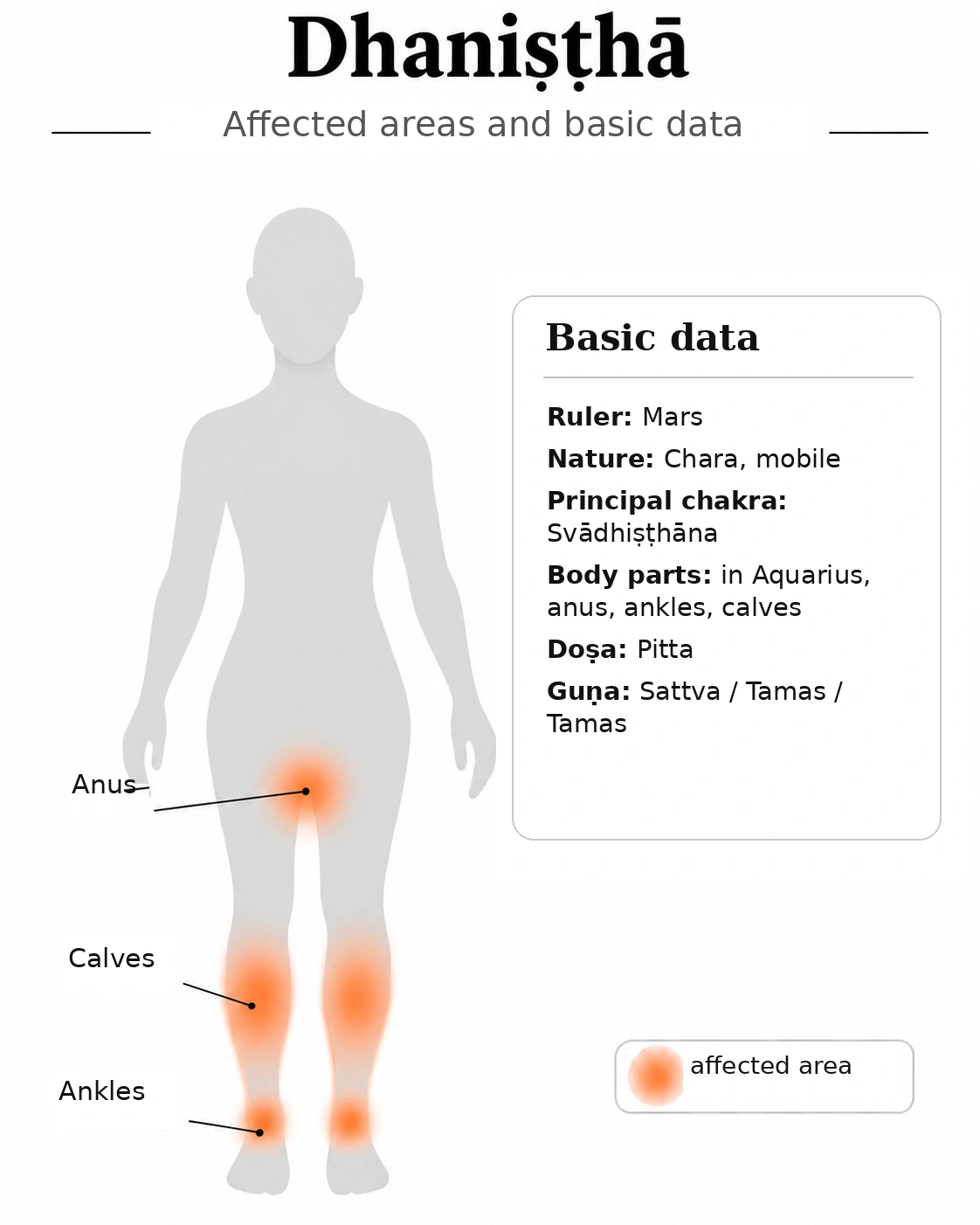
Body zonesBody zones · Dhaniṣṭhā · Aquarius
01

Support

Assisted Dog: established weight-bearing contacts.
  1. Sit on a stable chair with the pelvis fully supported and the feet on the ground. Notice calves and ankles within this first base. If sitting is comfortable, briefly let a soft gaze rest at the point between the eyebrows (bhrūmadhya-dṛṣṭi). Then relax the eyes forward and direct the inner attention of Śāmbhavī mudrā toward calves and ankles. Release the eyes; if sitting is unstable, omit the gaze practice. Let natural breathing move through chest and legs without retention. With necessary help, stand and turn in small steps to face the empty seat. Check that the chair is immobilized and able to support the hands when they take some body weight. The preparatory inner practice has ended before bearing weight. The feet are carrying you; the palms will now reach the seat.

  2. Place both palms on the stable seat at a comfortable distance apart. Once this support is secure, take one foot and then the other moderately backward, directing the pelvis behind you. Let the torso align broadly with the arms without pulling the shoulders or trying to make the back perfectly horizontal. Keep knees soft and feet securely grounded. Feel the hands helping support the torso as the feet and legs accompany the pelvis. A natural exhalation may accompany the backward steps if it comes easily; then let breathing renew itself. Do not synchronize an arm push to the inhalation and a calf push to the exhalation. The assisted Dog now exists, with several contributions active in their different roles.

  3. Move the feet toward the chair in small steps, keeping the palms in contact while they still help support you. Once enough weight has shifted back to the feet, regain stable standing. Reduce hand pressure before releasing the palms, lower the arms and receive an ordinary breath. If seated rest is needed, take it with the prepared assistance. Do not sit down to practise Bhrāmarī now; any optional humming is reserved for the final Integration. The body knows the way into and out of the supported form. The feet resumed the weight before the hands were unloaded.

  4. Return to the same assisted Dog just once. If you took a sitting pause, stand again and face the empty seat by the prepared route. Place the palms on the same support before moving the feet backward. Direct the pelvis back without increasing the distance or trying to lengthen the spine more. Feel hands, feet and legs resume their tasks. Breathe freely through the entry. Add no audible breath, humming or special rhythm. This second entry lets the distinct contributions be recognized in a familiar form.
02

Target

Same view; contributions cooperate without a prescribed rhythm.
  1. In the assisted Dog, attend first to the right palm and then to the left. Both hands stay on the seat. Do not lift a hand to test the strength of the other or shift body weight deliberately between arms. Feel shoulders and arms accompany the torso while the feet remain weight-bearing. Breathing stays natural; there is no need to make one hand push on an inhalation and the other on an exhalation. These contributions are distinct yet simultaneous. Two palms and two feet participate at once, without commanding one another.

  2. Now feel the feet, ankles and calves, and how the legs support the pelvis in its slightly backward position. Arms continue to accompany the torso toward the chair. Do not make one foot and then the other work in succession to create a rhythm. Do not increase the calf stretch or try to anchor the heels more firmly. Imagine light circulating between ankles, calves, hands and the lower pelvis. This imagery does not call for abdominal tightening or a change in support. Let the breath renew itself freely. Legs and arms carry out different functions within one organization; breathing does not assign a separate turn to each.

  3. If shoulders, wrists, legs and breathing remain comfortable, receive one final natural breath in the assisted Dog. Feel all four weight-bearing contacts. Cooperation can be recognized without starting another movement: the body is genuinely working, not merely imagining the action. Do not impose a long exhalation to prolong the back's extension. Do not close the abdomen, pelvic floor or throat. Mahābandha remains a symbolic analogy: no great lock and no retention are performed. If fatigue begins to make supports unreliable, immediately start bringing the feet closer. A brief duration is enough. The currents have gathered without any support needing to manufacture unity through extra effort.

03

Integration

Supported half-fold, hands on the same seat.
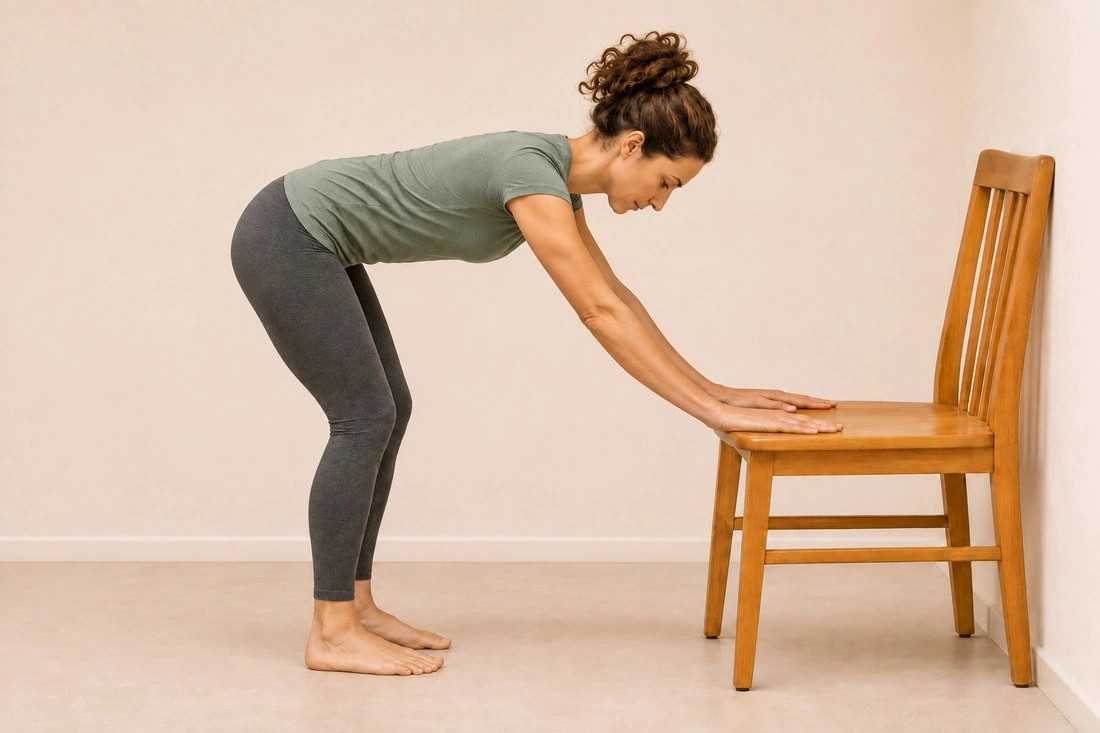
  1. Walk the feet progressively toward the seat in small steps while the palms remain available. Let the pelvis return farther above the feet. Knees stay soft, the back follows the movement and breathing continues naturally. Do not remove the hands while they still support the torso. Gradually reach an accessible half-forward fold with hands still resting on the same seat. The direction of the assisted Dog releases; calves and ankles no longer have to organize the pelvis's backward movement. Let breath follow this change of support without special rhythm.

  2. Stay briefly in the supported half-fold only if it remains comfortable. Feel the feet becoming the main support for the return while the hands remain available on the seat. The symbolic drum can now fall silent. Using the legs, and the hands for as long as they are needed, gradually raise the torso. When standing is genuinely stable, unload and release the palms. Turn in small steps and sit down with the usual assistance, letting the chair receive the pelvis and the feet rest on the ground. Breathe freely during all transfers. Only in this final sitting position, if throat and breathing remain comfortable, inhale without effort and let one exhalation become a very soft closed-mouth hum inspired by Bhrāmarī. Do not prolong the sound, empty the lungs or hold the breath. End the hum and immediately resume natural breathing; if unsuitable, simply remain silent. Whether the hum was performed or not, the tongue tip may lightly touch the front of the palate during one nasal breath (adapted Khecarī), then relax. No further sound or lock is needed, and no return to the Dog is necessary to confirm the unity experienced. Palms and feet cooperated; the pelvis is now received by the seat. Let the seal of gathering the currents dissolve. Neither hand pressure nor the possible resonance must continue.

Closing meditation

The hands met the chair while the feet held the ground. Then the weight returned to the seated pelvis. Perhaps this relay evokes trust between different forces. Rhythm arises when each responds at the right moment. Cooperation may now fall silent.

Silence