← All guidesAstroYoga practiceChair version →

AstroYoga · Kriyā on the mat

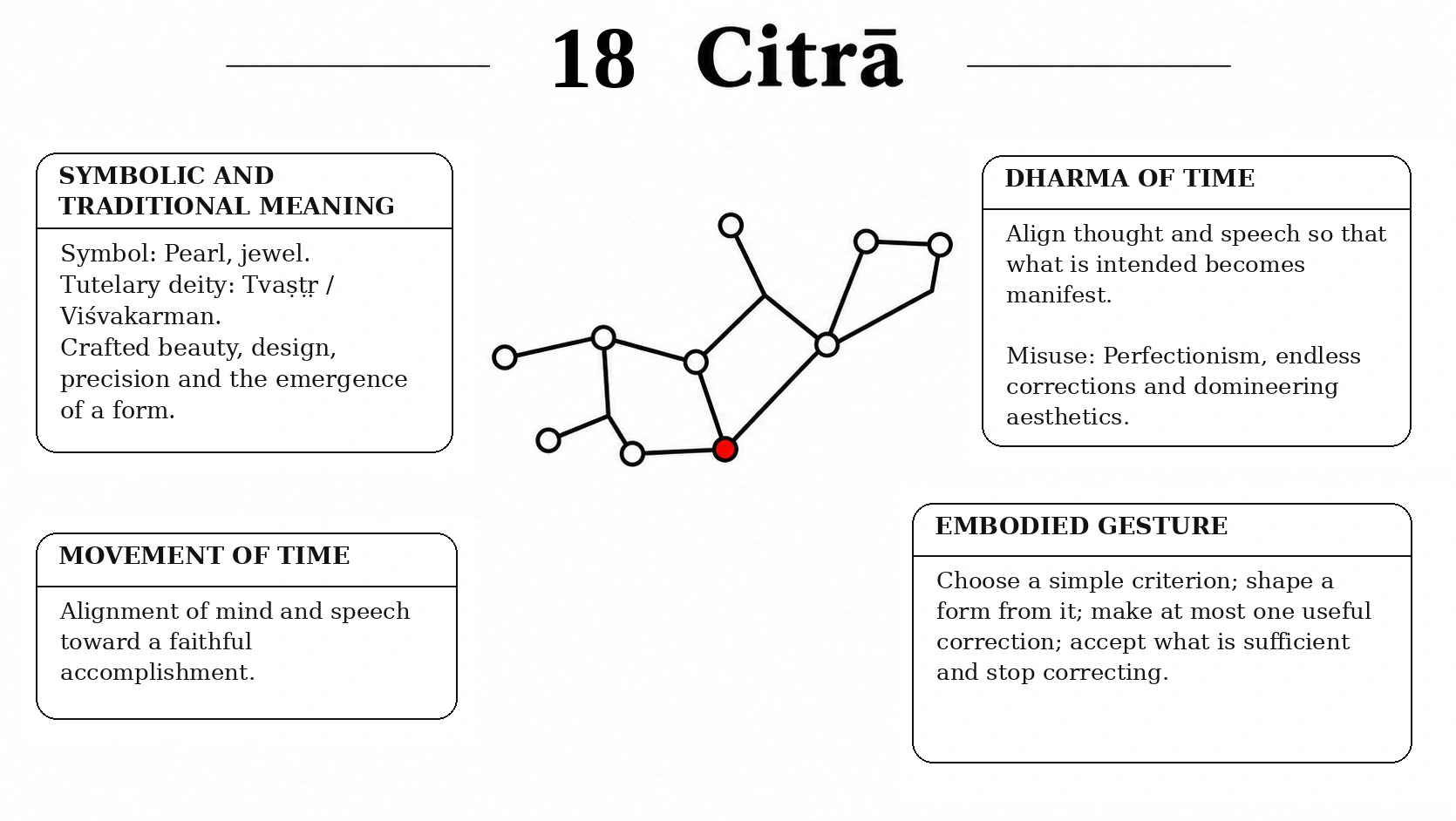
Citrā · Virgo

SHAPE

Support → Target → Integration
Practices
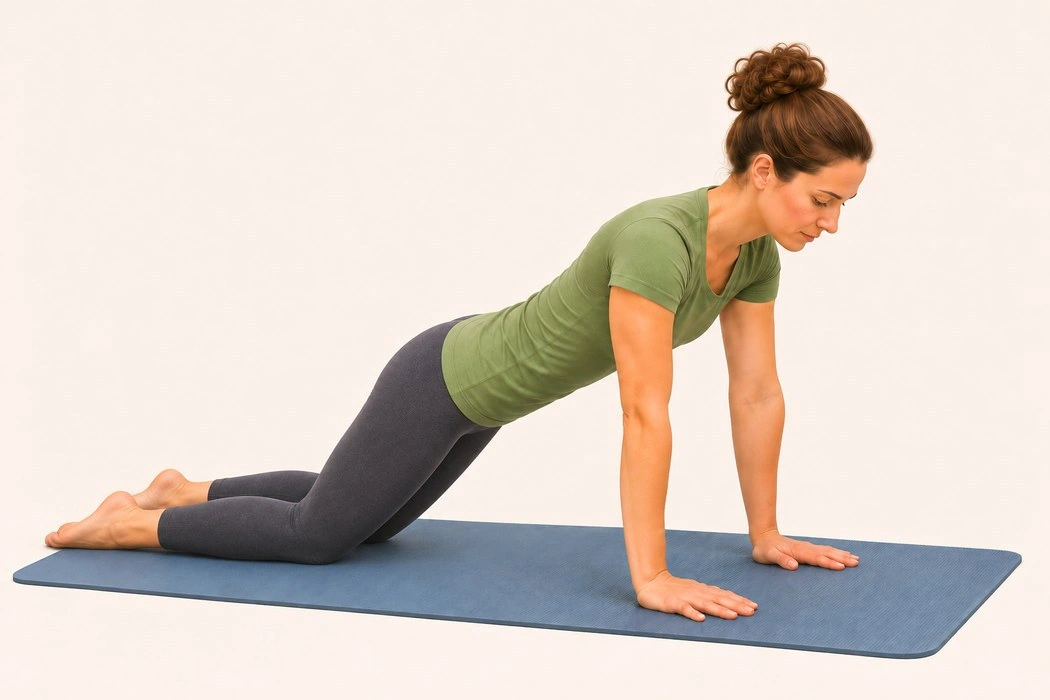
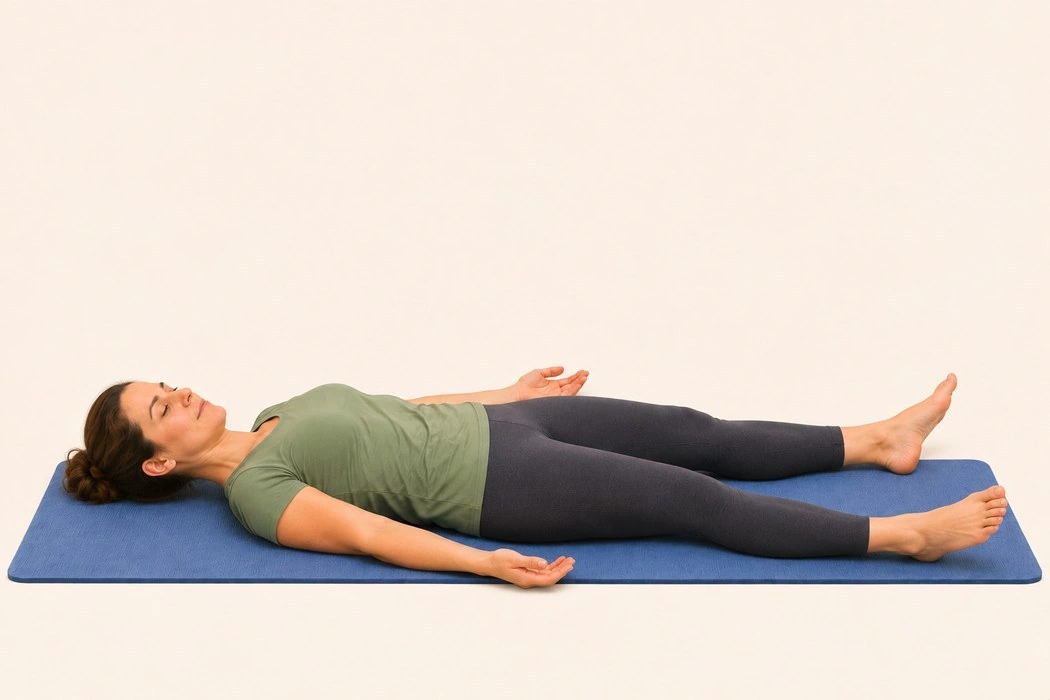
Phalakāsana — small plank supported on the knees · Śavāsana — supine rest.
Mudrā and seal
AstroYoga seal — the sufficient line · Uḍḍīyāna bandha — ascent of prāṇa in suṣumṇā (HYP III.55–60), an analogy not performed.
Supports
Palms and knees bearing weight · one decisive observation · at most one small pelvic adjustment · no abdominal lock.
Citrā · Virgo · SHAPE

Reference date : 14 / 11 / 2026

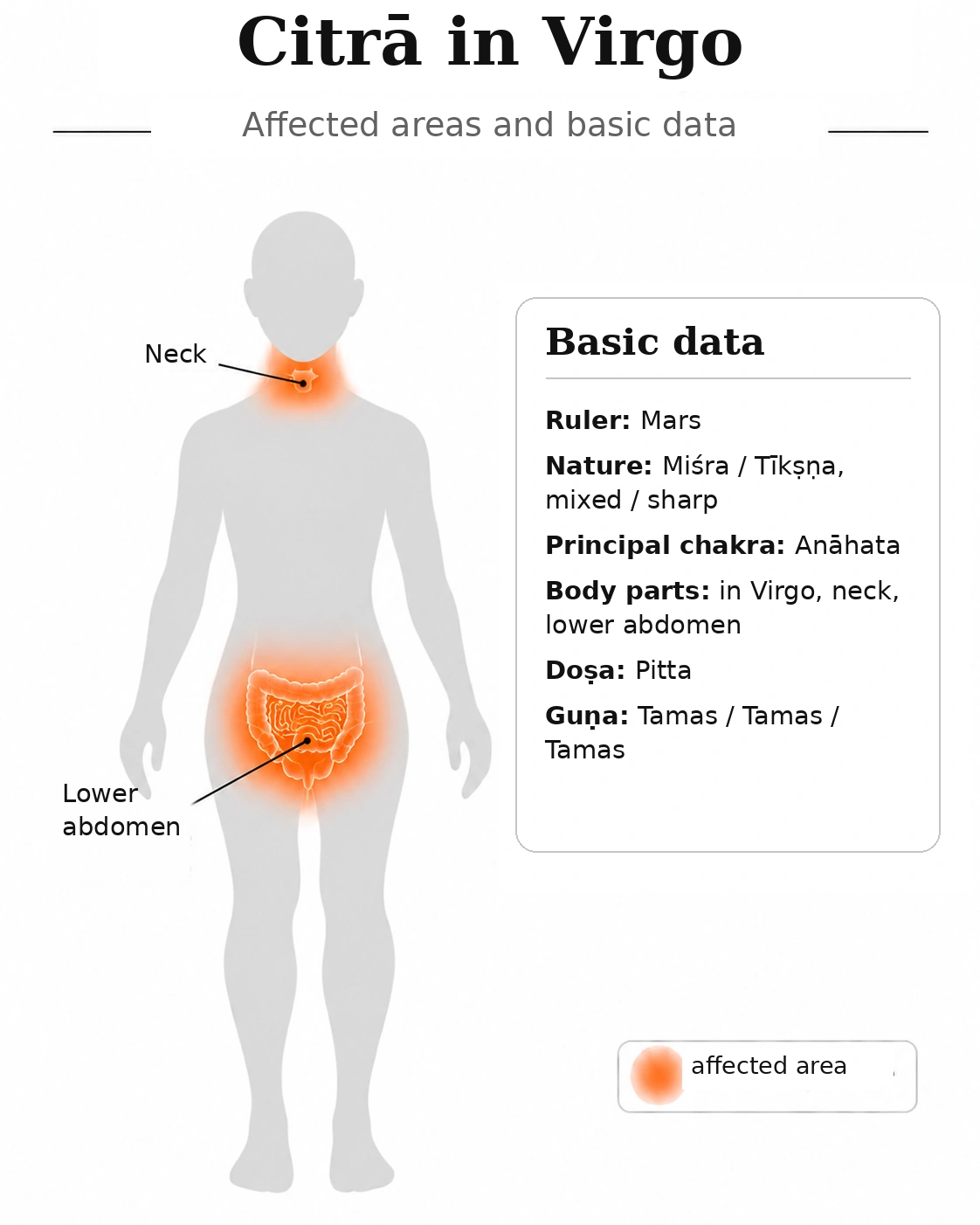
Body zonesBody zones · Citrā · Virgo
01

Support

Small plank with the knees on the mat. Phalakāsana, knee-supported plank.
  1. Come onto all fours, with the palms beneath the shoulders and the knees beneath the pelvis. Feel how the weight is distributed between these four supports. As you inhale, gently lengthen the back; on an ordinary exhalation, recognise the pressure of palms and knees against the mat. Do not hold your breath. If it remains easy, let the breath become slightly textured at the back of the throat. Direct attention towards the inner axis of suṣumṇā. The palms and knees are already supporting the body; the line of the plank has yet to be formed.

  2. Choose just one reference: head, pelvis and knees may arrange themselves into a simple line. Do not try to correct shoulders, abdomen, neck and legs all at once. Feel the palms and knees ready to receive the changed load. Let the breath accompany this preparation without asking for any additional lengthening of the breathing. The reference is chosen; the first plank will make it possible to experience it.

  3. Move the knees slightly back to form a small adapted plank. A gentle exhalation may accompany the transfer of weight to the palms, without stretching out the breath to complete the posture. Feel the arms and trunk actually taking part in holding the position. The pelvis enters a new relationship with the head and knees. Stay briefly, without yet pursuing a perfect line. The breath remains available under this modest load.

  4. Bring the pelvis back over the knees and return to all fours. Let hands and knees become available again in this less demanding base. Receive an ordinary breath. Now recognise the complete route: the small plank, observing the line, a possible adjustment and the exit. The body may return to this shape only once, to form it to the right measure.
02

Target

One adjustment of the pelvis, only if necessary.
  1. Return to the same small knee-supported plank without increasing its range. Feel the weight really transmitted through palms and knees. The breath may remain gentle if comfortable; otherwise let natural breathing accompany the hold. Direct attention just once towards the relationship between head, pelvis and knees. The temptation to perfect the line may appear under load. Do not carry out repeated checks to satisfy it.

  2. If the pelvis clearly sags or rises, change its height slightly, by only a few centimetres. Let breathing continue through this adjustment. An easy exhalation may accompany it, but must not be used to tighten the abdomen or immobilise the spine. If the line is already workable enough, change nothing. If even a small adjustment requires struggling, tensing the neck or blocking the breath, abandon the correction and prepare to exit directly. The seal of the sufficient line is completed through this decision: one adjustment, or none. No Uḍḍīyāna bandha is performed.

  3. Stop monitoring the line altogether. Gradually bring the pelvis back over the knees and regain a stable all-fours position. Let the breath accompany the exit without waiting for any particular exhalation to finish. Do not repeat the plank to verify the result. An adequate correction, or the absence of one, brings the shaping to a close.

03

Integration

Rest on the back without trying to correct anything further. Śavāsana.
  1. Remain briefly on all fours, then prepare to move into an accessible seated position. Use the hands to guide the pelvis to one side and reach that seat without hurrying. Breathing remains free during changes of support. The breath may become less audible when the arms stop supporting the plank, but do not impose slowness while moving. There is no longer any need to monitor the line.

  2. From sitting, lower onto one side and then roll onto the back, keeping the knees bent during the movement. Let the mat receive the back and pelvis. Straighten the legs if suitable or keep the feet on the floor. The breath may become almost silent and then return to its natural course. Chest, neck and lower abdomen no longer have to control the previous shape. The image of the sufficient line remains recognisable without another adjustment. The form has been experienced and calls for no further retouching.

Closing meditation

Under a small load, the pelvis called for a single correction, or none at all. The back now rests. Perhaps the desire to make things perfect still comes back in thought. Yet the gesture stopped at the right point. A living form does not need to be retouched endlessly.

Silence