Support
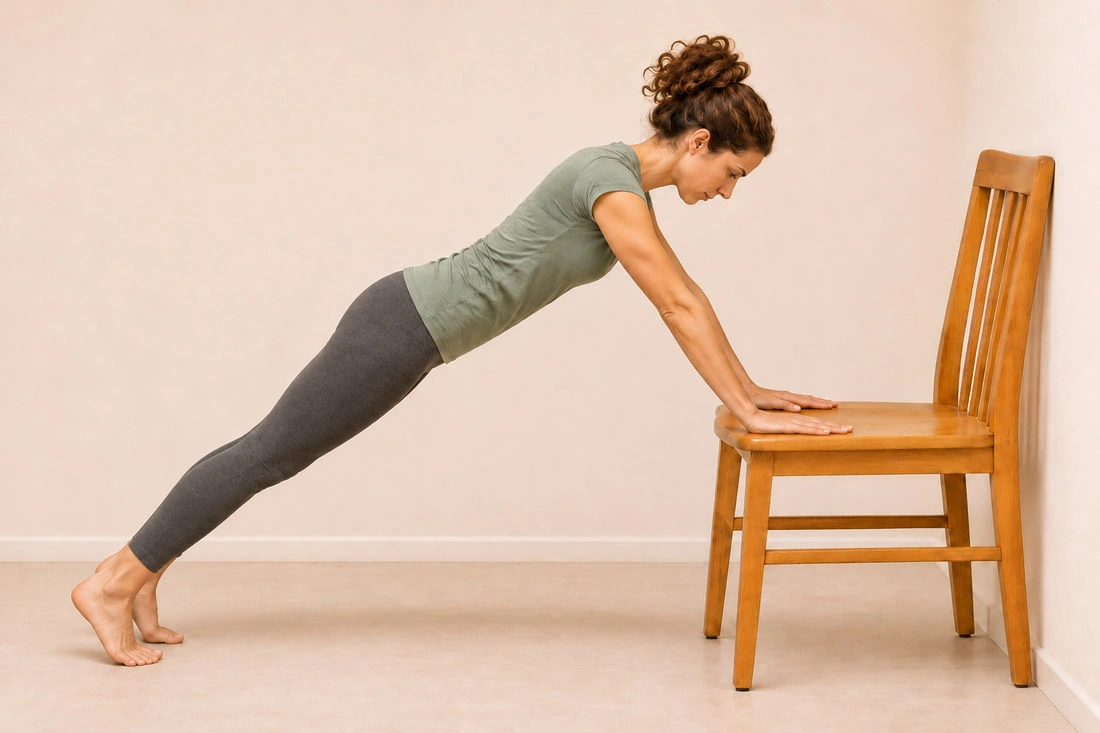
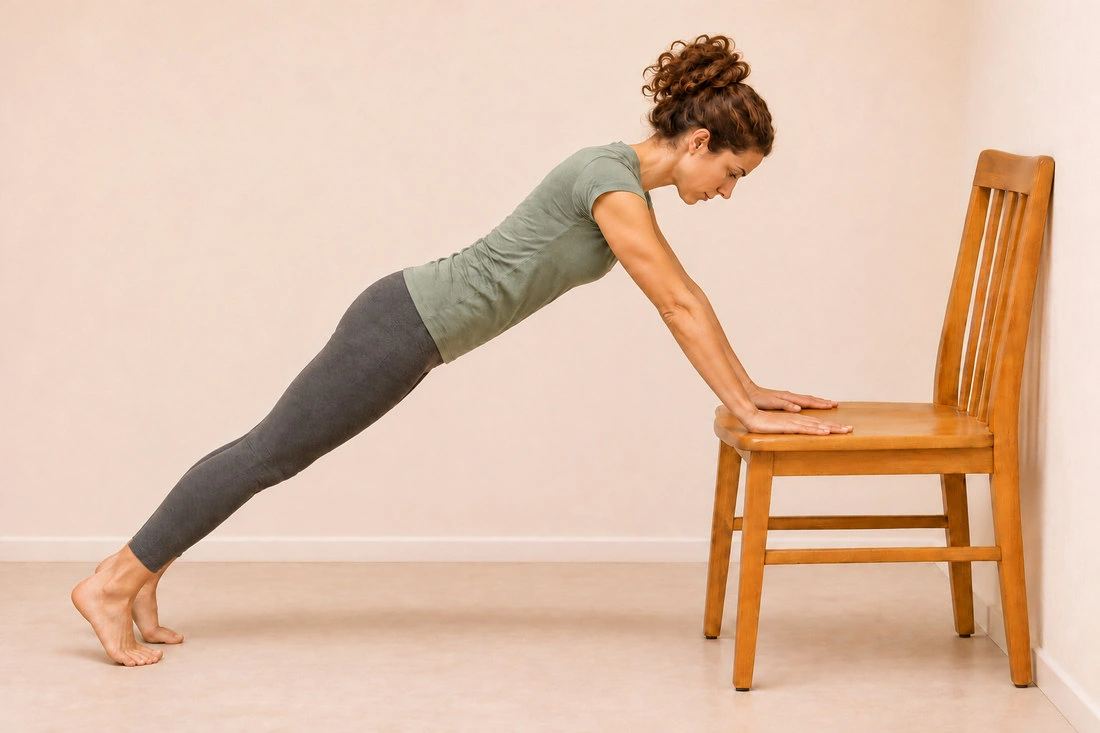
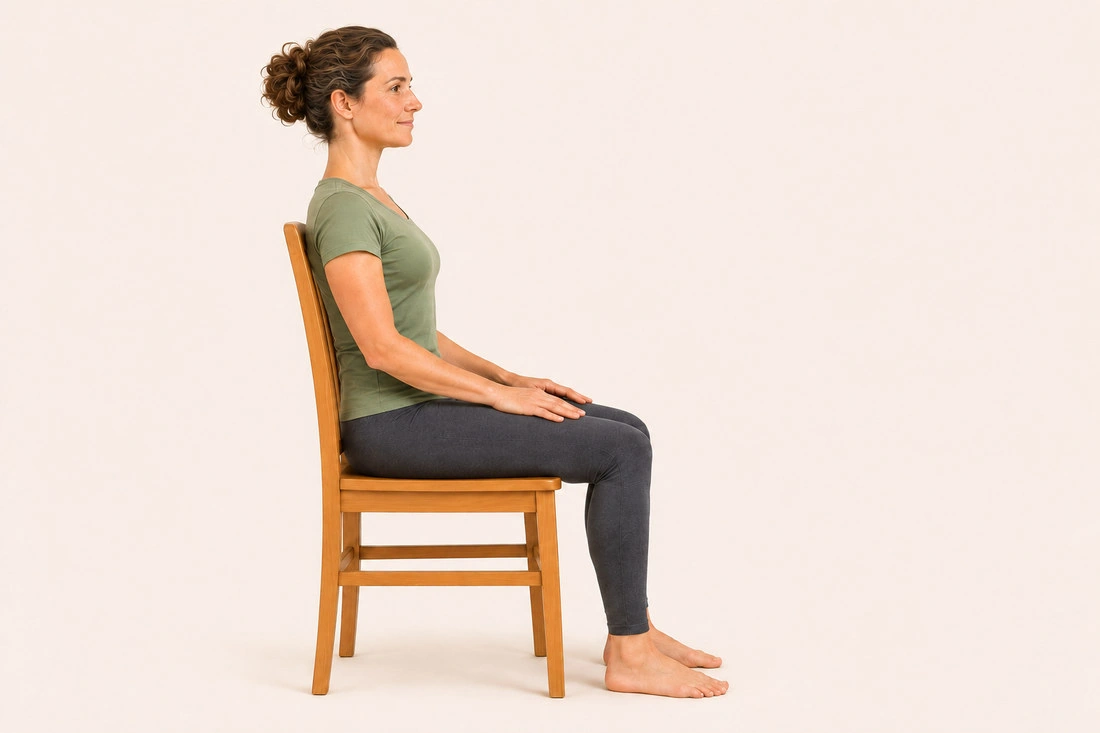
Stand in front of a fixed, immobilised chair. Check that the seat can receive a share of the body's weight without moving. Place both palms on the seat, keeping the feet in a comfortable base. Feel the hands and feet working together. Direct attention towards the inner axis of suṣumṇā. The breath remains available before stepping the feet back. Do not hold your breath. If it remains easy, let it become slightly textured at the back of the throat.
Choose just one reference: shoulders, pelvis and legs may form a workable line. Do not seek an ideal line. Recognise the exit route now: step the feet closer to the seat, recover stable standing, then take the load off the hands. Breathe naturally during this preparation; a slight sound remains optional. The routes into and out of the plank are known.
Once the palms are well placed, take a few small backward steps with the feet to enter an accessible inclined plank. Feel the hands genuinely carrying part of the load in relation to both feet. Allow breathing to renew itself freely. No breath retention is used to stabilise the posture. Do not try to prolong this first weight-bearing position to obtain better alignment. The first plank has actually been borne.
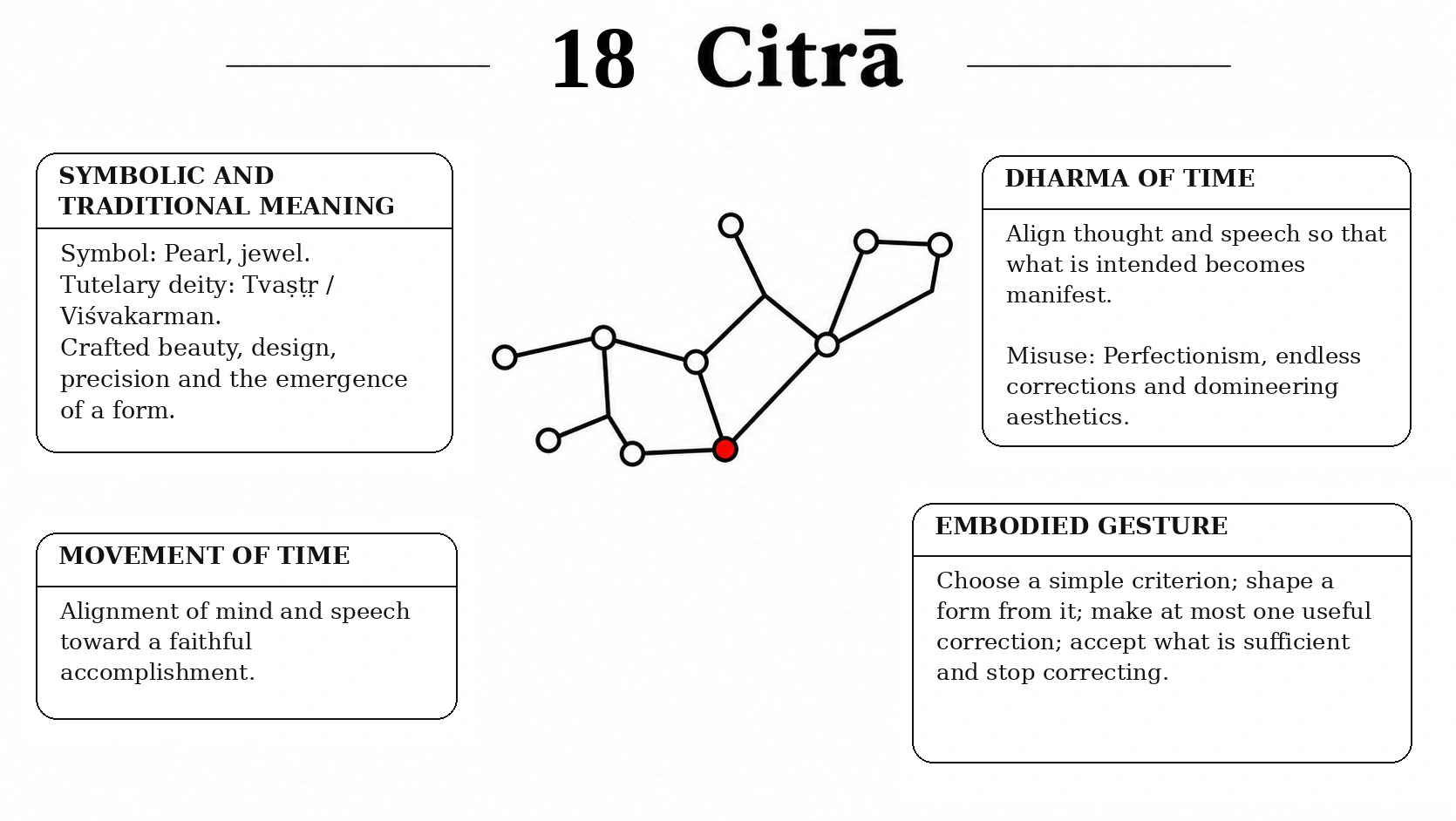
Step the feet closer to the seat while keeping the hands available. Recover stable standing, then reduce pressure through the palms and release them. Let one ordinary breath pass. If this first attempt was comfortable, prepare to enter the position a second time using the same chair, without planning a greater incline. The line can now be recognised; the remaining decision is whether it truly calls for a correction.