Support
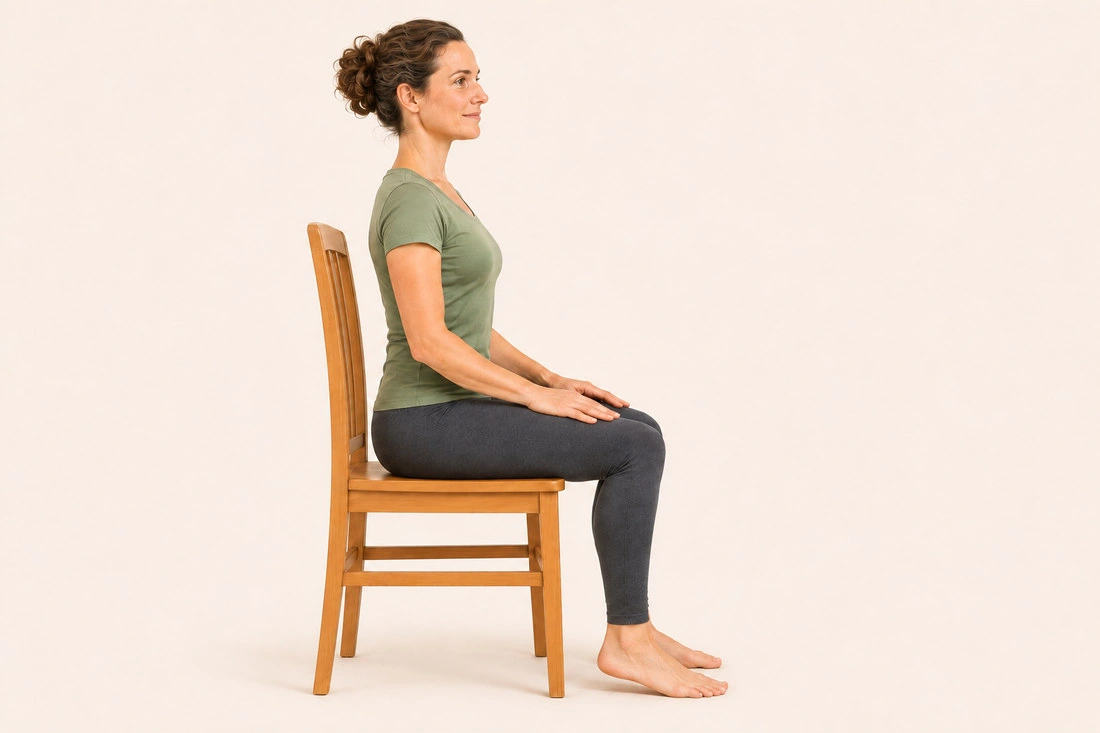
Sit on a stable chair with the pelvis fully supported by the seat. Put both feet on the floor at a comfortable distance, allowing the right heel and forefoot to make contact naturally. Rest the hands on the thighs, or retain whatever help is needed for stable sitting. Sense the relationship between supported pelvis, thighs, calves and soles. Notice the right heel against the floor without pressing it down any harder. The left foot also remains down and contributes to stability. Allow one natural inhalation and exhalation. Do not hold the breath; it need not secure anything to make contact more present. The initial support already exists: neither fragile and in need of defending nor inadequate and in need of reinforcement. The right heel rests at the beginning; it may briefly lighten and then find the floor again.
Feel the right heel and forefoot on the ground more precisely. Leave the calf naturally available rather than contracting it in premature preparation for the lift. If sitting is stable, the neck comfortable and one hand free, a short Nāḍīśodhana nostril alternation is optional: inhale gently through the left nostril, exhale through the right, inhale through the right and exhale through the left, with no retention and no attempt at equal or lengthened durations. One cycle may suffice. Finish the alternation completely, then replace the hand on the thigh before moving the heel. If this breathing practice does not suit, simply retain spontaneous breathing. Notice that the breath has continued while the pelvis and both feet have remained supported. No phase of the nostril alternation now dictates the ankle’s movement. Initial heel contact remains available.
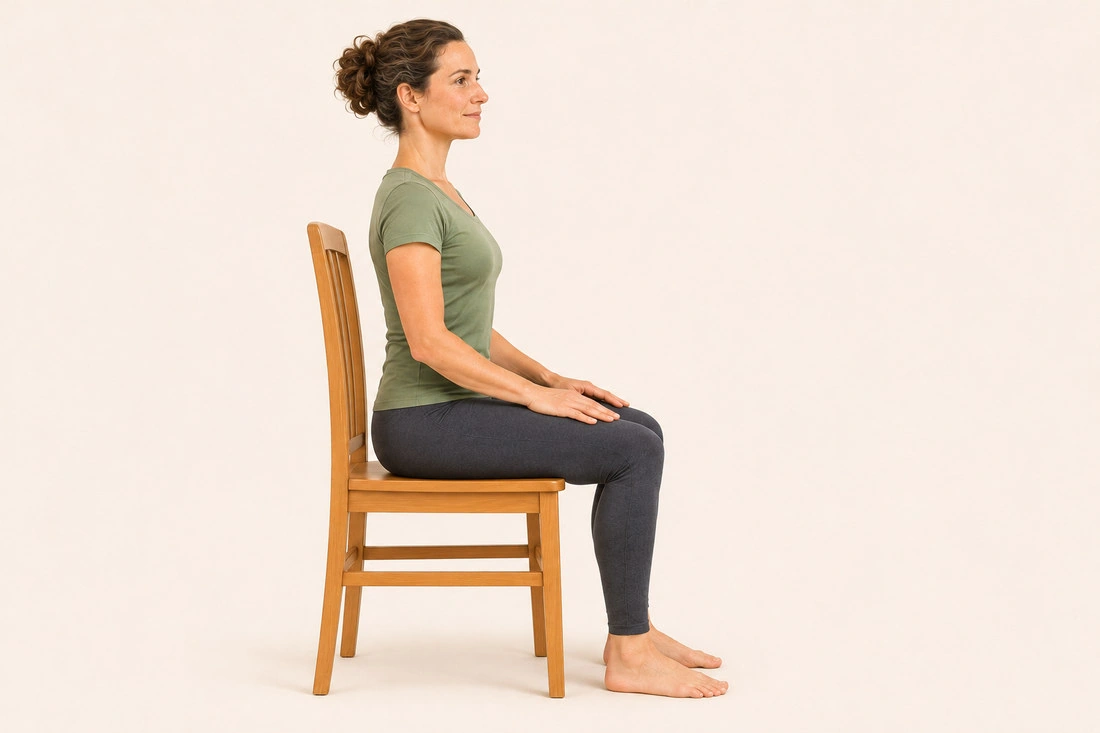
Feel the pelvis supported by the seat and the left foot on the floor. Notice whether sitting already requires excessive effort to maintain. If necessary, move gently toward the backrest and let it support the back. Then settle into stable sitting without demanding a more upright position than is comfortable. The right foot stays fully down during this check. Let the breath pass freely through abdomen and chest; do not lift the heel yet. Notice whether a small, local ankle movement seems possible while the rest of the body stays supported. If preparing it already seems difficult or uncomfortable, keep both feet on the floor and leave the action unperformed. In that case, do not perform steps 4–7 as though the heel had risen and returned: go to the rest in steps 8 and 9 and choose the alternative meditation for a heel that was not lifted. There is no need to provoke discomfort to create an absence of contact. Pelvis and right forefoot remain supported during the small movement.
If the right ankle remains comfortable, keep the right forefoot in contact with the floor. On an easy exhalation, if it comes naturally, raise the right heel very slightly. The height stays minimal. Feel a little participation by the calf without trying to rise onto tiptoe. The left foot remains down and the pelvis stays fully supported by the seat. Do not push the right knee forward to gain height. Do not grip the floor with the toes or deliberately contract the perineum. Let breathing renew freely; holding the breath is not needed to keep the heel briefly off the floor. Simply recognize that heel contact has ceased while the forefoot remains present. That tiny absence is real. The heel has only been lifted: its return belongs to the next step.