← All guidesAstroYoga practiceMat version →

AstroYoga · Kriyā on a chair

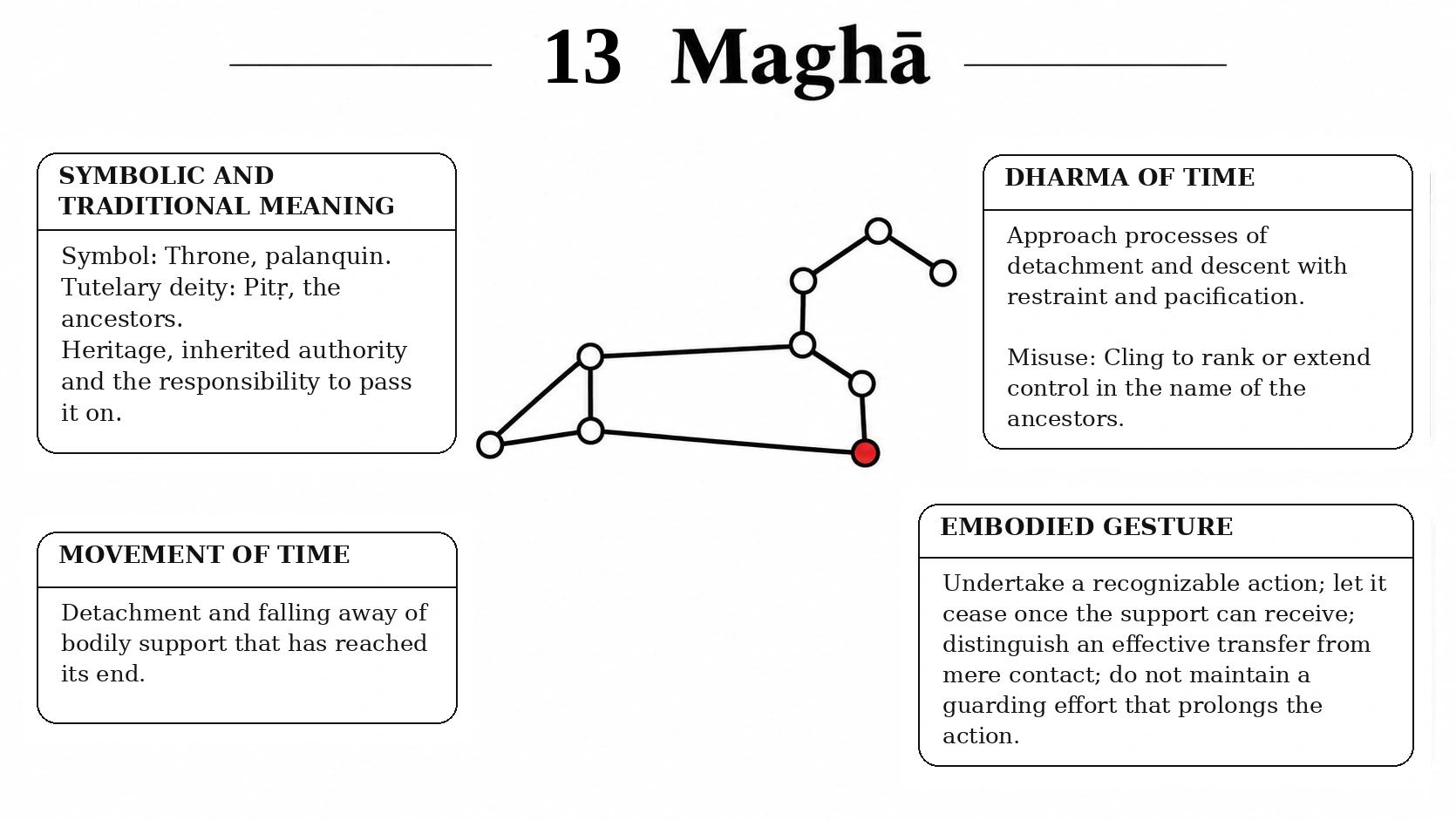
Maghā

RELEASE

Support → Target → Integration
Practices
Active seated position — slight upright holding, then transfer of the back to the backrest.
Mudrā and seal
Śāmbhavī — natural gaze as the load transfers during Target, step 6, then optional bhrūmadhya in rest, step 9 · Adapted Khecarī — optional light tongue contact during Śāmbhavī, once the backrest truly bears the body · AstroYoga seal — handing over the burden to the ancestors · Laya — symbolic correspondence, not a technique performed.
Supports
Pelvis supported by the seat · feet on the floor · backrest within reach · upright holding without arching the back.
Maghā · RELEASE
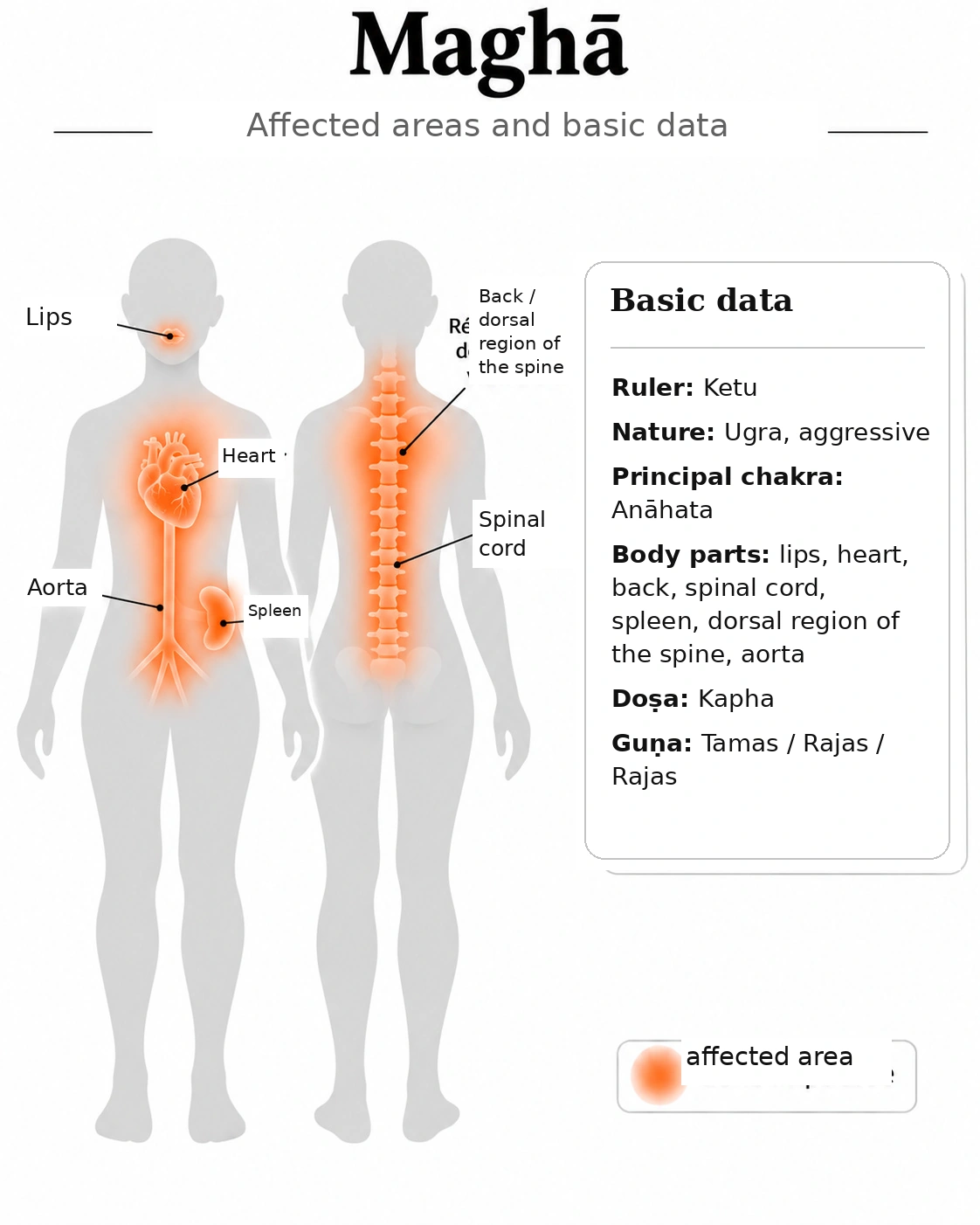
Body zonesBody zones · Maghā
01

Support

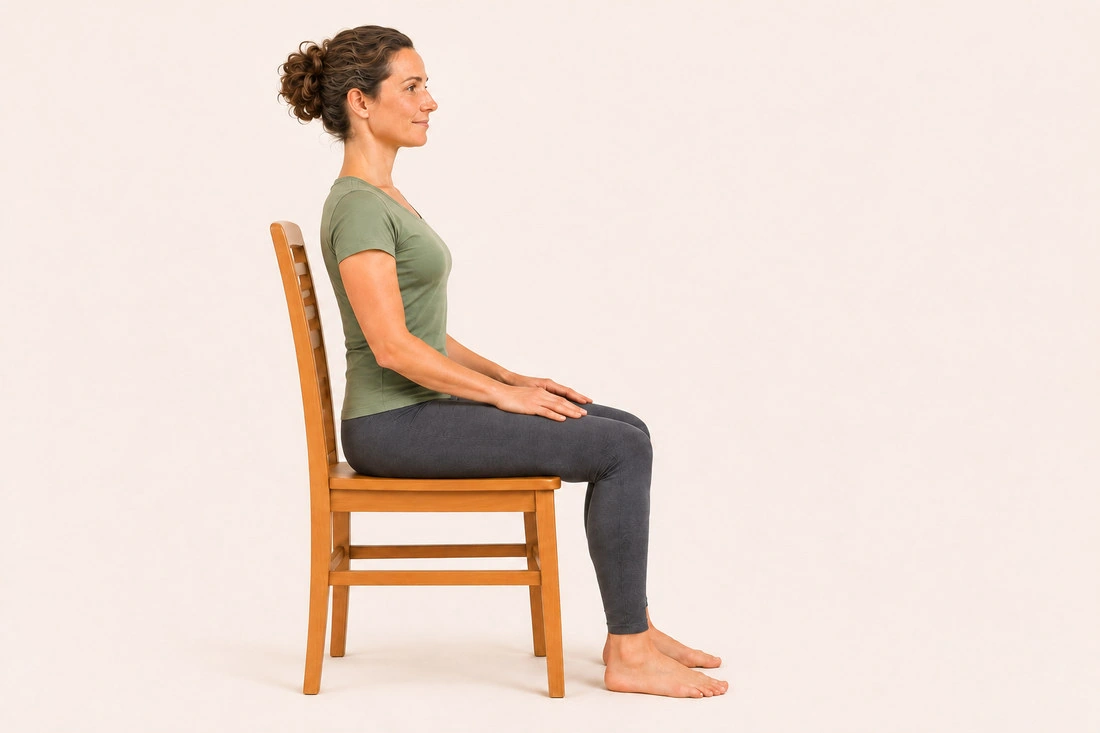
A slight active upright position, a short distance in front of the backrest.
  1. Sit with your feet on the floor and the pelvis supported, slightly forward of the backrest if this distance stays comfortable. Notice the supports already present: the feet and seat carry part of the body, while the back has not yet been received by the backrest. If the throat is free, inhale gently through the nose, then allow one exhale to become a very soft Bhrāmarī humming, lips closed, without extending the sound or emptying the lungs. Do not hold the breath. One cycle is enough. Allow the humming to end before any active holding begins. If this practice does not suit you, keep spontaneous breathing. The vibration ends before the back begins its active work.

  2. Establish a slight active upright position: the trunk stands above the pelvis, with the head following gently, without searching for an arch or additional height. Feel the upper back taking a real part in maintaining this position. If comfortable, allow a softly perceptible breath, slightly textured at the back of the throat. Attention may recognize the inner axis of suṣumṇā. Do not hold the air to sit upright. The back is indeed holding itself a little away from the backrest.

  3. Recognize what this position requires. If holding upright already costs too much effort, let the backrest receive the back; then, if still easy, move forward a smaller distance to find the same slight active holding just once more. If that renewed effort is uncomfortable, remain supported without continuing. Breathing accompanies these adjustments without deciding how long the effort must last. The aim is not to sit upright for a long time, but to recognize clearly the act of holding before the transfer.

  4. From the accessible slight upright position, let the trunk gradually approach the backrest, keeping the pelvis on the seat. Maintain the organization needed to accompany this movement backwards. Do not drop the body's weight suddenly behind you. The breath may remain perceptible, renewing itself as needed during the movement. When the back meets the backrest, recognize that first contact. Touching the backrest does not yet necessarily mean that it bears the full weight of the trunk.
02

Target

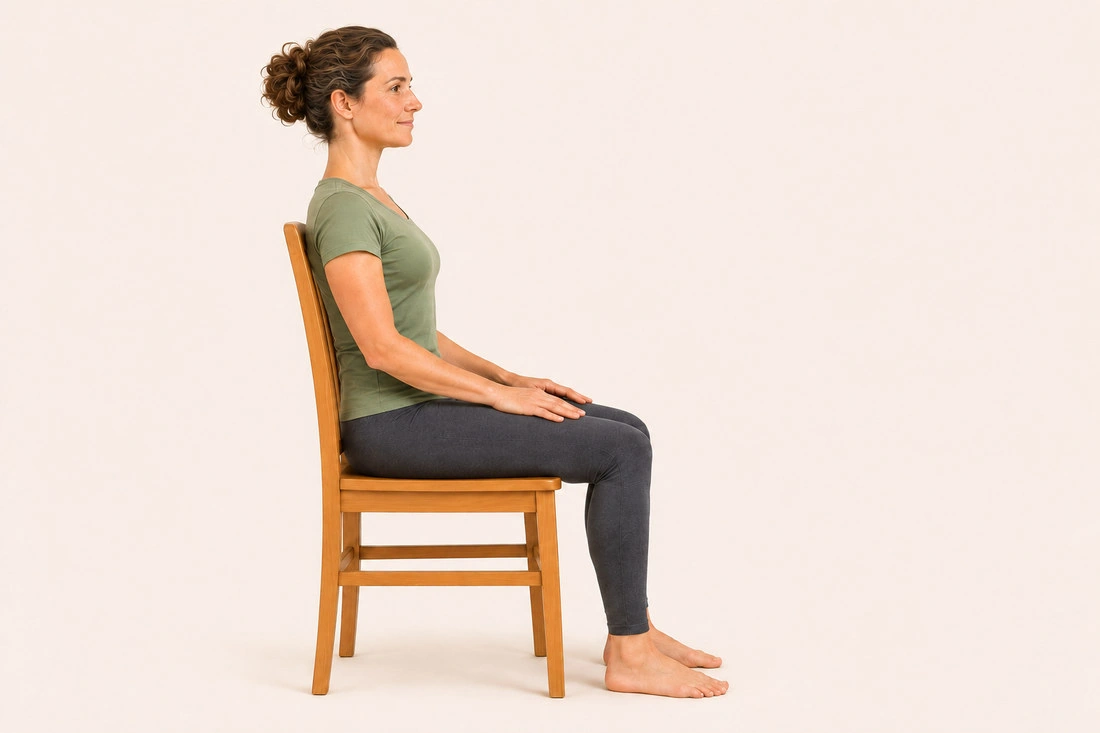
Back received by the backrest once the load has truly transferred.
  1. Allow the backrest progressively to receive a real share of the trunk's weight. Distinguish between the back simply touching the backrest and the moment when the backrest actually begins to carry it. Keep whatever effort remains necessary until the transfer is secure. Breathing accompanies this shift without speeding up the backward movement. The effort decreases only when the backrest genuinely starts to bear the load.

  2. Once the backrest is truly bearing the back, let the voluntary activity of the upper back diminish. Stop sitting upright as though the backrest were not there. If the back is really supported, let the gaze remain natural and briefly gather attention inward (adapted Śāmbhavī), without testing the transfer again. Imagine a light gradually leaving the effort of the upper back and settling in the chest as support is received. An exhale may accompany this reduction of effort, but must not be prolonged to make it happen. The breath may grow quieter. Active holding ends as the backrest takes over the load.

  3. Recognize whether the trunk is really supported and whether the work of holding has come to an end. Feel the pelvis on the seat, feet on the floor and back entrusted to the backrest. Notice whether a residual tension persists in the upper back, as though the body were still trying to hold itself alone. Allow it to subside without pressing harder into the backrest. If the support has not genuinely been received, do not pretend the handover is complete: return to a stable, comfortable position. In that case, remain at rest with the necessary aids and go to the alternative meditation, without continuing steps 8 and 9. Breathing remains free during this recognition.

03

Integration

The same supported position, without resuming active holding.
  1. Remain in the supported seated position, feet planted and hands at rest. Do not move forward again to prove that upright holding could be repeated. Let the breath become progressively subtler if the chest can breathe freely against the backrest. The function of active holding may remain complete.

  2. Let the backrest fulfil its role, without trying to press the back farther into it. Feel the chest breathe while the upper back no longer has to maintain the posture on its own. The breath may become almost silent and then natural again. Laya, understood here as a symbolic image of dissolution, suggests letting the effort merge into available support; it is not an invitation to force absorption or manufacture an inner sound. If the seated position remains stable, briefly direct a gentle gaze to the point between the eyebrows (bhrūmadhya-dṛṣṭi). Then let the eyes rest calmly ahead, with the inward attention of Śāmbhavī mudrā towards the upper back and chest. As the backrest bears the trunk, the tongue may briefly touch the front of the palate during this same nasal breath (adapted Khecarī), then relax without seeking laya. Relax the eyes. The backrest continues to carry the body. There is no need for the trunk to straighten again to confirm its strength. The transfer is complete; the value of the action remains without its effort.

Closing meditation

The back straightened, then the backrest took its share. The chest can breathe without having to hold itself up alone. Perhaps this evokes the relief of finally entrusting a burden to support. Strength is not diminished when it accepts being supported.

ALTERNATIVE MEDITATION · If the backrest did not receive the load

The backrest did not receive the expected load. The seat and floor remain supports, with the aids kept in place. Perhaps the wish persists to entrust what still needs to be held. A handover can wait. For now, the useful supports keep their place.

Silence