← All guidesAstroYoga practiceChair version →

AstroYoga · Kriyā on the mat

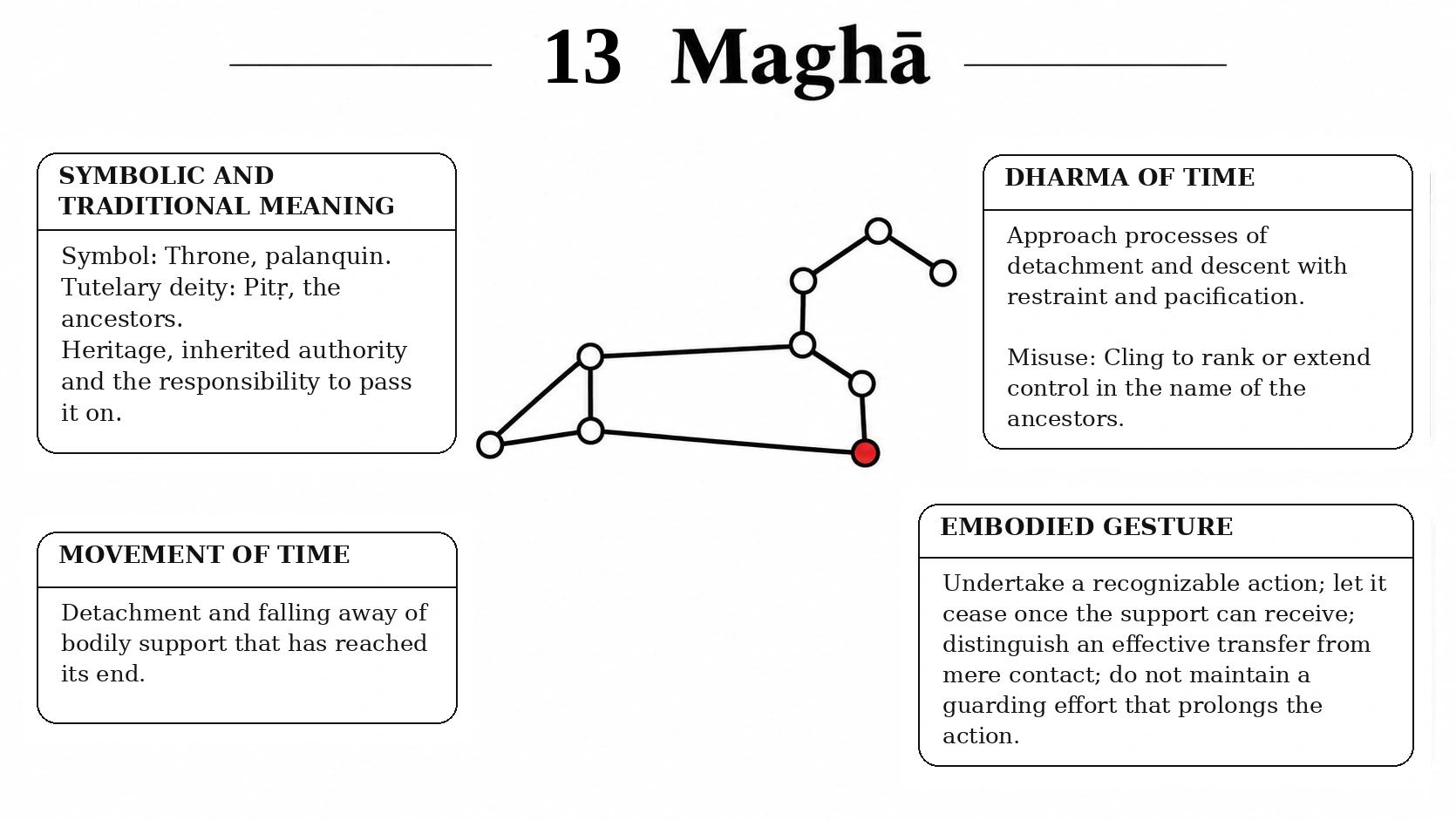
Maghā

RELEASE

Support → Target → Integration
Practices
Śalabhāsana — Little Locust · Makarāsana — Crocodile, prone rest · Śavāsana — rest on the back.
Mudrā and seal
AstroYoga seal — handing over the burden to the ancestors · Laya — a symbolic correspondence with dissolution, not performed as a contemplative technique · Adapted Khecarī — optional tongue contact as the body comes to rest on the mat, step 6, with nose and mouth unobstructed · Śāmbhavī — natural gaze during supine rest, optional at step 9, without seeking laya.
Supports
Belly and legs on the mat · chest lifted only very slightly · head aligned · actual reception of the chest before the effort is fully released.
Maghā · RELEASE
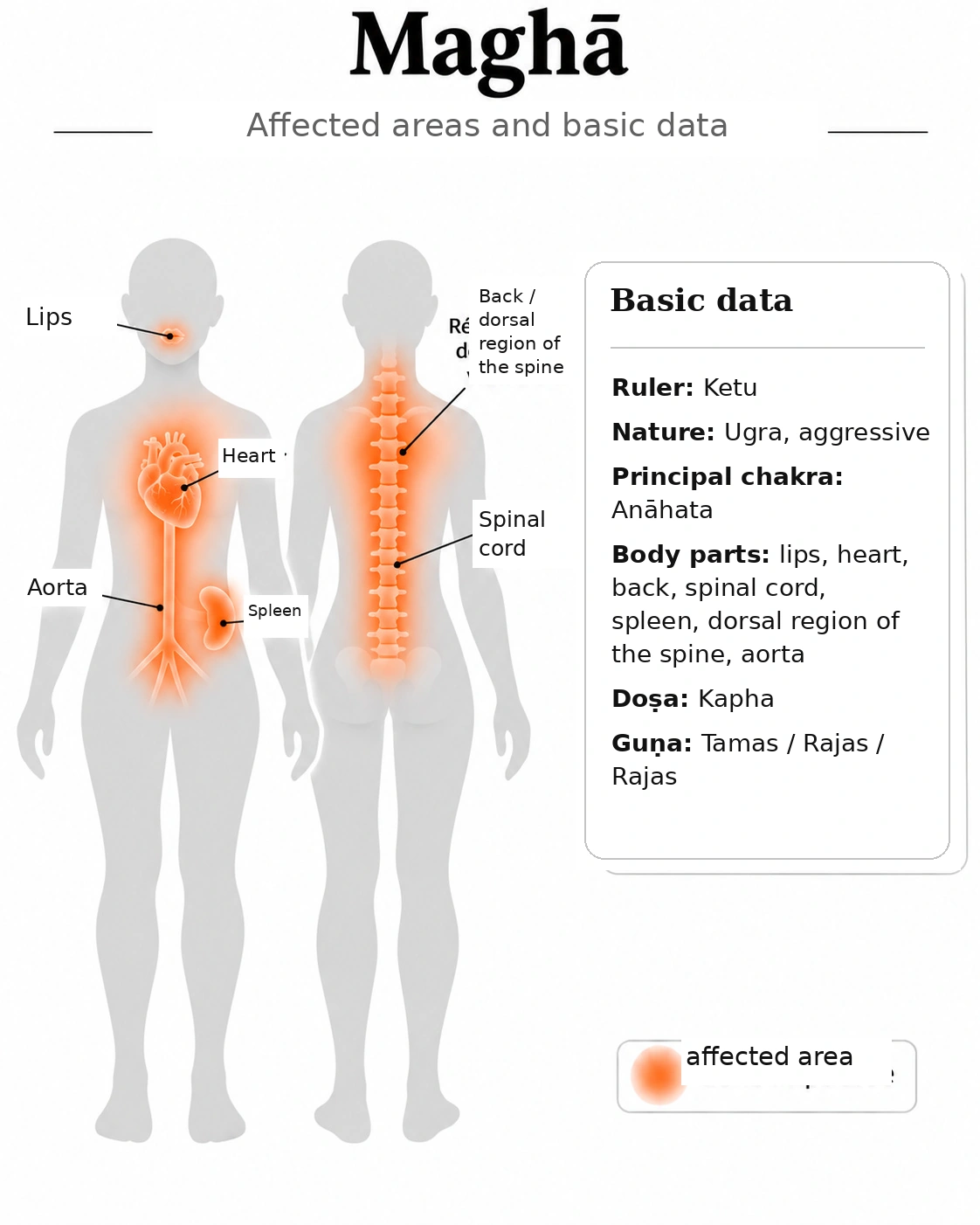
Body zonesBody zones · Maghā
01

Support

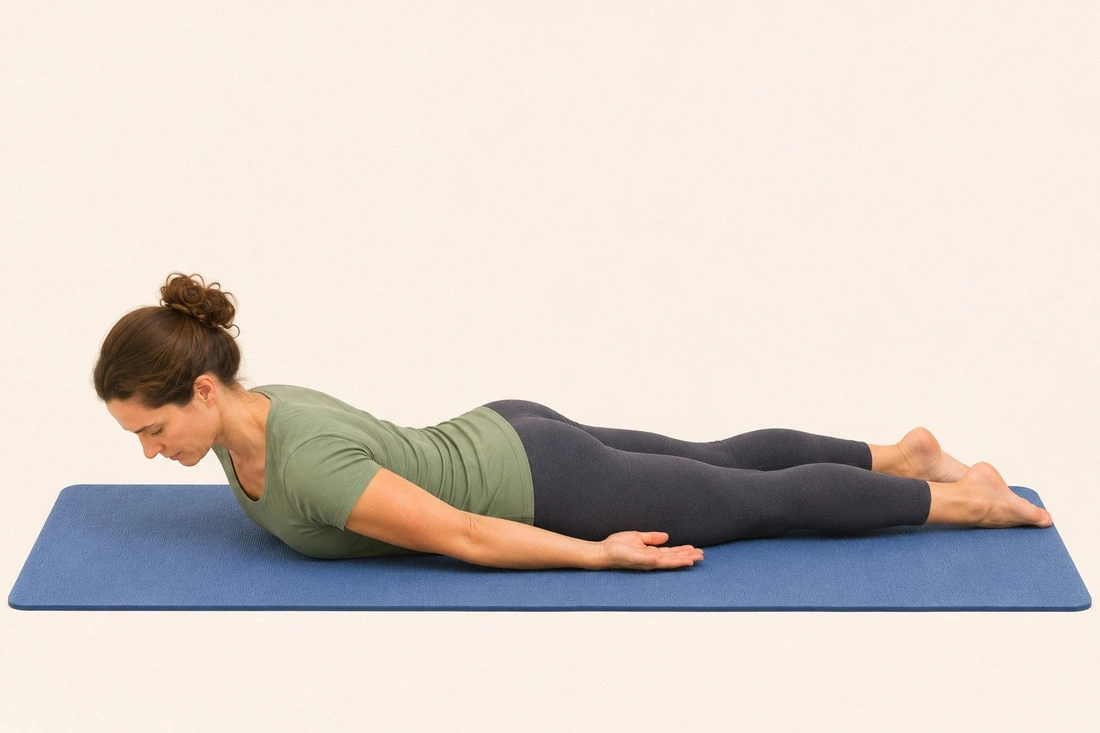
Low Śalabhāsana: the chest lifted just slightly. Little Locust.
  1. Come to rest on your belly by turning through one side, with the help of your forearms. Let the pelvis, belly and legs meet the mat. Feel which parts of the body are already supported. Do not hold the breath. If it remains easy, let the breath become slightly textured at the back of the throat. Attention may gather along the inner axis of suṣumṇā. The chest is still resting; the active holding has not yet begun.

  2. Make room for your head and place the arms close to the body, palms turned towards the thighs. On an easy inhale, let the chest find a little space without yet trying to lift it. Notice the muscles of the upper back that will be able to take part in the action. Keep the head aligned, without thrusting the chin forward. The breath accompanies this preparation; it is not a store of air to be saved for the effort.

  3. On a comfortable inhale, lift only the upper chest a few centimetres while the legs remain on the mat. Feel the upper back making a real effort. Let the breath renew itself if necessary; do not hold the air to maintain the posture. Then gently guide the chest back towards the mat with an available exhale. This first small lift and its return have been experienced.

  4. After a short rest, find the same small lift of the chest once more, and only once. Do not rise higher or try to prolong the hold. Feel the upper back working again, without pushing the head or deepening the arch of the body. The breath may remain perceptible if that stays easy, but it must not turn the effort into breath-holding. The chest remains lifted briefly: the body is still carrying this action through its own effort.
02

Target

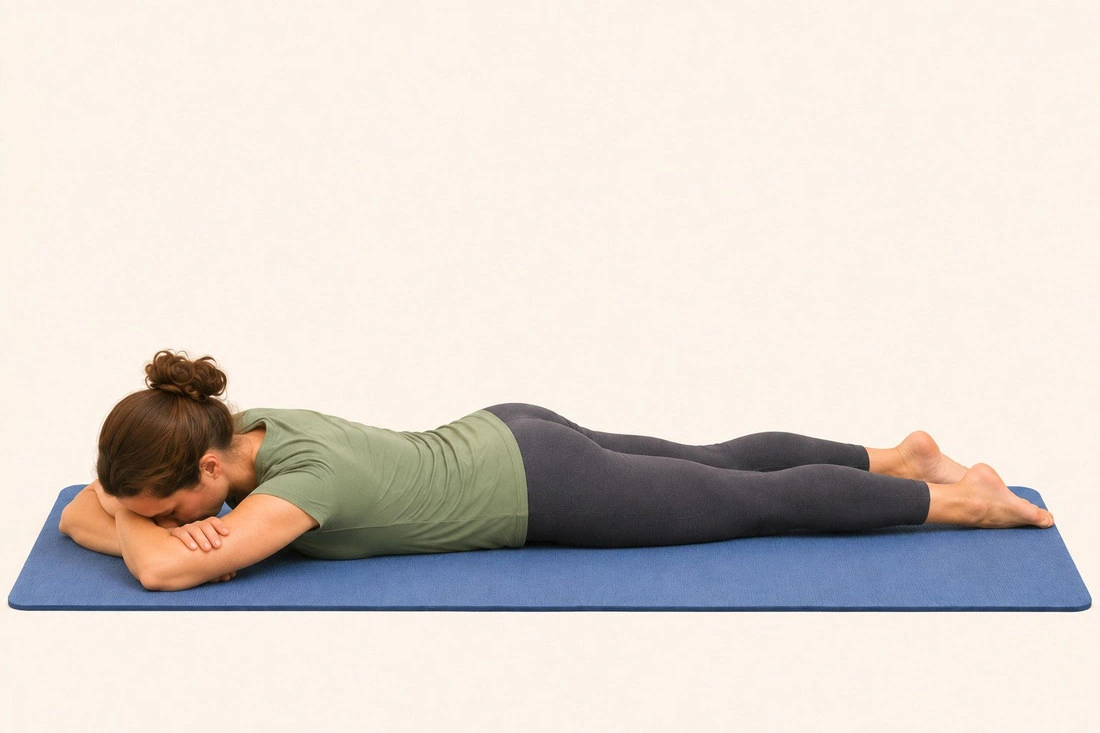
Makarāsana: chest set down and forehead supported. Crocodile, prone rest.
  1. With an easy exhale, begin to guide the upper chest slowly towards the mat. Do not try to complete the descent in a single exhalation. If several breaths are needed, let them come. Notice the change in the load: the upper back still accompanies the return as the chest approaches its support. The breath may grow quieter without determining the speed of the descent. The chest has not yet been received; the useful effort is still present.

  2. Only when the chest is actually resting on the mat, release the head and bring the forearms in front of you to enter Makarāsana. Rest the forehead on the forearms, keeping the nose and mouth clear. Feel that the mat now receives the weight that the upper back had been holding. The mat truly supports the chest; only then may the effort lessen. If the face is free, the tongue may briefly brush the front of the palate (adapted Khecarī), then relax without changing the breath. Imagine the seal of handing the burden to the ancestors as the symbolic possibility of entrusting a load to support without losing the value of what was accomplished. Breathing may become more discreet as the body ceases to hold itself up.

  3. Remain in this rest for two or three natural breaths. Notice whether the upper back still maintains a slight vigilance, as though it had to keep holding the chest up. Allow that activity to subside gradually. There is no need to press the chest into the mat to obtain more support. The breath may become quieter, then give way to spontaneous breathing. The holding ends when the mat fully carries the chest.

03

Integration

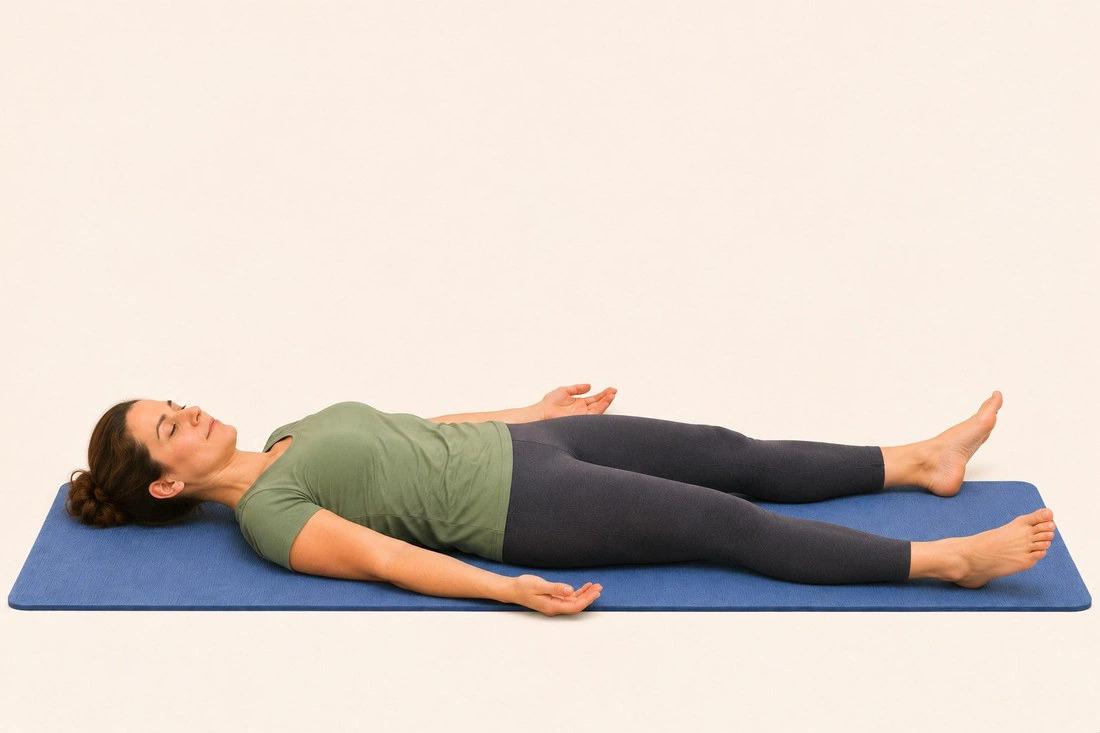
Śavāsana: rest on the back.
  1. Gently free the head before changing the support of either arm. With the help of your hands, turn onto one side and then roll onto your back, without twisting the neck abruptly. Let as many breaths as necessary accompany this transition. Do not impose a slowed breath while the arms and trunk are still carrying out the transfer. The body leaves Makarāsana to find broader support in Śavāsana.

  2. In supine rest, lengthen the legs if that is comfortable; otherwise keep the knees bent and feet on the floor. Allow the mat to carry the head, back, pelvis and legs. Breathing may become almost silent and settle at its own pace. Inner attention remains available without requiring a new contraction. If the eyes remain gently open in supine rest, let them look towards the ceiling without fixing on anything as attention turns inward: Śāmbhavī accompanies the transfer of the effort to the mat. Otherwise, simply let the eyes rest; no special state of absorption is sought. Laya, an inner dissolution, may symbolically illuminate this end of effort: there is no need to interrupt the air, seek a particular absorption, or produce an inner sound. The upper back has worked; the mat now supports the chest. Rest does not erase strength.

Closing meditation

The upper back worked to lift the chest a little; the mat now carries its weight. Inner strength can sometimes believe it must remain active to keep its value. Yet the handover has taken place. What was held can be entrusted, without being lost.

Silence