← All guidesAstroYoga practiceMat version →

AstroYoga · Kriyā on a chair

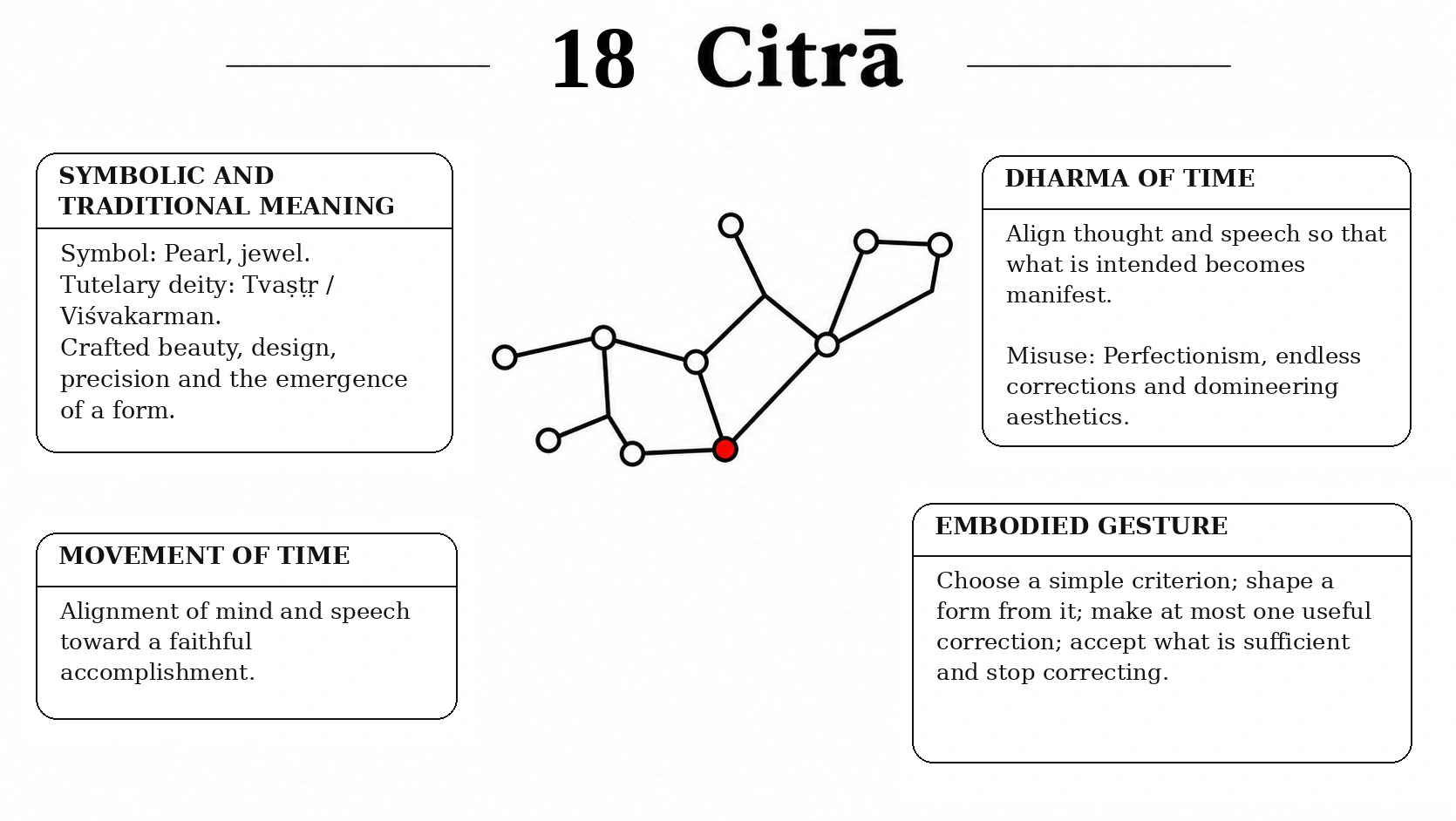
Citrā · Virgo

SHAPE

Support → Target → Integration
Practices
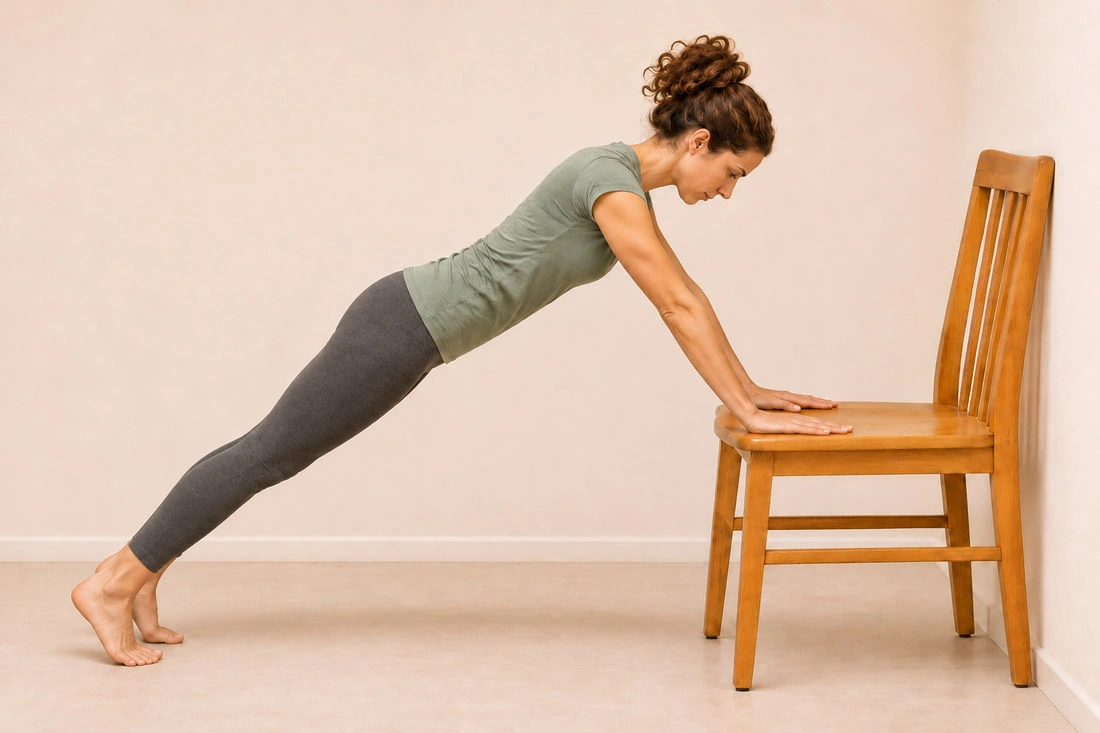
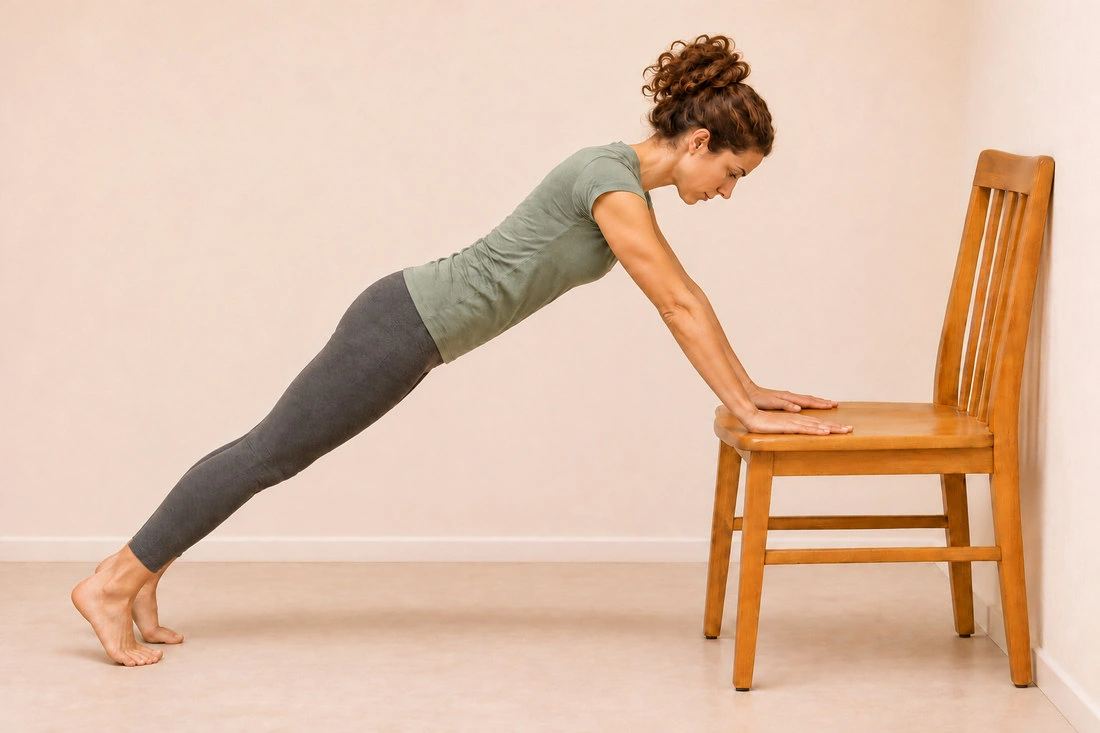
Adapted Phalakāsana — small inclined plank, with the palms on the seat.
Mudrā and seal
Śāmbhavī and bhrūmadhya at step 9 · AstroYoga seal — the sufficient line.
Supports
Immobilised chair without wheels, able to bear weight through the hands · palms and feet bearing weight · at most one optional correction · return to standing before sitting again.
Citrā · Virgo · SHAPE

Reference date : 14 / 11 / 2026

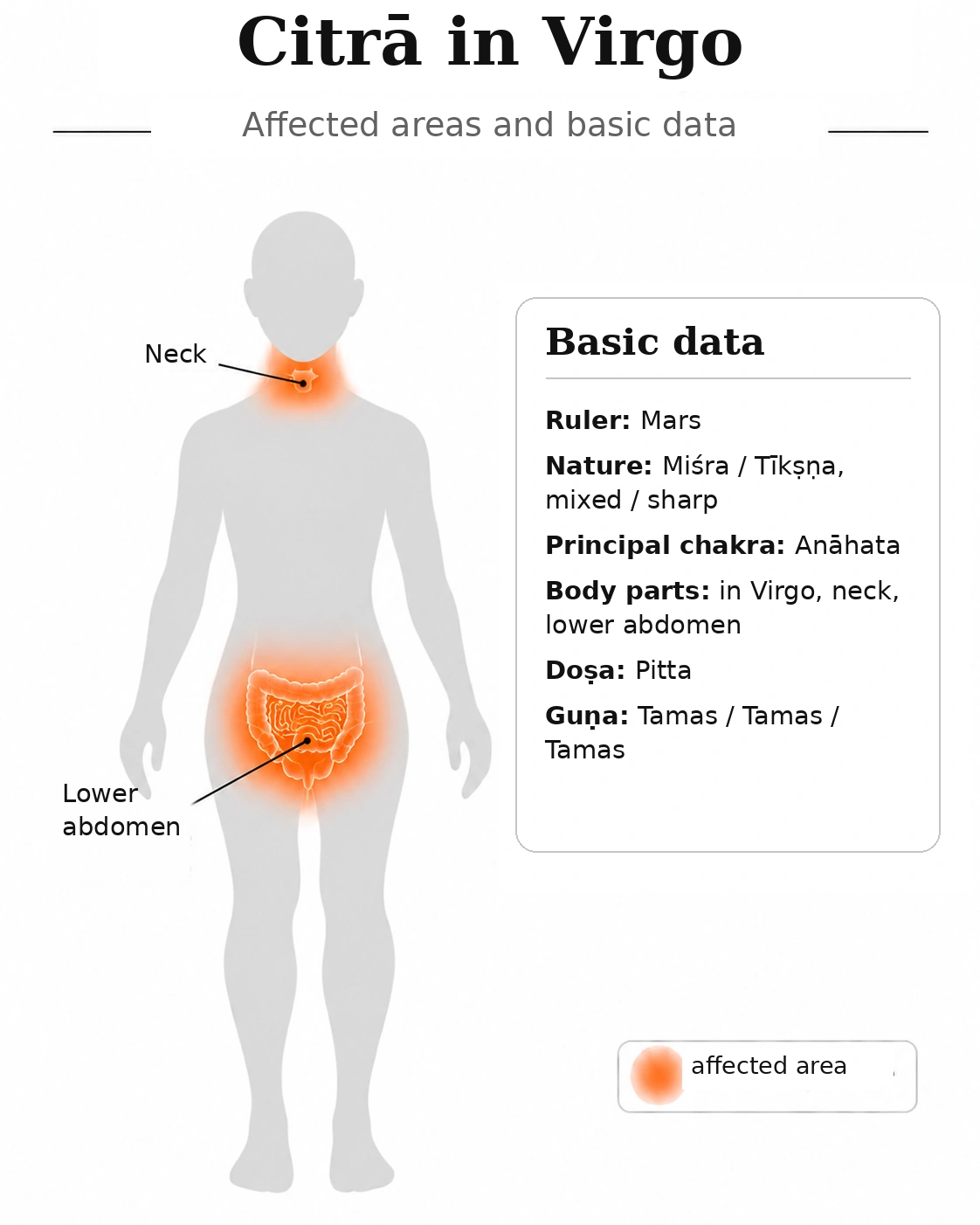
Body zonesBody zones · Citrā · Virgo
01

Support

Inclined plank in a workable line.
  1. Stand in front of a fixed, immobilised chair. Check that the seat can receive a share of the body's weight without moving. Place both palms on the seat, keeping the feet in a comfortable base. Feel the hands and feet working together. Direct attention towards the inner axis of suṣumṇā. The breath remains available before stepping the feet back. Do not hold your breath. If it remains easy, let it become slightly textured at the back of the throat.

  2. Choose just one reference: shoulders, pelvis and legs may form a workable line. Do not seek an ideal line. Recognise the exit route now: step the feet closer to the seat, recover stable standing, then take the load off the hands. Breathe naturally during this preparation; a slight sound remains optional. The routes into and out of the plank are known.

  3. Once the palms are well placed, take a few small backward steps with the feet to enter an accessible inclined plank. Feel the hands genuinely carrying part of the load in relation to both feet. Allow breathing to renew itself freely. No breath retention is used to stabilise the posture. Do not try to prolong this first weight-bearing position to obtain better alignment. The first plank has actually been borne.

  4. Step the feet closer to the seat while keeping the hands available. Recover stable standing, then reduce pressure through the palms and release them. Let one ordinary breath pass. If this first attempt was comfortable, prepare to enter the position a second time using the same chair, without planning a greater incline. The line can now be recognised; the remaining decision is whether it truly calls for a correction.
02

Target

The criterion may already be met without any adjustment.
  1. Place the palms again on the same stable seat, then step the feet back only far enough to regain the small inclined plank. Feel hands and feet carrying the body. The breath may remain quietly perceptible if the effort permits, but no particular breath should prolong the hold. Look inwardly just once at the relationship between shoulders, pelvis and legs. The check serves to discern a need, not to deepen the posture.

  2. If the pelvis clearly sags or rises, adjust its position slightly, only once. Do not try to revise every part of the line. If the posture is already organised sufficiently well, correct nothing. An ordinary exhalation may accompany the adjustment without directing how far the body moves. If a correction requires struggling, stiffening the neck or holding the breath, exit the posture rather than trying again. The seal of the sufficient line is completed as soon as the useful correction, or the lack of need for one, has been recognised.

  3. Stop checking. Gradually step the feet closer to the seat, keeping the hands weight-bearing for as long as needed. Let the breaths renew themselves during the movement. Do not prolong the return merely to finish breathing out. The form has been experienced and, if needed, adjusted. It no longer needs to be maintained.

03

Integration

A new seated position receives the rest.
  1. Once the feet genuinely support standing, reduce the pressure of the hands on the seat and then release them. Regain a stable position with the arms available. The load of the plank has ended. The breath may become less audible. The inclined hold is over.

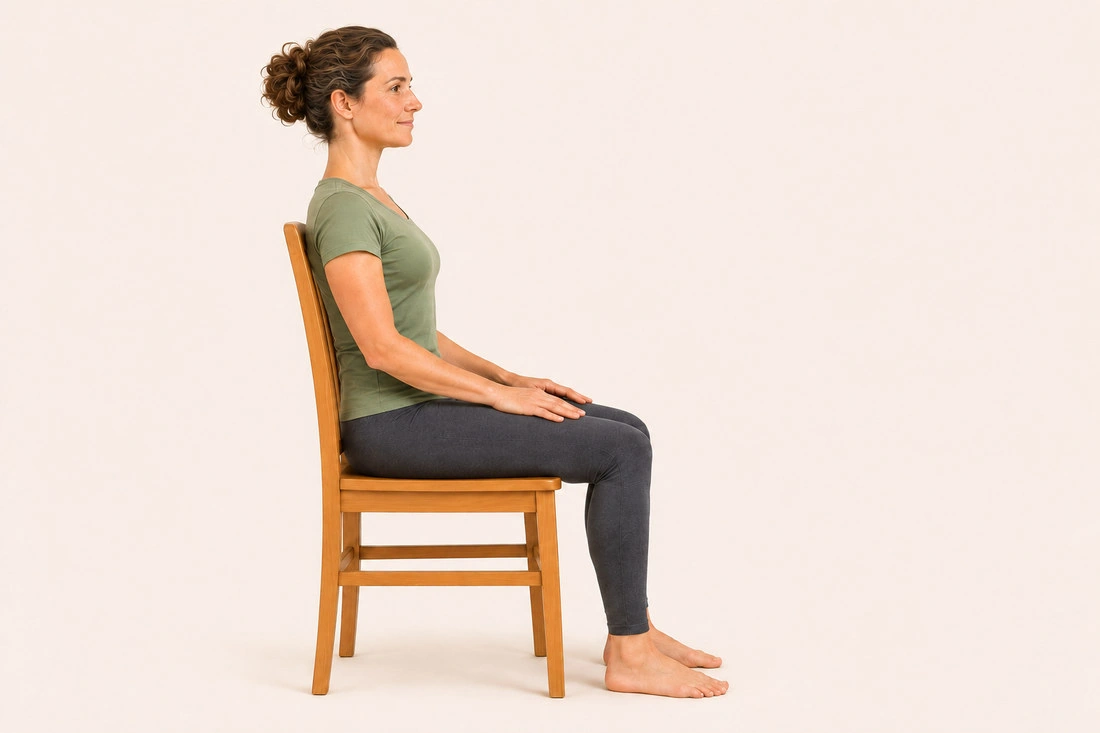
  2. Turn in small steps in front of the same chair, then return to its seat in a controlled way. Let the seat support the pelvis and the backrest receive the back if helpful. Rest the hands on the thighs. Breathing may calm gradually and then return to its natural course. If sitting is stable, briefly direct a gentle gaze towards the point between the eyebrows (bhrūmadhya-dṛṣṭi). Then let the eyes rest naturally ahead and the inner attention of Śāmbhavī mudrā turn towards the neck and lower abdomen. Relax the eyes. The body no longer has to monitor the line of the plank. The line is enough without any further checking.

Closing meditation

The hands briefly supported the inclined plank, then the chair received the pelvis. A line was observed; perhaps one detail was adjusted. The mind sometimes likes to check again. The body now knows what is enough: correctness needs no constant monitoring.

Silence