← All guidesAstroYoga practiceChair version →

AstroYoga · Kriyā on the mat

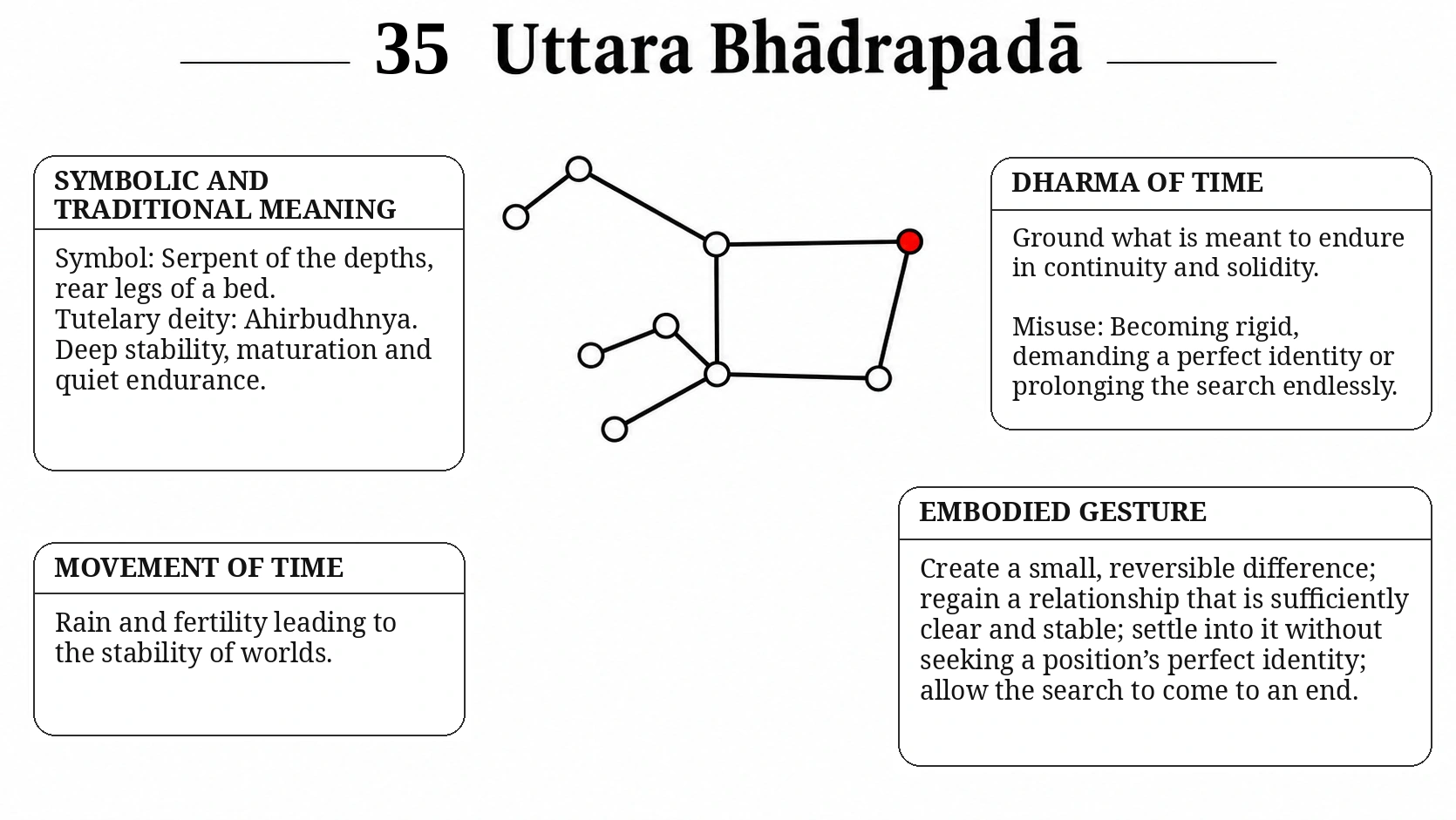
Uttara Bhādrapadā

ROOT

Support → Target → Integration
Practices
Adho Mukha Śvānāsana — adapted Downward-Facing Dog, only if the right heel already rests naturally on the floor · Bālāsana — adapted Child’s Pose, if accessible.
Mudrā and seal
AstroYoga seal — the root regained.
Supports
Weight-bearing palms · right forefoot continually on the mat during the movement · right heel initially down without effort · one slight lift only · no attempt to balance on tiptoe · return to the knees with the hands still available.
Uttara Bhādrapadā · ROOT
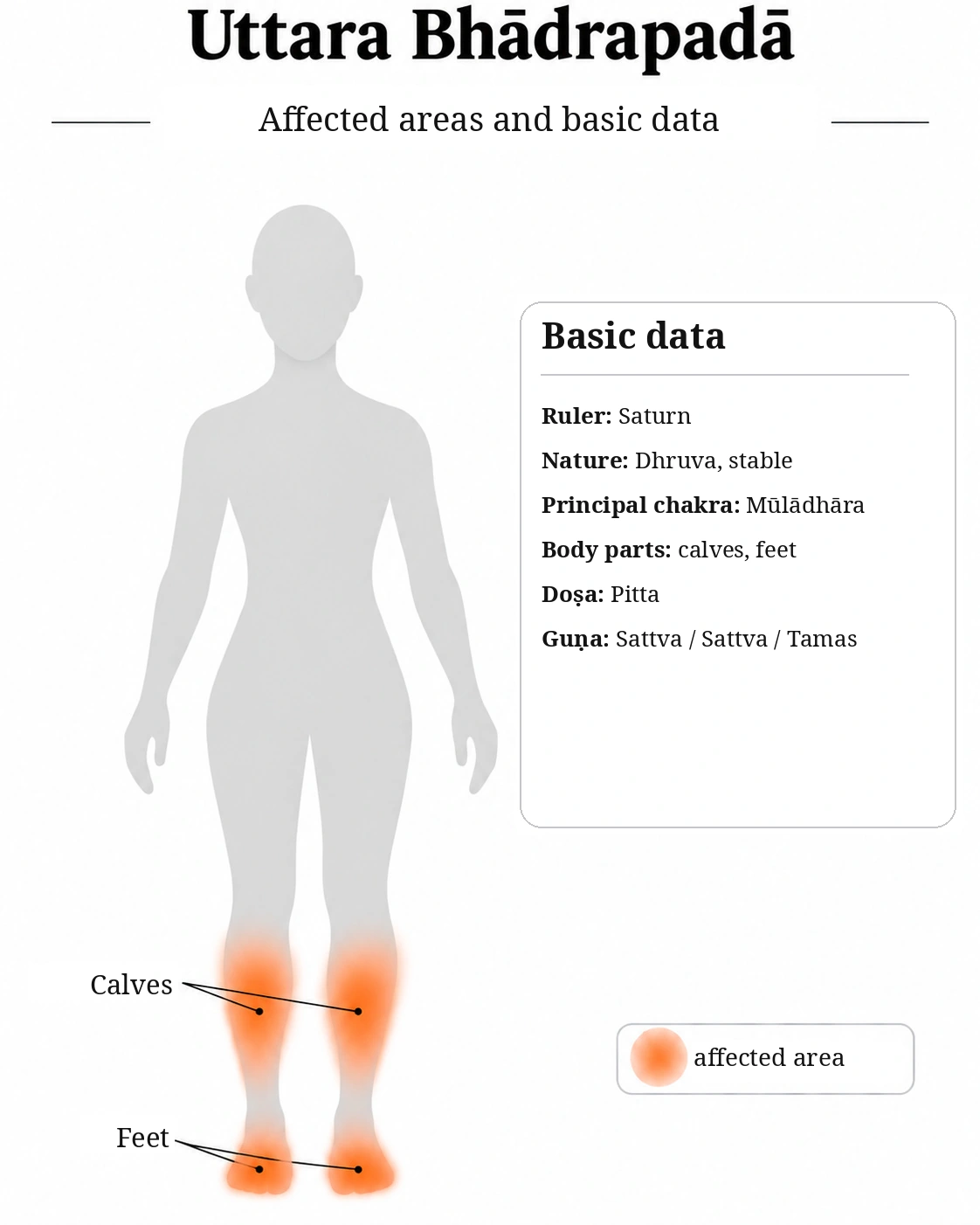
Body zonesBody zones · Uttara Bhādrapadā
01

Support

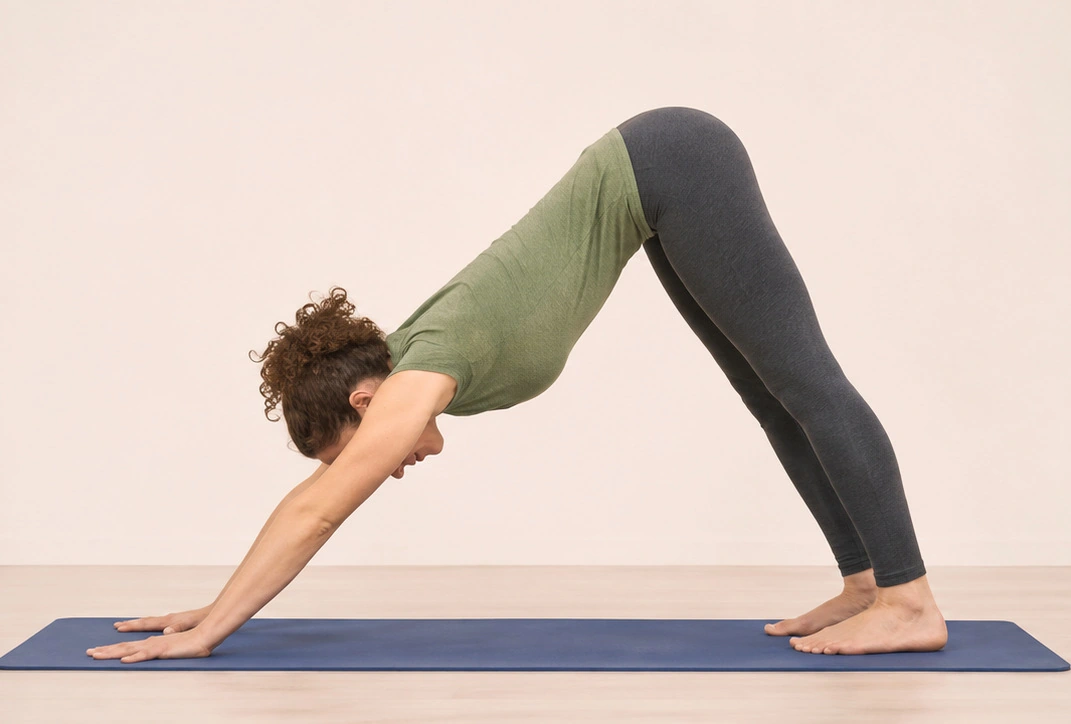
Downward Dog: right heel initially down.
  1. Choose the form to be practised before testing the heel. If an adapted Downward-Facing Dog already allows the right heel to touch the floor without straining the calf, ankle or back, prepare that form with the necessary supports. From hands and knees, tuck the toes and let the pelvis move gently back and up, keeping the palms weight-bearing. Keep the knees soft; the left heel need not be down in the same way as the right. Do not pull the right heel toward the mat to obtain the required shape. If initial contact of the right heel is not naturally accessible, choose a stable seated position now, with the pelvis supported and the feet on the floor. In either case, let breathing follow its ordinary rhythm; do not hold the breath. Recognize that the body has genuine support before moving. The right heel must not be forced to the floor to begin the practice.

  2. In the accessible Dog, recognize that the right heel and forefoot are already touching the mat. Feel the palms support the upper body while the feet and legs accompany the pelvis. The right-side contact exists; there is no need to press harder to make it more certain. Let a natural breath pass through shoulders, back and legs. If the seated alternative was chosen from the beginning, keep the pelvis fully supported, the left foot on the floor and the right heel resting. Only in this stable sitting position, if one hand is free and the neck comfortable, a short Nāḍīśodhana alternation may be offered: inhale gently through the left nostril, exhale through the right, inhale through the right and exhale through the left, without retention or prescribed timing. One cycle is enough. Then rest the hands. Do not leave Downward Dog to practise Nāḍīśodhana. The breath accompanies a contact already present rather than trying to reinforce it.

  3. If the Dog already demands too much effort, lower the knees while keeping the palms available. Let the pelvis move into an accessible kneeling rest without forcing contact with the heels. Receive a natural breath as the work of the arms and legs diminishes. Only if that rest has genuinely made the task accessible again, and the right heel can still touch the mat naturally, return once to the same small Dog. If that contact is no longer available, do not try another setup. If the Dog was comfortable from the outset, simply keep its shape without imposing a descent and ascent. With the seated alternative, let the pelvis and feet retain their support; use the backrest if helpful. Preparation must not become repeated attempts to achieve an ideal contact. The chosen form is the one in which the small movement can be experienced without strain.

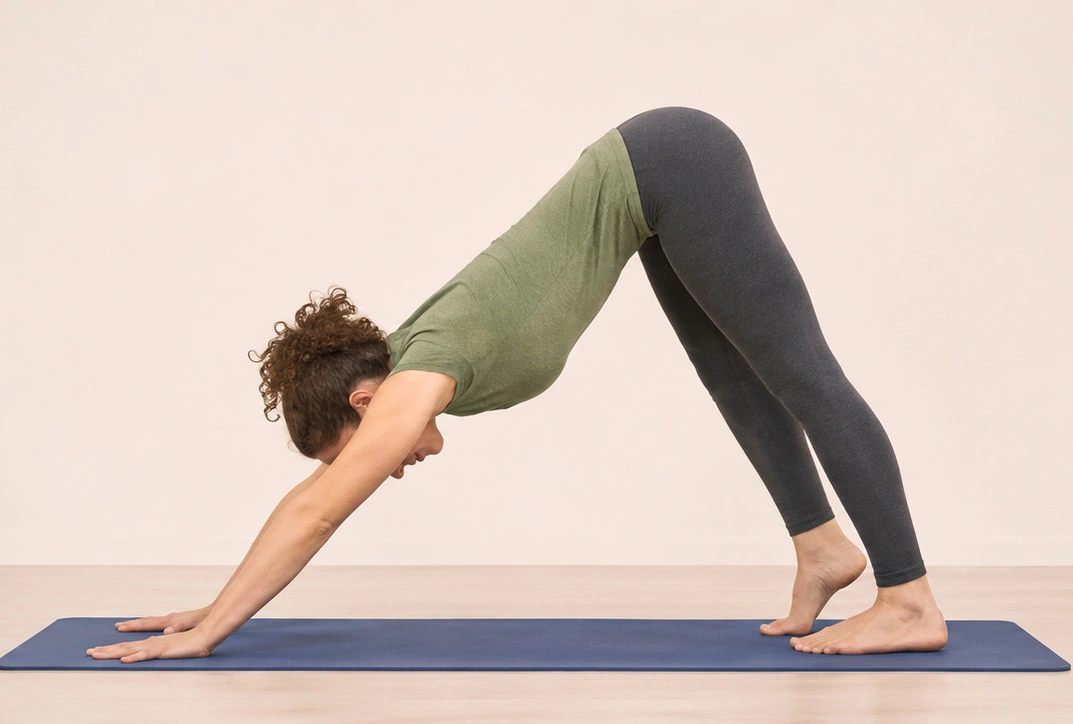
  4. If the Dog remains accessible and the right heel rests naturally, keep the right forefoot in steady contact with the mat. On an easy exhalation, if one comes naturally, lift the right heel only very slightly. Do not rise high onto the ball of the foot. Let the calf work just enough to create that minimal separation. The palms remain weight-bearing; the left foot and right forefoot keep their supports. Do not rotate the pelvis or shift weight onto the hands to lift the heel higher. Let the breath renew freely even if the motion continues beyond the exhalation. If sitting was chosen, the same tiny heel lift may occur with the pelvis still supported and the right forefoot on the floor. There will be only one lift. If initial contact was left, the separation was minimal but real; otherwise do not assume a lift occurred. There is no need to prolong even a small lift. If no safe lift was achieved, do not perform steps 5–7 as though it had occurred: proceed to the return and rest described in steps 8 and 9, in the accessible form, and choose the corresponding alternative meditation.
02

Target

One heel lifted slightly; toes remain down.
  1. Now let the right heel move gradually toward the floor. Do not try to reproduce the exact speed or pressure of its initial contact. Keep the right forefoot down throughout the return. In Downward Dog, the palms and other supports continue bearing the body; if seated, the pelvis remains supported by the seat and the left foot stays down. As the right heel returns to the floor, let the particular work of the calf diminish. Breathing follows the movement without retention; do not lengthen the exhalation to create a heavier contact. Picture the symbolic serpent of the depths as a coiled presence that need not rise in order to remain present. This image calls for no contraction of the pelvis or perineum. If the right heel returns, do not add pressure to accentuate its contact; if the return is incomplete, do not force it.

  2. Notice where the right heel and forefoot are. Has the heel’s contact returned clearly enough? If so, receive its presence without demanding a sensation identical to the beginning. The calf may work less; the toes need not grip the ground. If the heel does not readily regain contact, do not force it. Acknowledge that a complete return is not available in this form and prepare to leave it. Do not later describe the heel as having returned: let steps 7–9 lead to safe rest and select the alternative meditation for an incomplete journey. Do not claim symbolically that contact was regained when it was not physically regained. Breathing remains natural; if the heel has returned while seated, one gentle breath, slightly rough at the back of the throat, may pass and then cease — never in Downward Dog. The image of the serpent of the depths may remain without demanding an outcome. A limit observed is also bodily knowledge. The contact regained may feel different from the first without calling for another attempt.

  3. If the right heel has returned, sense its relationship with the ground for another brief moment, only while the position remains comfortable. Do not meticulously compare its pressure with the pressure before the lift. Do not lift the heel a second time to check whether it can return correctly. If the memory of the first contact seems clearer, allow that difference. Keep breathing freely. In the Dog, palms and feet remain weight-bearing during this brief recognition; in sitting, the pelvis stays supported and both feet may rest. Do not force the calf to relax. This is the meaning of the seal of the root regained: contact can be accepted as real enough without another demonstration. If the return was incomplete, stop looking for it and use the accessible exit. Do not repeat the experience to obtain a better conclusion. The movement had one opportunity to happen and end.

03

Integration

Downward Dog: the heel has returned to the mat.
  1. If the practice took place in the Dog, lower the knees progressively to the mat. Keep the palms weight-bearing until the knees have truly received support. Then let the feet reduce their supporting role. The pelvis may start moving back toward the prepared Child’s Pose, as far as knees and hips permit. Let breathing accompany this transfer of weight freely; do not hold the breath to hasten the exit. If the seated alternative was used, simply let both feet return to rest, hands settled and pelvis fully supported by the seat. In either case, do not begin another heel movement. After the return, or if a limit required stopping, no second lift is requested.

  2. If Bālāsana is accessible, let the pelvis approach the heels within a comfortable range. Allow forehead and chest to reach the prepared supports without forcing back or knees, keeping the face free to breathe. The hands stay available until the torso is actually supported. If Child’s Pose troubles the knees or feet, use the hands to return to a stable sitting position. Let arms, legs and back rest. Breathing stays natural. Do not add Nāḍīśodhana here to confirm the outcome. Feel the right calf released from the task of lifting. The symbolic reference to coiled power may remain only an inner image; no bandha is maintained or performed. If the heel returned to the floor, recognize that contact as a complete experience, even if it differs from the original sensation. If the return was unavailable, accept the observed limit without trying another form to obtain the expected result. The seal of the root regained can dissolve. The body need not compare before and after any longer. Presence can return without reproducing the past identically.

Closing meditation

The heel left the floor by the smallest amount, then returned. The calf can rest now. Perhaps we would like to recover exactly the sensation of the first contact. Yet the return took place. What is re-established need not reproduce the past exactly.

ALTERNATIVE GUIDED MEDITATION · If initial heel contact was not available and sitting was chosen

The sitting position was received without trying to force the heel onto the floor in Downward Dog. The return of the classical contact was not put to the test. Presence can remain complete within the support that is genuinely available.

ALTERNATIVE GUIDED MEDITATION · If the heel lift or its return was not achieved

The intended movement did not follow its entire course: either the heel was not lifted or its return was not clearly received. The attempt ended without repetition or forced contact. The body returns to the supports and rest that are still available, without announcing a success that did not occur.

Silence